
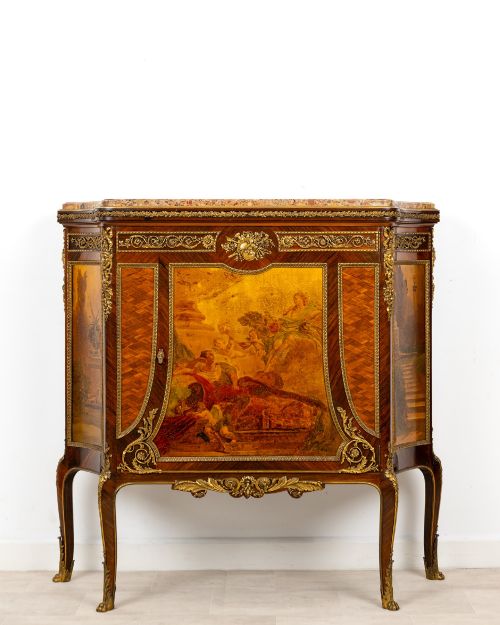
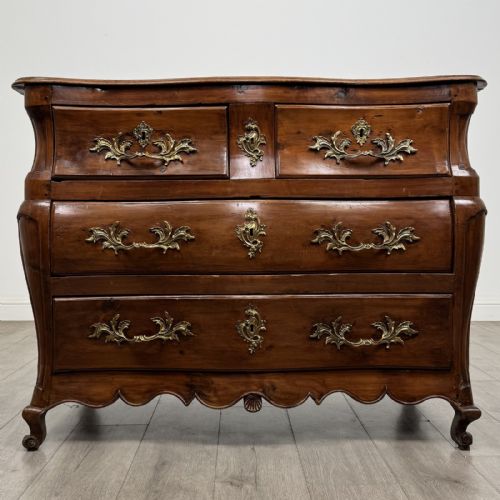
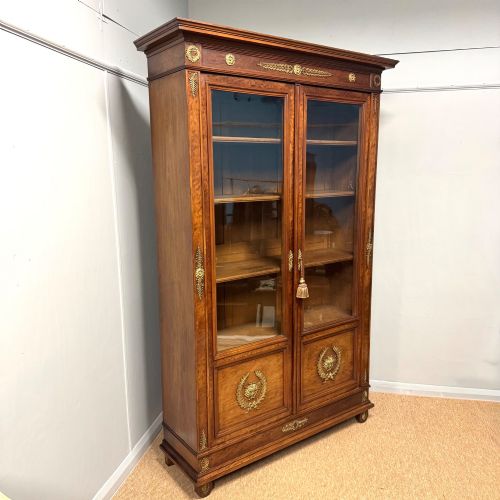
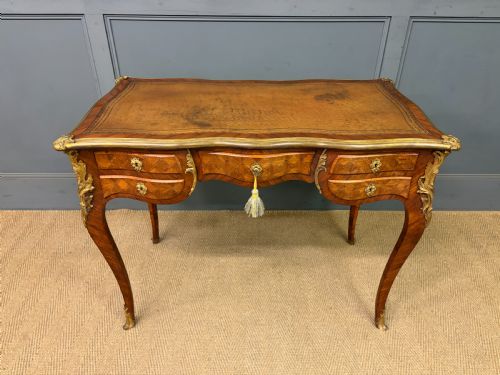
Ormolu Furniture
Ormolu furniture combines substantial timber carcasses with finely cast gilt-bronze mounts, offering a sophisticated statement piece for a formal interior.
Ormolu Furniture
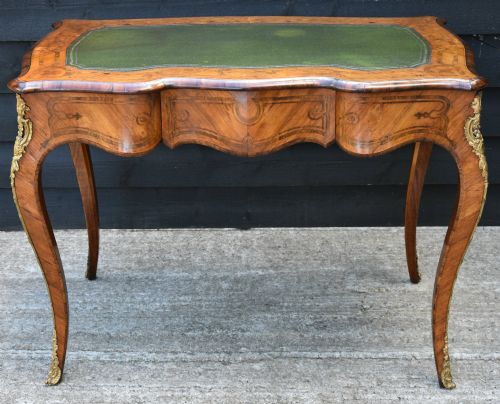
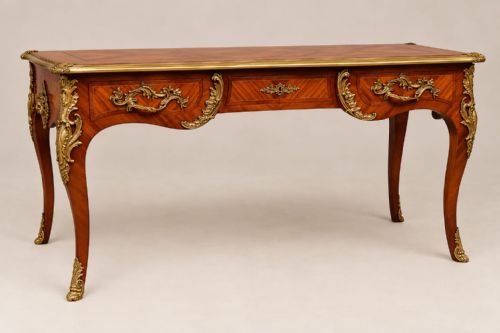
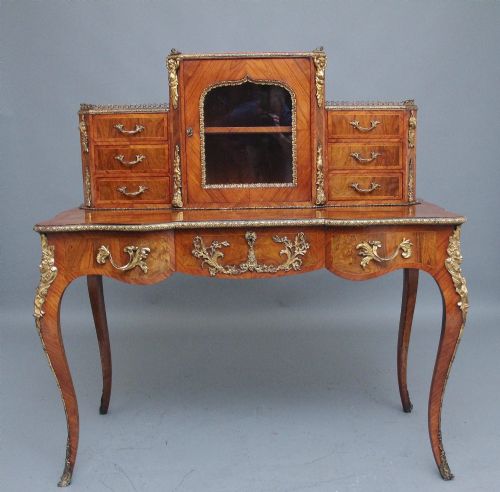
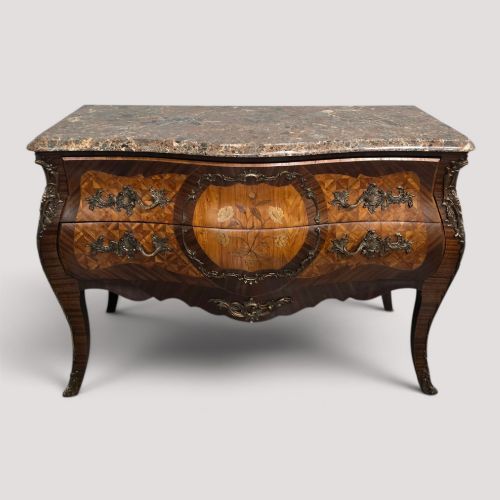
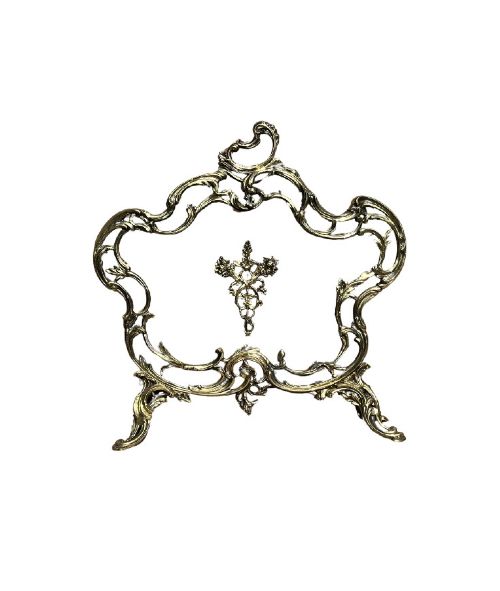
When you search for ormolu furniture, you encounter items featuring finely cast gilt-bronze mounts applied to timber frames. These pieces span the eighteenth, nineteenth, and early twentieth centuries, drawing heavily upon French revival aesthetics such as Louis XV, Louis XVI, and Empire styles.
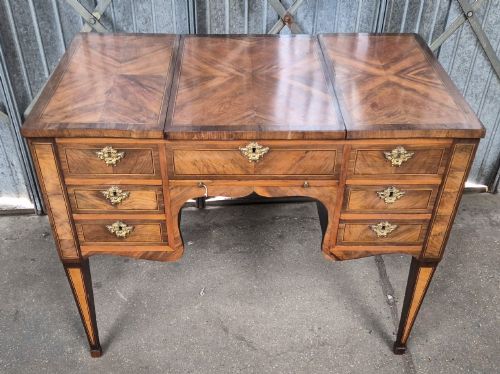
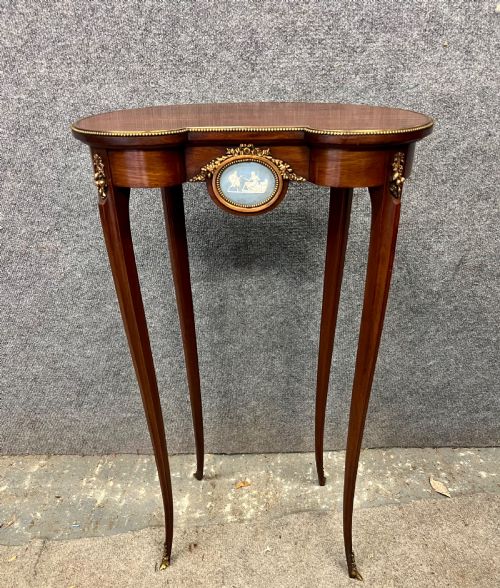
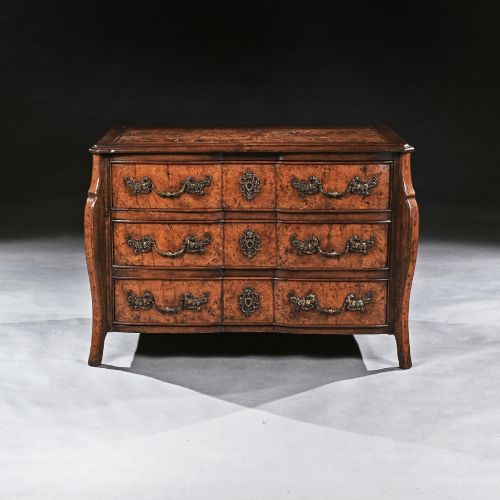
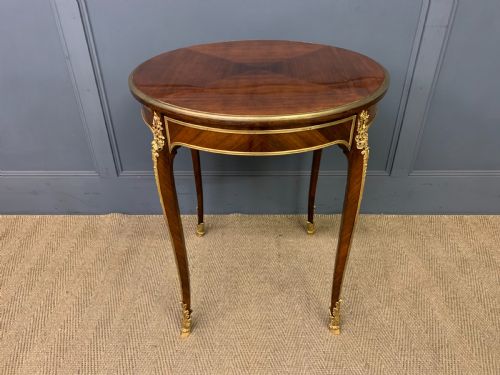
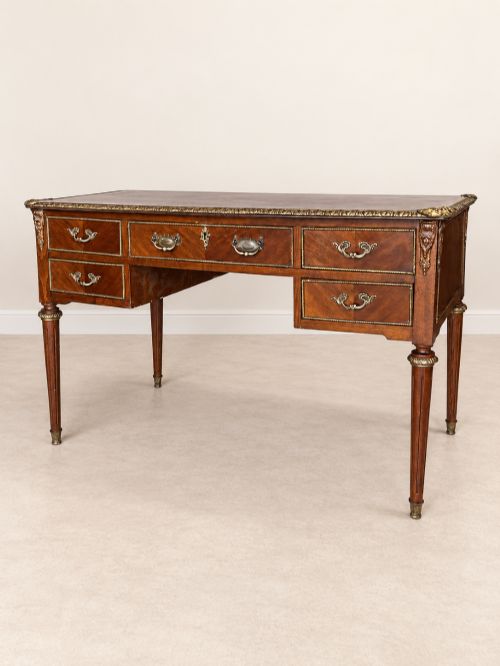
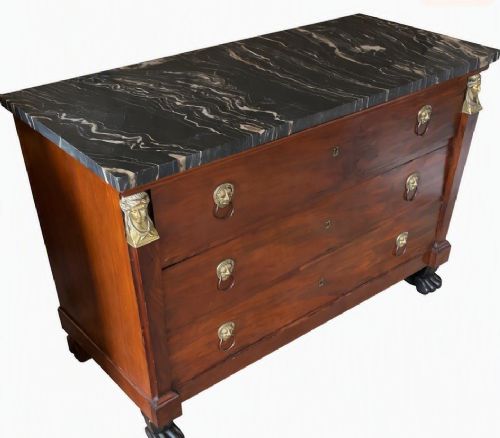
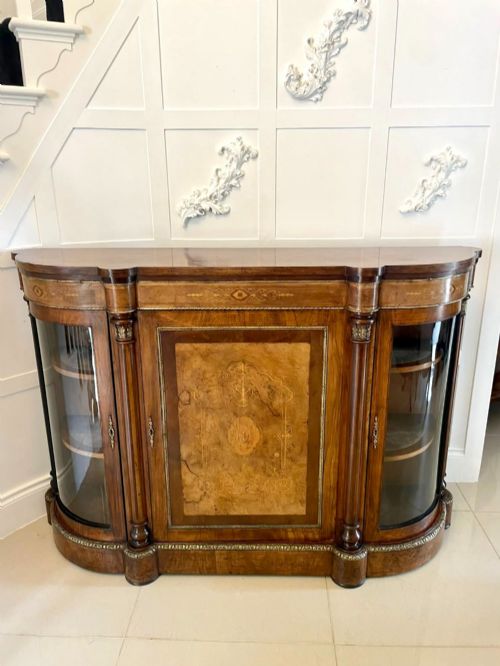
The forms on this page include desks, commodes, display cabinets, side tables, and occasional tables. You are most likely to meet nineteenth-century examples produced during revival periods, incorporating intricate marquetry and parquetry alongside cast metal ornamentation.
How they were made
Cabinetmakers constructed the underlying carcasses using dense timbers such as kingwood, walnut, mahogany, and rosewood, often embellishing the surfaces with geometric parquetry or floral marquetry veneers. Selected pieces incorporate marble tops, porcelain plaques, or painted panels in the Vernis Martin manner.
The distinct metallic enrichment involves ormolu, also described as gilt-bronze or brass, which was cast, chased, and gilded to produce crisp decorative mounts, handles, and finials. These mounts were carefully fitted to the contours of desks, cabinets, and chests of drawers.
The listings here feature nineteenth-century items alongside eighteenth-century examples, constructed in mahogany, walnut, kingwood, and ormolu.
What varies in quality
The standard of the casting and subsequent chasing in the gilt-bronze mounts dictates much of the distinction across these items. Finer mounts display sharp detail, deep relief, and crisp hand-chasing, whereas lesser versions appear soft and lack definition.
The complexity of the underlying woodwork also separates examples, with intricate multi-wood marquetry, serpentine shapes, and sophisticated internal mechanisms marking out the most accomplished cabinetmaking workshops.
François Linke·Gillows·Francois Linke·Poix Blin·JAS Shoolbred·Johnstone and Jeanes·Maison Millet·H. J. Hatfield and Sons·Henry Dasson
The Ormolu Furniture Glossary
- Ormolu
- Gilded bronze used for decorative mounts on furniture and decorative objects. The technique involves applying a gold amalgam to bronze before heating to drive off the mercury.
- Marquetry
- Decorative veneer work forming pictorial or geometric patterns using various coloured woods. Craftsmen cut contrasting timbers and fitted them precisely into a paper design before gluing.
- Parquetry
- Geometric mosaic woodwork used for floors and furniture surfaces. It creates repeating patterns such as squares, lozenges, and chequers using contrasting timber veneers.
- Commode
- A low chest of drawers developed in France during the seventeenth century. These pieces usually feature prominent decorative mounts and marble tops.
- Bureau plat
- A flat-topped writing desk, typically freestanding with cabriole or tapered legs. They frequently incorporate leather writing surfaces and gilt-bronze mounts.
Ormolu Furniture: Frequently Asked Questions
What is ormolu furniture?
These pieces consist of wooden carcasses adorned with cast and gilded bronze mounts. They primarily reflect French stylistic revivals from the eighteenth and nineteenth centuries.
Craftsmen combined rich timbers like kingwood and mahogany with detailed metalwork to produce functional items that doubled as decorative art.
How do I care for marble tops?
Marble surfaces require gentle cleaning with a soft cloth and neutral soap to avoid damaging the polished stone. Acidic liquids must be wiped away immediately.
Preventing scratches from objects placed on top preserves the surface finish over years of daily use.
Where were these pieces made?
Many examples originate from Paris workshops responding to historic revival tastes. British cabinetmakers also produced comparable designs.
Maker signatures on the bronze mounts or timber frames occasionally indicate the specific workshop of origin.
How do I distinguish Louis XV and Louis XVI styles?
Louis XV items display asymmetrical curves, serpentine forms, and naturalistic ormolu mounts. The later Louis XVI style introduces neoclassical symmetry, straight tapered legs, and geometric proportions.
Examining the leg profiles and mount motifs clarifies the stylistic period of each piece.