




Ormolu Enamel Table Clock
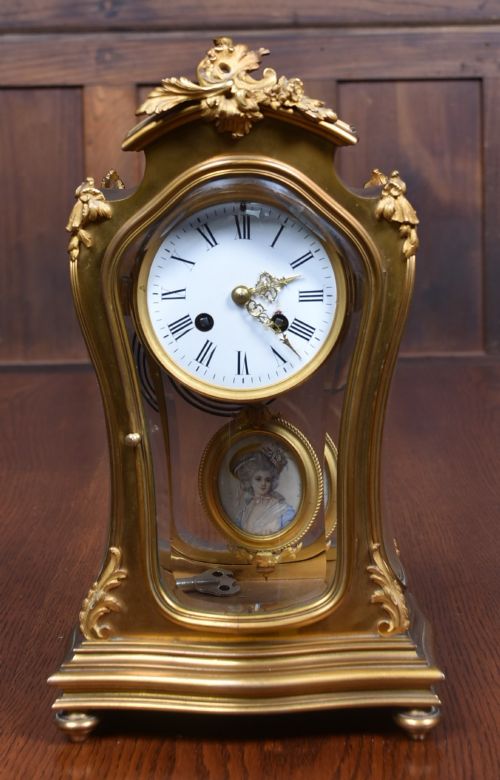
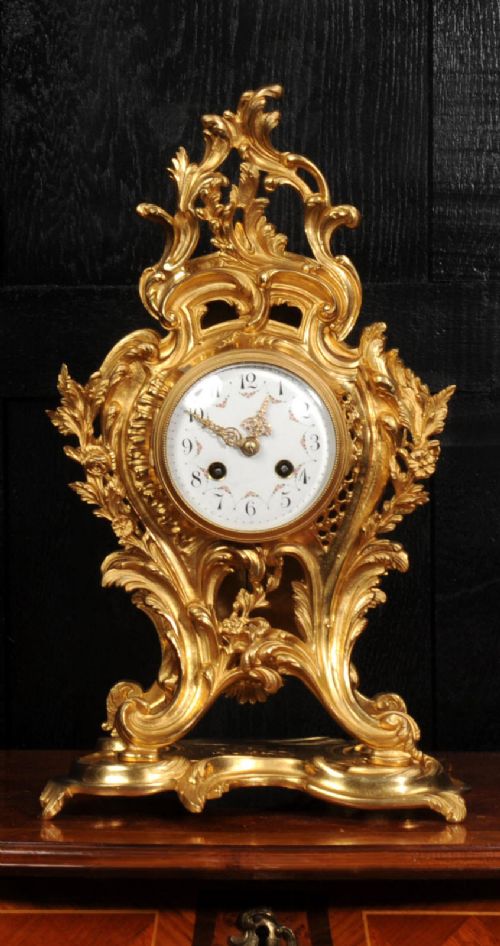
An ormolu enamel table clock brings nineteenth-century French precision and golden warmth to a mantelpiece, combining gilt bronze with intricate coloured dials.
Ormolu Enamel Table Clock
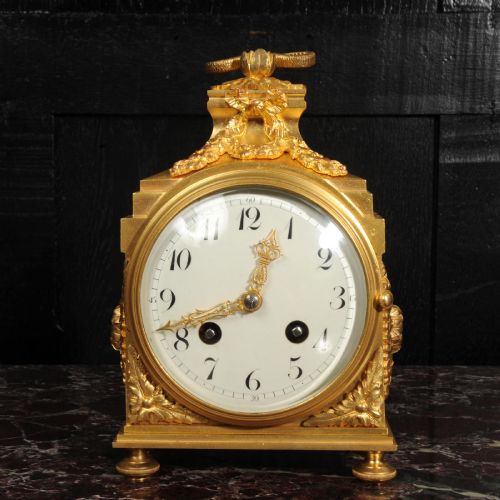
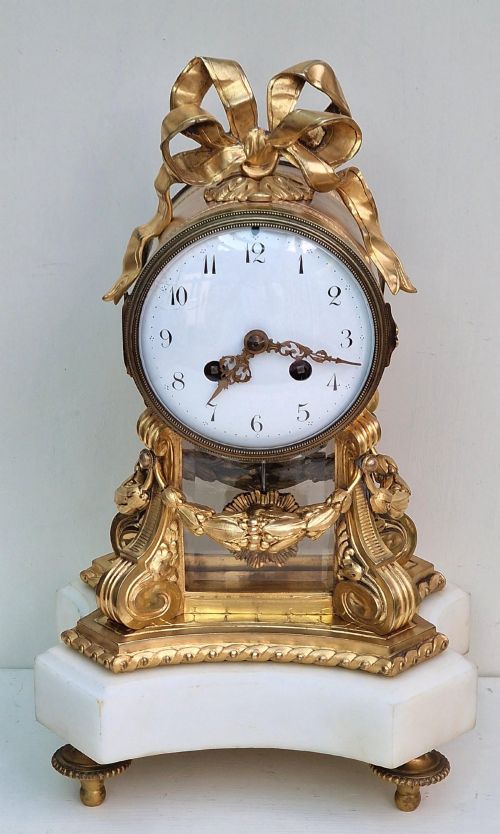
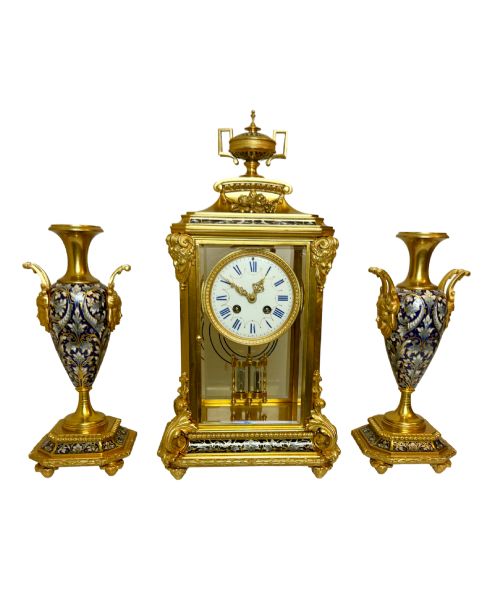
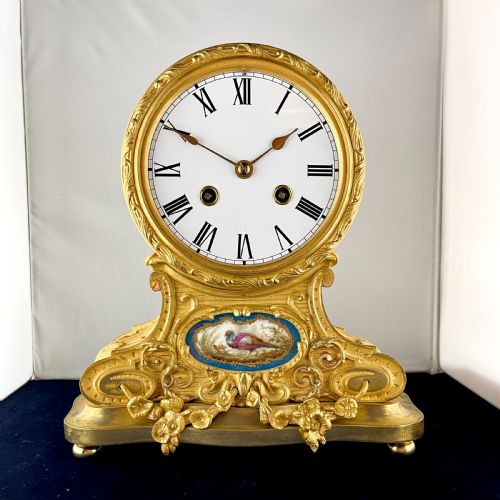
An ormolu enamel table clock typically takes the form of a French mantel clock or garniture set spanning the nineteenth century, from the Victorian era down to the early twentieth century. You will encounter various revival styles including Louis XVI, Napoleon III and French Rococo, produced in forms ranging from simple drumhead timepieces to elaborate clock garnitures.
The objects combine heavy gilt bronze framing with delicate vitreous enamel dials, porcelain panels or champleve borders. They function as both decorative centrepieces and working timekeepers, often originating from Parisian workshops and makers.
How they were made
The bodies are cast in bronze or brass and heavily gilded to create the characteristic ormolu surface, paired with inset panels of champleve enamel, porcelain or tortoiseshell. Dial faces feature hand-painted numbers and miniature scenes protected beneath curved glass bezels.
Internal movements are housed within substantial metal casings, with many examples utilising eight-day striking mechanisms and signed components produced by specialist French clockmakers.
Goats and palm trees occasionally share the bronze stage with cherubs, proving that nineteenth-century clockmakers possessed delightfully unpredictable imaginations.
What varies in quality
Quality rests in the crispness of the bronze casting and the depth of the mercury or electroplated gilt finish, where finer examples display sharp relief work and hand-chased detail rather than soft contours. The preservation of the enamel dials and the presence of signed movements or maker signatures elevate certain pieces far above standard production.
Proportion and architectural harmony dictate the overall success of the design, distinguishing balanced garniture sets and architectural marble clock cases from plainer or heavier domestic alternatives.
Japy Freres·Le Roy et Fils·Maple and Co·Leon Message·Jollet et Cie·John Bennett
The Ormolu Enamel Table Clock Glossary
- Ormolu
- Gilded bronze achieved by applying a finely ground high-carat gold mercury amalgam to a cast bronze base, or through later electroplating methods. The finish provides a rich, warm golden lustre characteristic of nineteenth-century decorative metalwork.
- Champleve
- An enamelling technique where troughs or cells are hollowed out of the metal surface and filled with coloured vitreous enamel powder before firing. This creates vibrant, patterned borders around clock faces and bezels.
- Garniture set
- A matched arrangement consisting of a central clock flanked by decorative matching ornaments such as urns or candelabra. These sets were designed to sit harmoniously on a mantelpiece or console table.
- Pendule d'Officier
- A portable campaign-style carriage or officer clock featuring a distinct architectural shape and a protective travel case. These compact timepieces combine heavy bronze framing with clear enamel dials.
- Crystal regulator
- A mantel clock constructed with glass panels on all four sides, allowing an unobstructed view of the pendulum and mechanical movement. They often incorporate delicate blue enamel panels within the brass framework.
Ormolu Enamel Table Clock: Frequently Asked Questions
How do I wind my clock?
Most mechanical nineteenth-century clocks require a key inserted into the dial face to tension the internal springs every eight days. Care must be taken not to over-wind the mechanism.
Moving the hands should be done slowly and strictly in accordance with the manufacturer instructions to avoid damaging the delicate strike train.
Are these clocks still accurate?
Historic mechanical movements can keep reliable time when properly serviced and adjusted, though minor daily variations are normal for antique pieces. Pendulum regulation allows for fine-tuning.
Professional restoration ensures the internal gears and escapements operate smoothly without placing undue wear on original components.
Where should I place a clock?
Ormolu and enamel pieces require stable, level surfaces away from direct sunlight, excessive moisture and sudden temperature shifts. Mantelpieces and sturdy console tables provide ideal support.
Keeping the clock away from draughts helps protect delicate glass bezels and painted enamel dials from accidental damage.
How do I identify the period?
Stylistic cues such as Rococo asymmetry, Louis XVI urn motifs or Napoleon III proportions help date a piece alongside any maker signatures found on the movement backplate. Materials like champleve enamel and tortoiseshell point towards the later nineteenth century.
Consulting the dial signature and case construction reveals whether a piece is an original Victorian production or a later revival.