
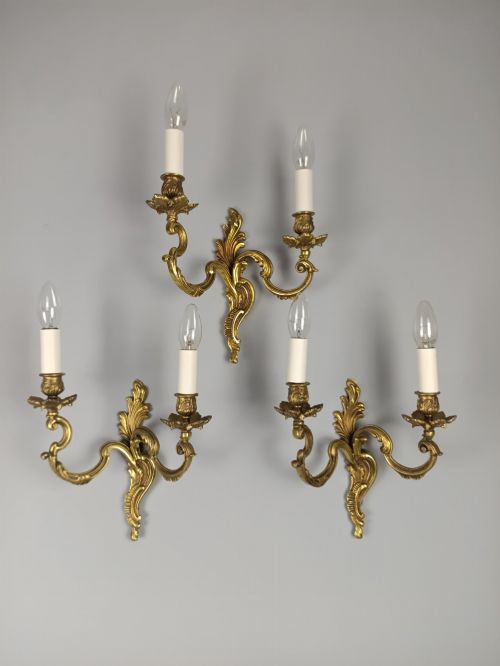
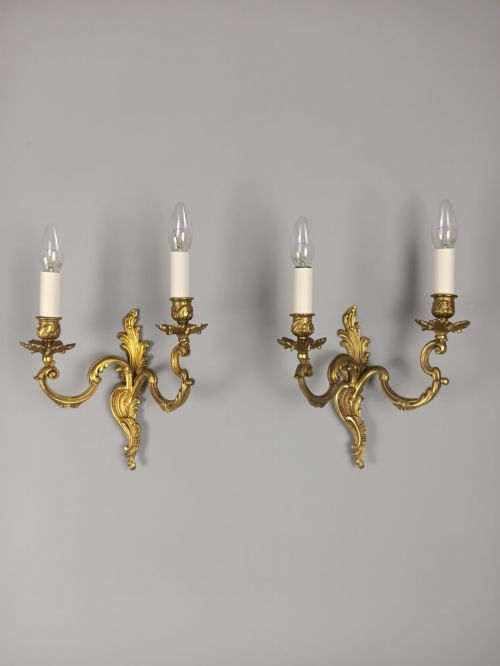
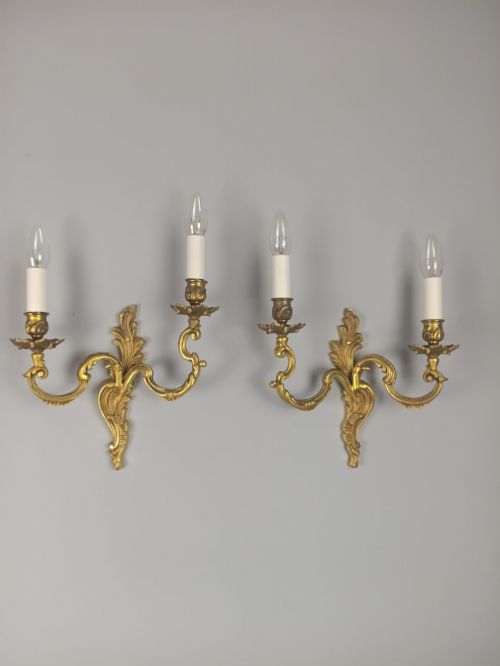
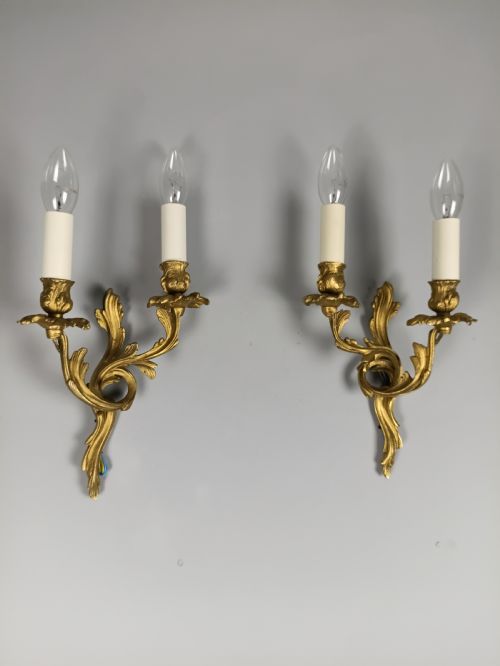
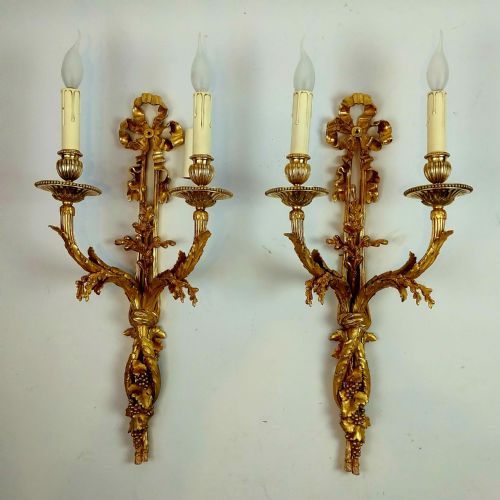


Ormolu Double Wall Lights
Ormolu double wall lights bring warmth and ornamental splendour to an interior through gilded metal and twin candle branches.
Ormolu Double Wall Lights
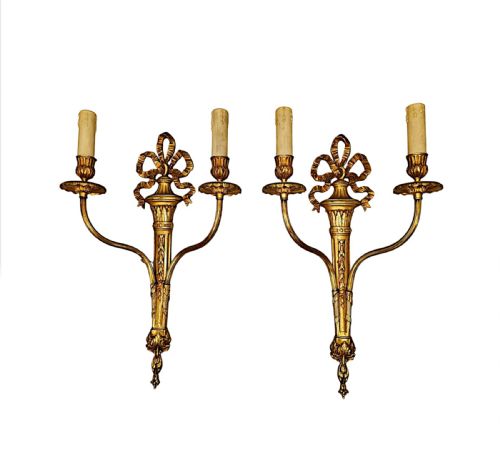
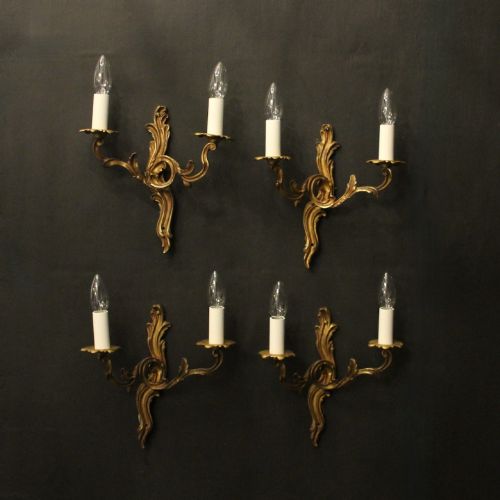
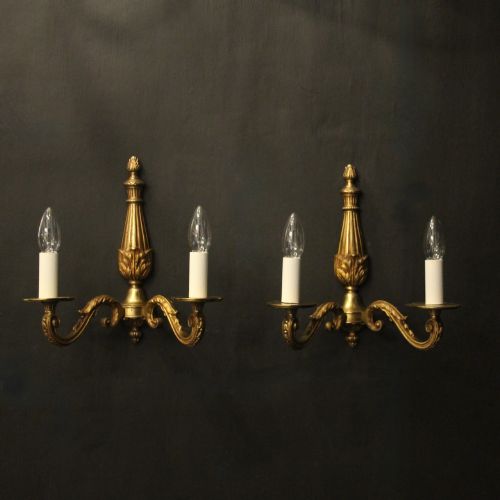
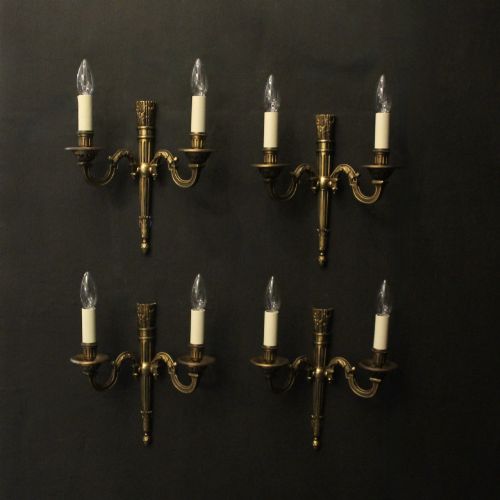
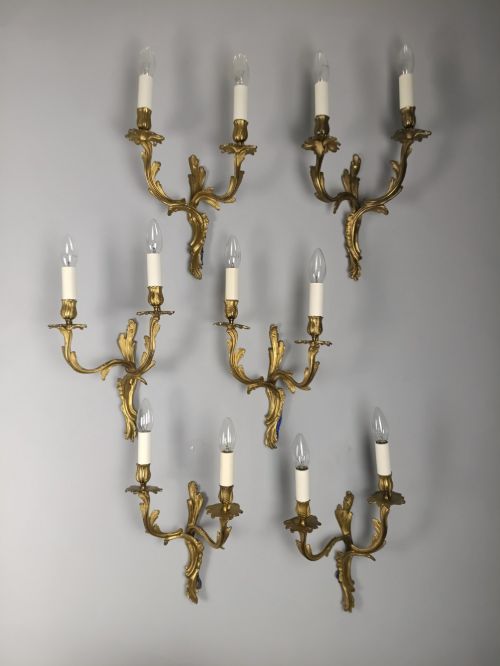
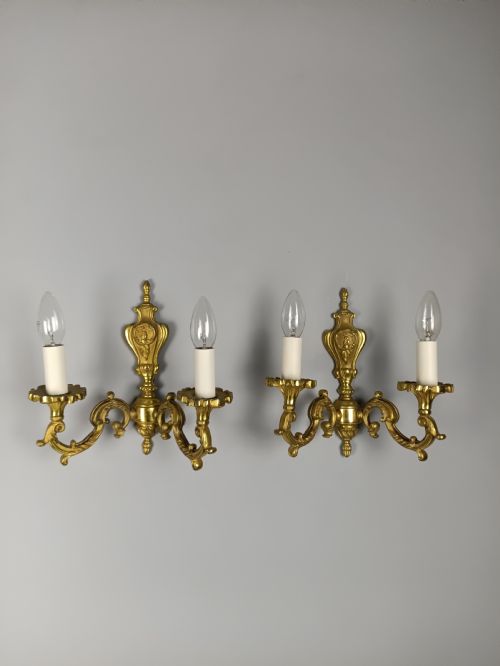
When you search for ormolu double wall lights, you are looking at ornamental two-branch light fixtures designed to mount directly onto a wall. These pieces primarily originate from French workshops across the nineteenth and early twentieth centuries, spanning periods from Regency to the 1930s. The selection on this page consists predominantly of matched pairs and sets created in France, utilising twin arms to hold candles or electric fittings.
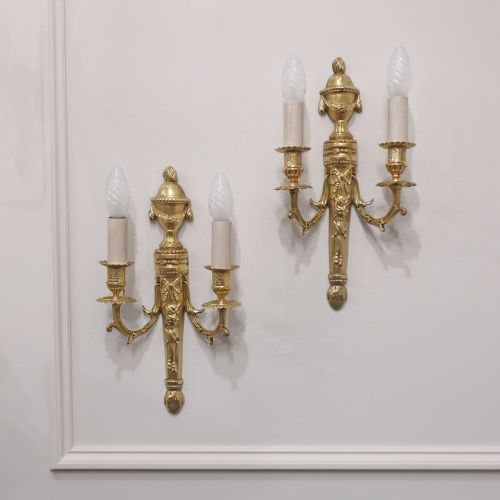
The dominant aesthetic draws heavily on classical and revival vocabularies, including French Rococo, Louis XVI, and Empire styles. Buyers will encounter swirling asymmetric foliage alongside strict neoclassical symmetry, depending on the specific decade of manufacture. Most examples function as wall sconces, combining functional illumination with sculptural metalwork that reflects candlelight or electric bulbs across a room.
Materials and construction
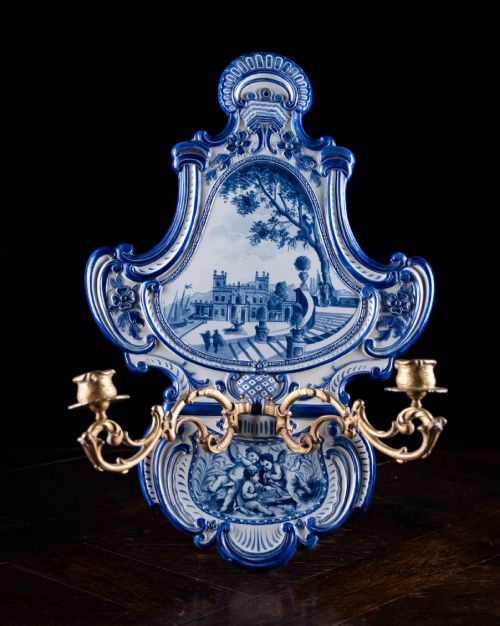
The primary material foundation relies on cast bronze, brass, and metal, which is then heavily gilded to achieve the characteristic ormolu finish. Artisans employed mercury gilding or electroplating techniques to apply gold layers over bronze or brass bases, creating a durable and lustrous metallic surface. Certain specialised examples incorporate ceramic elements alongside the metalwork, such as Delft components integrated into the wall plate.
Casting and chasing formed the core of the manufacturing process, allowing makers to achieve intricate scrolls, acanthus leaves, and urn motifs. Twin arms were cast separately and secured to the main backplate, ensuring structural stability for supporting multiple light branches. The resulting fixtures combine robust metal engineering with delicate surface detailing typical of high-grade decorative hardware.
Even the tiniest nineteenth-century wall sconces manage to insist they belong in a palace.
Markers of quality
The weight of the bronze and the precision of the assembly also separate standard production from finer craftsmanship. Heavier gauge metal ensures the twin arms remain rigidly aligned over decades of use, while poorly constructed joints may loosen at the backplate. Furthermore, the quality of the gilding itself dictates longevity, with superior gold applications retaining their warm luminance rather than dulling into flat brass tones.
Casier
The Ormolu Double Wall Lights Glossary
- Ormolu
- Gilded bronze or brass, typically created by applying a gold amalgam to a base metal surface and heating it. This technique imparts a rich, golden sheen that defines nineteenth-century decorative hardware.
- Wall sconce
- A decorative lighting fixture fixed to a wall rather than freestanding on a table or suspended from a ceiling. Sconces project outward to distribute light across interior walls.
- Rococo Revival
- A nineteenth-century design movement mimicking the asymmetrical C-scrolls, shells, and naturalistic foliage of the eighteenth-century French Rococo period. It dominates many nineteenth-century wall light designs.
- Empire style
- A neoclassical design aesthetic inspired by ancient Roman and Greek forms, favouring military trophies, sphinxes, wreaths, and strict symmetry. This style emerged during the early nineteenth century and influenced later reproductions.
- Twin arm
- A branch configuration featuring two distinct candleholders or light nozzles extending from a single backplate. These dual branches double the illumination capacity of the fixture.
Ormolu Double Wall Lights: Frequently Asked Questions
How were double wall lights used historically?
These fixtures were mounted in pairs or larger sets along drawing room and hallway walls to supplement chandelier light. Candles placed in the twin arms reflected off gilded bronze surfaces to maximise illumination in grand interiors.
Over time, many of these antique fixtures underwent professional rewiring to accommodate modern electrical fittings while preserving their original decorative metalwork.
How do I tell Louis XVI style from Rococo?
Louis XVI style wall lights feature strict symmetry, straight lines, urns, ribbons, and classical architectural motifs. They project order and neoclassical restraint.
Rococo wall lights embrace asymmetry, swirling foliage, C-scrolls, and organic movement without straight architectural lines.
Are these lights wired for modern use?
Many surviving examples have been adapted for electricity over the course of their long lifespan. Listings frequently note when a set has been rewired for contemporary electrical standards.
Buyers should inspect the internal wiring setup upon acquisition to ensure compatibility with modern domestic electrical circuits.
What is the difference between ormolu and brass?
Ormolu specifically refers to gilded bronze or gilded brass where a gold layer enhances the base metal. True ormolu possesses a deep, rich golden lustre derived from the application of real gold.
Plain brass relies solely on the natural alloy colour without the additional gilding process found on high-grade ormolu pieces.