



Ormolu Chenets
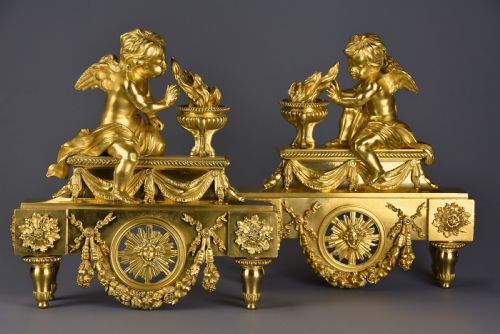
These ormolu chenets bring genuine hearthside drama, pairing the warmth of gilded bronze with bold French revival style.
Ormolu Chenets
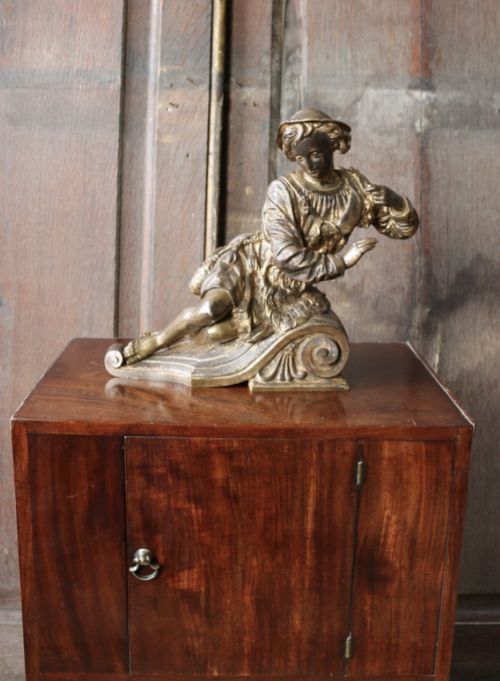
When you search for ormolu chenets, you look at decorative fireplace accessories designed to support logs above the hearth. These pieces anchor the fireplace with sculptural presence, often taking the form of figural pairs or intricate rococo scrolls.
You are most likely to meet nineteenth-century revival examples on this page, drawing heavily on French Louis XIV and Louis XV designs. They frequently combine ormolu with patinated bronze or cast iron to create a striking two-tone metallic contrast.
Materials and construction
These pieces rely on heavy cast bronze frameworks, shaped into classical figures, cherubs, or asymmetrical rococo motifs. Artisans applied mercury gilding or modern electroplating to achieve the characteristic rich ormolu surface.
Many pairs incorporate patinated bronze elements to emphasise the gilt highlights, while the structural fire bars often utilise durable cast iron to withstand the heat of the hearth.
Ormolu Chenets Retail Price Guide 2026
Typical asking prices for ormolu chenets among the pieces listed under this phrase on Sellingantiques today, from the lower quarter to the upper quarter. They describe what is for sale here now, not the wider market.
Listings span the eighteenth and nineteenth centuries, utilising gilt bronze, ormolu, and patinated bronze within French revival styles.
Judging quality
The finest examples display crisp hand-chasing on the bronze surface, where an artisan has sharpened the details of the cast after removal from the mould. Lesser pieces rely solely on the raw cast without subsequent refinement by hand.
Weight and stability also separate standard pairs from exceptional ones, alongside the depth and warmth of the original gilding. Integrated mechanical adjustments, such as variable widths, indicate thoughtful nineteenth-century design.
The Ormolu Chenets Glossary
- Chenet
- A horizontal iron bar with an ornamental front, also known as a firedog, used to elevate firewood in an open hearth.
- Ormolu
- Finely ground high-carat gold applied to a bronze base using a mercury amalgamation technique, or later electroplating.
- Patinated bronze
- Bronze treated with chemicals to produce a dark, protective surface layer that contrasts sharply against bright gilt mounts.
- Rococo Revival
- A nineteenth-century design movement that imitated the asymmetrical C-scrolls and natural motifs of the mid eighteenth century.
Ormolu Chenets: Frequently Asked Questions
What is the purpose of ormolu chenets?
These decorative metal supports hold logs above the floor of an open fireplace, allowing air to circulate underneath for a better fire.
Beyond their practical function, they served as ornamental centrepieces for grand nineteenth-century reception rooms.
How do I clean ormolu surfaces?
Dust gently with a soft, dry brush to remove surface particles without disturbing the delicate metallic finish.
Avoid abrasive metal polishes entirely, as they strip away the thin layer of gold leaf or mercury gilding.
Can I use them in a working fireplace?
Most antique pairs function perfectly well in a traditional wood-burning hearth, provided the iron bars bear the heat.
Many collectors prefer to place them in decorative or non-operational fireplaces to protect the gilt bronze from soot.
How do I spot a reproduction?
Examine the casting quality and the weight of the bronze, as older pieces often feature heavier metal and hand-chased details.
Modern copies frequently exhibit uniform machine-smooth surfaces without the crisp definition characteristic of nineteenth-century work.