
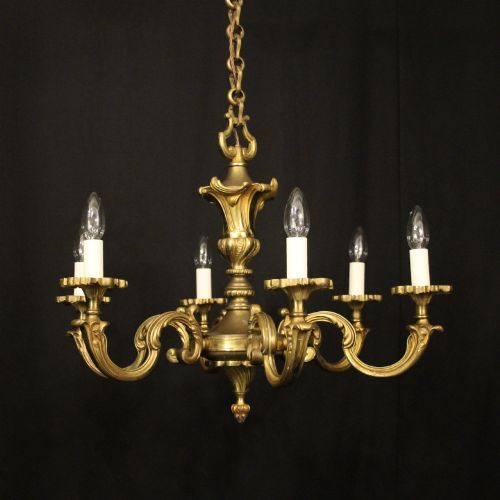
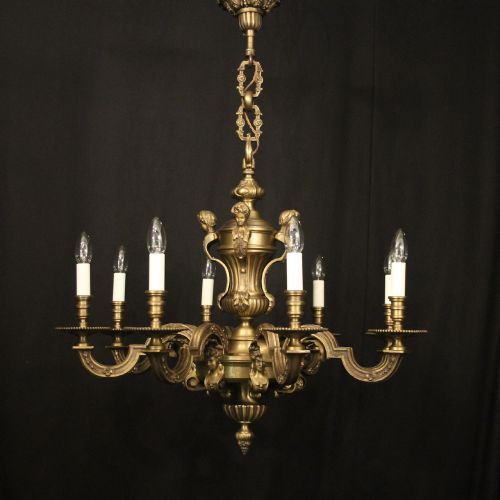
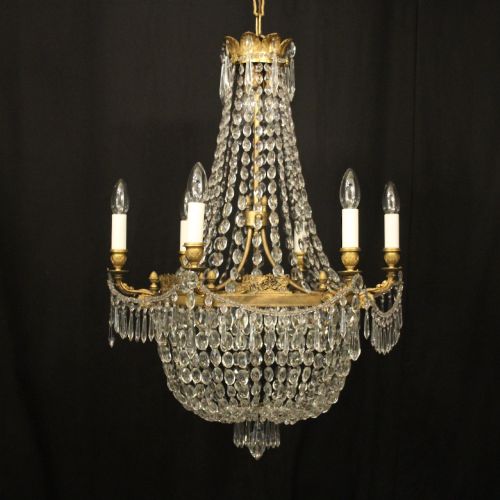
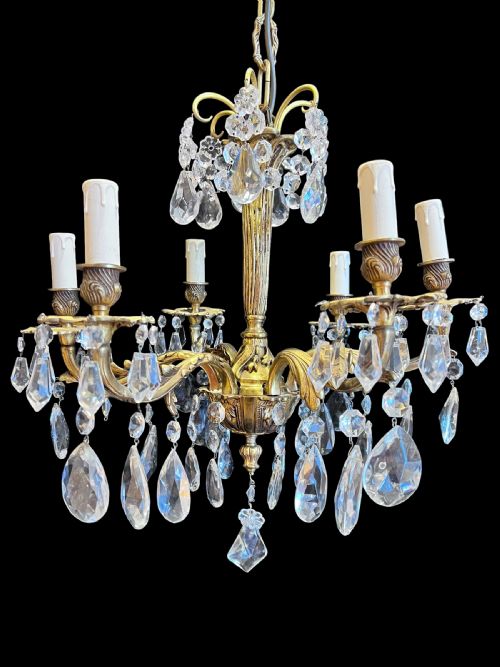

Ormolu Ceiling Light Fitting
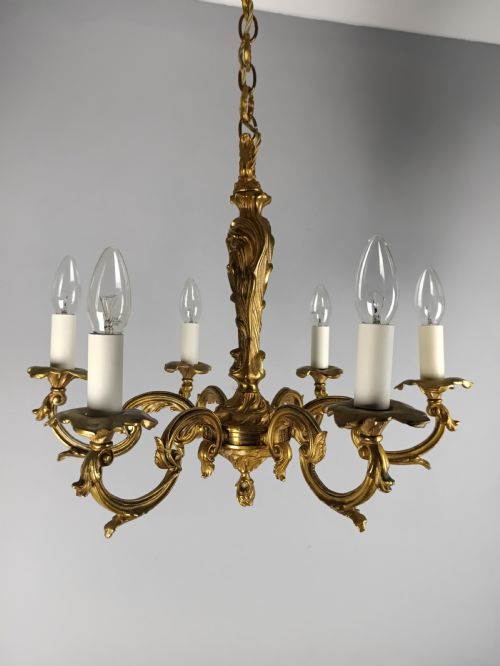
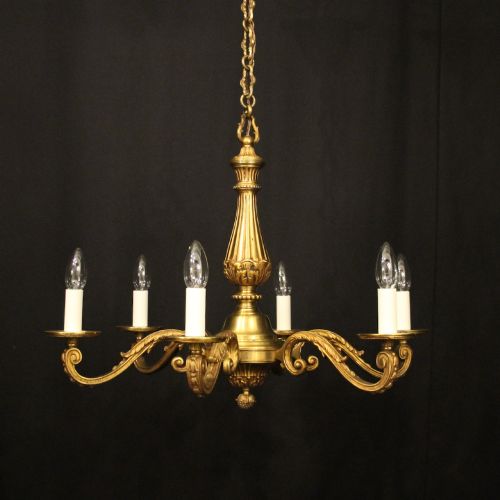
An ormolu ceiling light fitting brings opulent French styling and warm illumination to high-ceilinged rooms through heavily decorated metalwork and glittering glass.
Ormolu Ceiling Light Fitting
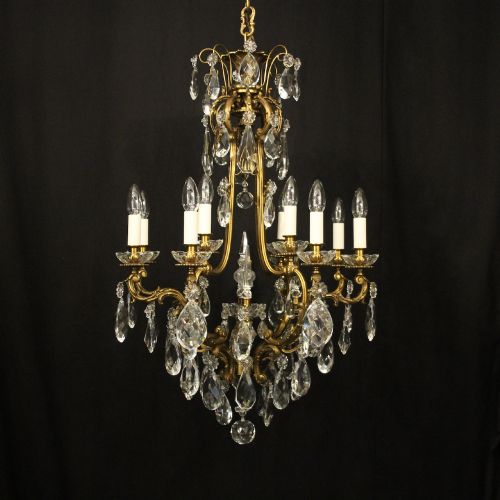
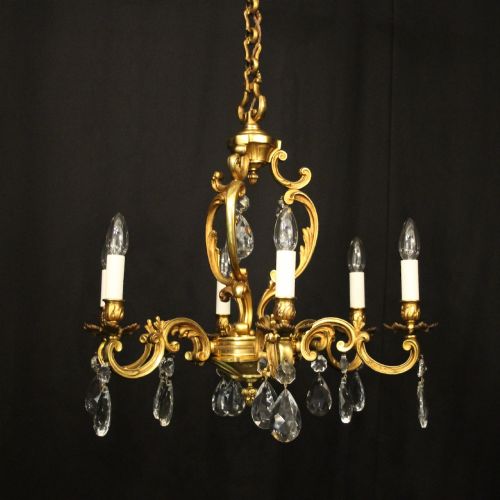
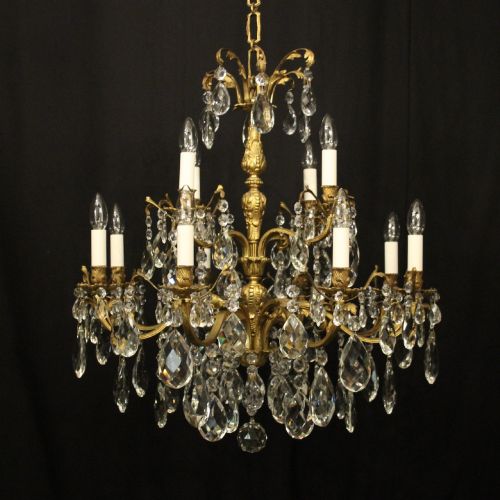
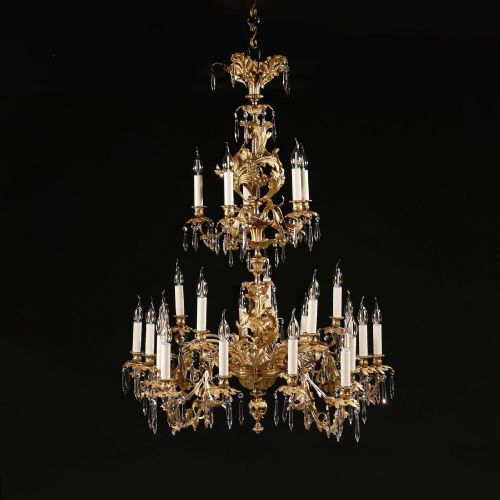
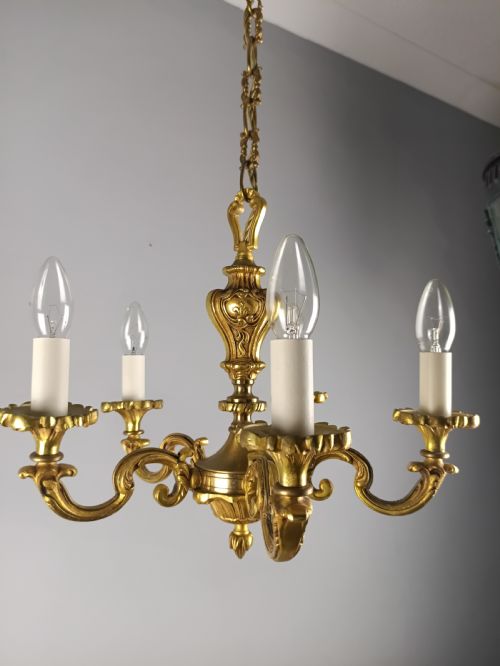
When you search for an ormolu ceiling light fitting, you examine elaborate hanging fixtures designed to illuminate grand interiors with multiple branches of light. The pieces on this page span the nineteenth century and the early decades of the twentieth century, originating primarily from French workshops adhering to traditional decorative vocabularies.
Most examples take the form of chandeliers carrying anywhere from three to twenty-five lights, alongside smaller hanging lanterns suited for hallways. The common thread across these forms is a heavy reliance on gilded bronze, brass, or ormolu frames paired extensively with glass and crystal elements.
Materials and construction methods
Makers constructed these fixtures using cast bronze and brass subjected to fire gilding or chemical gilding techniques to achieve the characteristic rich surface finish known as ormolu. Artisans then chased the metal surfaces by hand to sharpen the leaf scrolls, floral motifs, and architectural details before assembly.
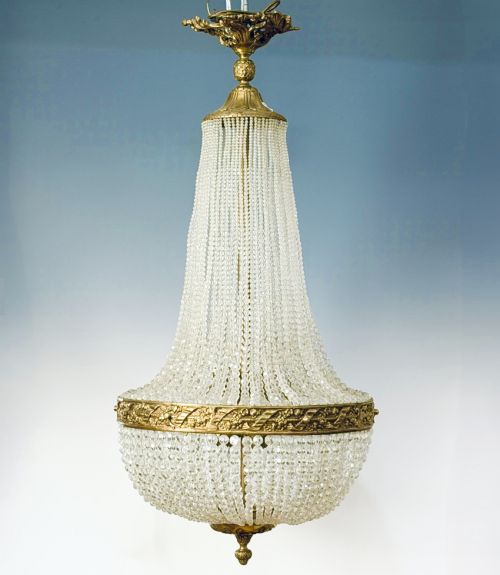
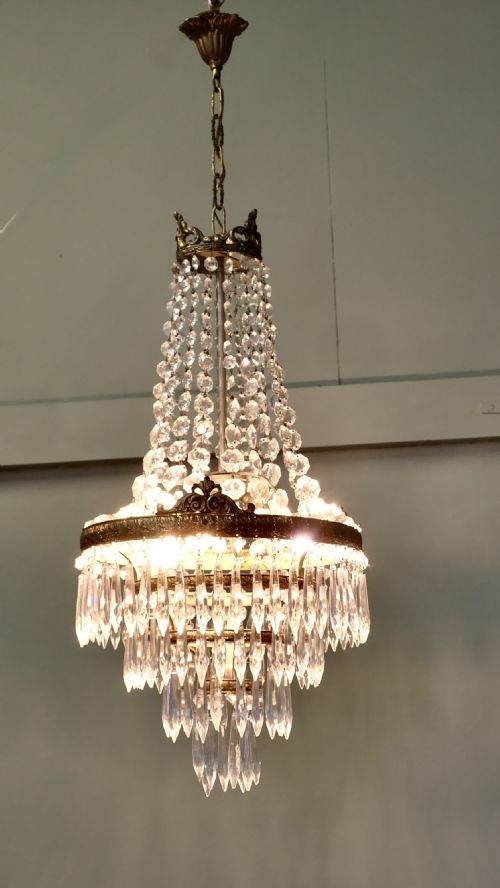
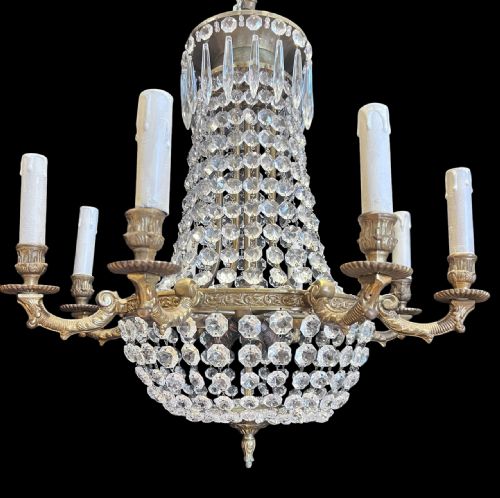
Lighting components incorporated cut glass and crystal drops, often arranged in tent and waterfall formations or suspended as birdcage designs to refract the illumination. Multiple arms and tiers were bolted or pinned together mechanically, creating robust structural frames capable of supporting heavy glass loads.
Several chandeliers employ miniature bronze birds perched invisibly among the crystal leaves, waiting to serenade the drawing room.
Discerning quality in period lighting
The distinction between ordinary and exceptional pieces lies in the crispness of the metal chasing and the depth of the gilding layer. Superior examples display sharply defined relief work on the bronze mounts, whereas lesser pieces show softened casting details and flatter surface colour.
Quality also reveals itself in the proportion of the frame and the quality of the glass components. Master workshops utilised heavy cut crystal drops that retain sharp facets and clear refraction, paired with balanced, symmetrical arm arrangements that command the room visually.
The Ormolu Ceiling Light Fitting Glossary
- Ormolu
- A surface finish historically produced by applying a finely ground high-carat gold-mercury amalgam to a bronze object before heating. It yields a rich, warm golden lustre that resists tarnishing over centuries.
- Chandelier
- A branched ceiling-mounted lighting fixture designed to hold multiple candles or electric lamps. These fixtures distribute light across large reception rooms and halls.
- Tent and waterfall
- A chandelier configuration where strings of crystal beads form an upper conical tent shape above a cascading shower of drops. This style maximises light refraction from a central light source.
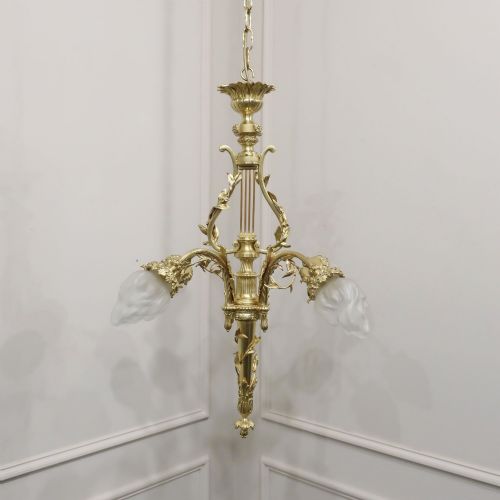
- Lyre chandelier
- A ceiling light featuring a central frame shaped like an ancient musical lyre. This neoclassical design incorporates symmetrical curved sides and string-like metal details.
- Hall lantern
- An enclosed hanging light fixture designed specifically for entranceways and corridors. These pieces protect the light source within glazed or crystal panels framed in gilt bronze.
Ormolu Ceiling Light Fitting: Frequently Asked Questions
Are these lights wired for modern electricity?
Most antique fixtures of this type have been adapted for modern electrical supplies during their history. Rewiring ensures they comply with current safety standards while retaining their historic metalwork.
Buyers should consult a qualified electrician to inspect the internal wiring and ceiling mounting capacity before installation.
What is the difference between ormolu and gilt brass?
Ormolu specifically denotes mercury-gilded bronze, producing a deep, durable golden finish favoured in high-end French decorative arts. Gilt brass uses a brass base metal often treated with alternative modern or older plating methods.
Both materials share a bright golden appearance, but bronze allows for sharper, heavier casting details.
How do I date a French chandelier?
Dating relies on stylistic clues such as the symmetry of Neoclassical designs versus the asymmetry of Rococo revival forms, alongside construction methods like screw types and casting seams. Nineteenth-century pieces often display heavier bronze casting, while 1920s and 1930s examples may show sleeker lines or transitional styling.
Comparing the drop cuts and mounting hardware against documented period pieces provides further chronological context.