




Classical Brass Ceiling Lamp
A classical brass ceiling lamp brings weight and presence to a room, offering warm light through cast metal and glass.
Classical Brass Ceiling Lamp
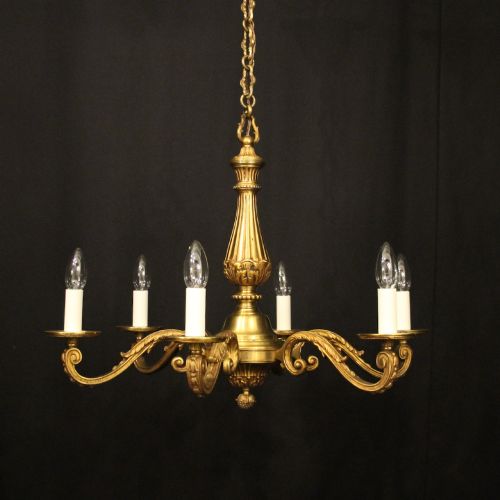
When you search for a classical brass ceiling lamp, you are looking at substantial lighting fixtures typically cast from bronze, brass, or gilded metal, often incorporating cut glass and crystal drops. These pieces originate from various periods including the nineteenth century, Edwardian era, and the early decades of the twentieth century.
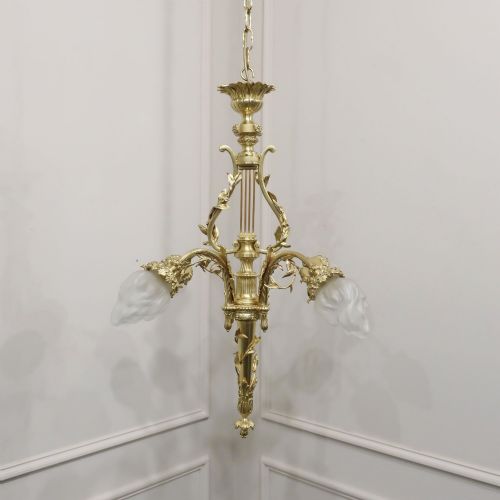
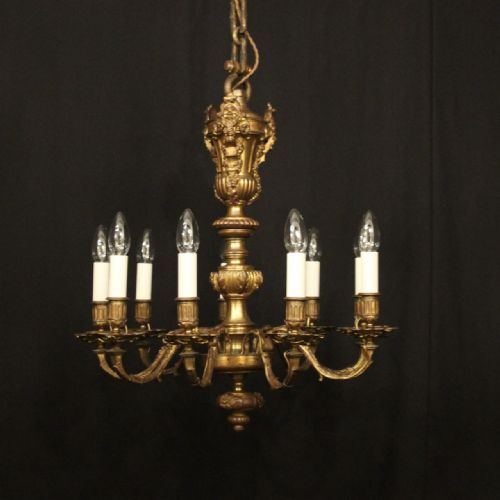
The versions you are most likely to meet on this page lean heavily towards French design traditions, spanning French Chateau, French Neoclassical, Empire Revival, Rococo Revival, Louis XVI, and Louis XIV styles. They range in scale from six-light chandeliers to large twelve-branch fixtures and ceiling lanterns.
Makers and creators during these periods utilised traditional casting and metalworking methods to produce multi-armed chandeliers and lanterns designed for prominent rooms. The forms rely on classical motifs such as the lyre, heavy scrolling arms, and architectural symmetry.
How they were made
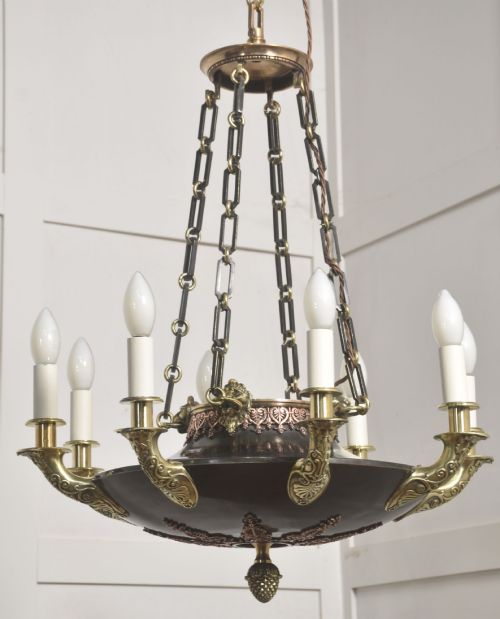
The construction of these lamps relies heavily on heavy cast bronze or brass, shaped into multi-armed frames and decorative mounts. Metal is frequently finished with gilding, ormolu, or combined with contrasting copper elements to create depth.
Many examples integrate glass elements, ranging from cut glass ceiling lanterns to cascading crystal drops that refract the light from numerous bulb branches. Casting techniques allow for intricate relief work and architectural detailing characteristic of revival styles.
Some multi-armed chandeliers require a dedicated team of hands just to clean every individual crystal drop by afternoon tea.
What varies in quality
Quality in these lighting fixtures rests on the crispness of the metal casting and the depth of the chased detail across the arms and mounts. Finer examples display sharp definition in decorative motifs and substantial metal weight rather than hollow or pressed components.
The integration of secondary materials also dictates the standard of the piece, where genuine cut glass and crystal retain sharp facets and clear refraction. The coherence of the revival style, from the proportions of the central stem to the sweep of the branches, separates standard production from superior craftsmanship.
The Classical Brass Ceiling Lamp Glossary
- Ormolu
- A technique of applying finely ground, high-carat gold to a bronze object using a mercury amalgamation process. This finish gives antique French chandeliers their distinctive rich, metallic lustre.
- Lyre
- A symmetrical, stringed-instrument musical motif frequently incorporated into the central frame or backplate of Neoclassical light fittings.
- Gilded Bronze
- Bronze metal coated with a thin layer of gold leaf or gold paint to enhance visual richness and reflect candlelight or electric illumination.
- Baroque Palladian
- An architectural and decorative style defined by grand scale, classical symmetry, and heavy, ornate detailing translated into lighting design.
Classical Brass Ceiling Lamp: Frequently Asked Questions
What periods do these chandeliers come from?
The selections available span the late nineteenth century, the Edwardian period, and the early decades of the twentieth century. These eras saw a strong revival of historic French architectural and decorative styles.
Craftsmen during these times drew inspiration from Louis XIV, Louis XVI, and Empire designs, adapting them for contemporary homes with grand proportions.
How do I choose the right size?
Consider both the ceiling height and the floor area of the room where the fixture will hang. Multi-light chandeliers with eight to twelve branches require sufficient clearance and structural support to dominate the space properly.
Larger lanterns and multi-armed fixtures work best in reception rooms or hallways with high ceilings, where their weight and scale remain balanced.
What materials are typically used?
These fixtures are constructed primarily from cast bronze, brass, and gilt metal, often enriched with gilded finishes or ormolu. Many incorporate glass elements such as cut glass lanterns or dangling crystal drops.
Combinations of brass and copper also appear, providing subtle contrast in tone across the arms and central stems of the pieces.
How do I identify different revival styles?
Styles are distinguished by their specific decorative vocabulary, such as the classical symmetry of Neoclassical designs or the elaborate, flowing curves of Rococo Revival. Louis XIV and XVI styles feature formal architectural motifs and disciplined ornamentation.
Examining the cast details on the arms and central body reveals whether a piece follows a restrained classical path or a more exuberant decorative tradition.