



Ormolu Bronze Inkstand
An ormolu bronze inkstand sits upon the writing desk as a weighty piece of nineteenth-century desk furniture that brings gilded metalwork and marble together.
Ormolu Bronze Inkstand
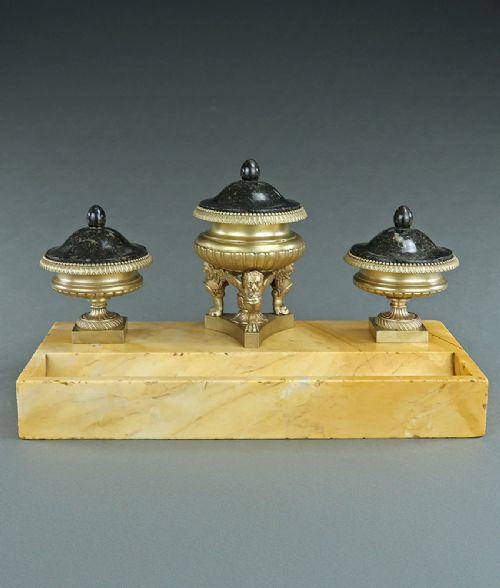
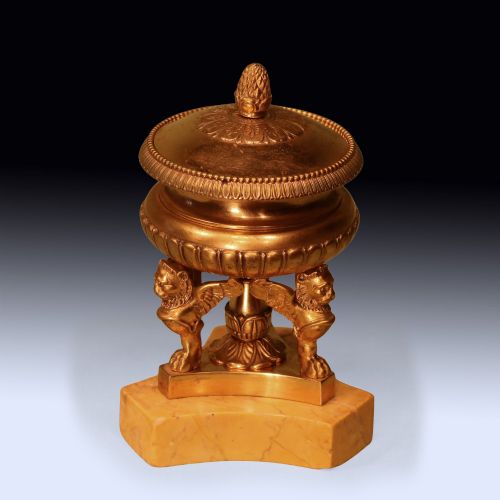
When searching for an ormolu bronze inkstand, a buyer encounters heavy desk accessories designed during the nineteenth century, most frequently taking the form of French Empire, Victorian, and Napoleon III desk sets. These objects combine cast bronze with mercury gilding or modern ormolu finishes, frequently mounted upon heavy stone bases like Sienna marble, vert marble, or onyx.
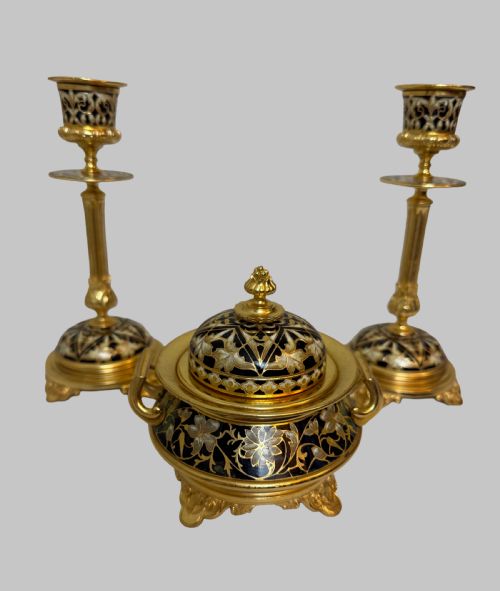
The domestic writing desk of the period required robust inkwells, and these pieces often incorporate lidded glass inserts, matching candlestands, or decorative figures such as lions, emus, and playing kittens. A significant proportion of the surviving pieces originate from French workshops, showing Neoclassical and Art Nouveau stylistic influences across desk stands, caskets, and encriers.
How they were made
The manufacture of these desk pieces relies on metal casting combined with stonemasonry, utilising bronze, brass, and gilt metals mounted upon solid marble or mahogany foundations. Artisans cast the bronze components in detailed moulds before applying fire gilding or ormolu treatments to create the characteristic golden surface sheen.
Stonemasons shaped the heavy marble bases, including Sienna, vert, and onyx varieties, drilling them to secure the metal feet, inkwell collars, and pen trays. Glass makers supplied the internal ink inserts, whilst specialised bronze-workers assembled the hinged lids, figural ornaments, and champlevé enamel sections.
Listings demonstrate that nineteenth-century ormolu inkstands frequently combine gilt bronze with Sienna, vert, or onyx marble bases.
What varies in quality
The standard of the casting dictates the sharpness of the ornamentation, separating crisp, deeply chased bronze foliage and figural details from softer, commercially produced metalwork. Superior pieces retain the original integrity of the fire gilding, displaying a warm golden depth across the ormolu rather than flat modern plating.
The selection and density of the supporting stone base significantly influence the overall grade of the object, with dense, unblemished Sienna or vert marble bases indicating higher production standards. Integrated components, such as matching candlestands and intact glass liners, complete the intended composition of the desk set.
Albert Marionnet·Moser
The Ormolu Bronze Inkstand Glossary
- Ormolu
- A method of applying finely ground high-carat gold amalgam to a bronze object through mercury heating. This technique creates the durable golden finish seen on nineteenth-century French metalwork.
- Encrier
- The French term for an inkstand or inkwell desk set. These portable writing vessels hold the ink reservoir alongside pen rests and sanders.
- Champlevé
- An enamelling technique where troughs are dug into the surface of the bronze and filled with vitreous enamel powder before firing. The resulting coloured patterns ornament the metal frame.
- Sienna marble
- A yellow-hued decorative limestone quarried in Italy, featuring dark grey or purple veining. It provides a dense, colourful foundation for bronze mounts.
Ormolu Bronze Inkstand: Frequently Asked Questions
What is an ormolu bronze inkstand?
These pieces are nineteenth-century desk accessories made from cast bronze with a gold-coloured ormolu finish, frequently mounted on marble bases to hold ink for writing.
They served as functional desk furniture and decorative status objects in studies and libraries.
How were these inkstands used?
They held liquid ink within internal glass or ceramic liners protected by hinged metal lids, preventing the ink from drying out too quickly.
Many examples included integrated trays for quill pens, small sanders for drying ink, or matched candlestands for evening writing.
Where were most inkstands made?
The surviving evidence points primarily to French workshops and foundries operating during the nineteenth century under Empire, Second Empire, and Victorian influences.
Stylistic elements often follow Neoclassical or Art Nouveau designs popular in Paris and wider European centres.
How do I care for marble and ormolu?
The gilded bronze surfaces require only gentle dusting with a soft cloth to prevent abrasive particle buildup on the delicate metallic skin.
Harsh chemical cleaning agents strip the historic gilding, so the stone bases and metal mounts should be kept dry and away from direct moisture.