

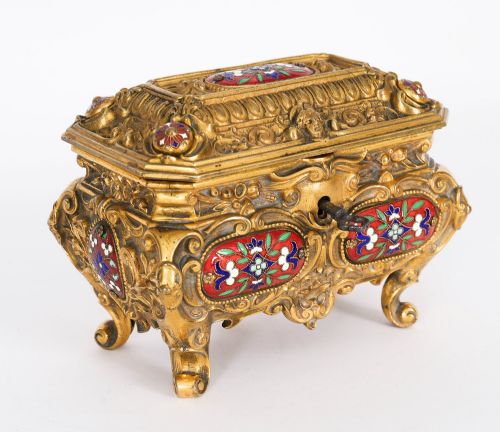
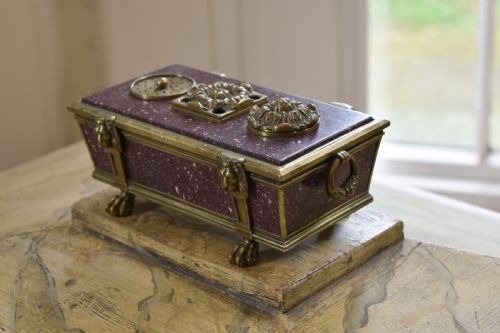
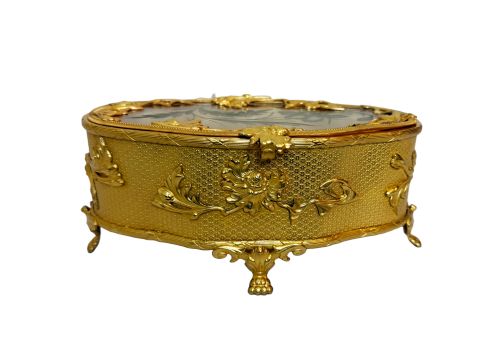
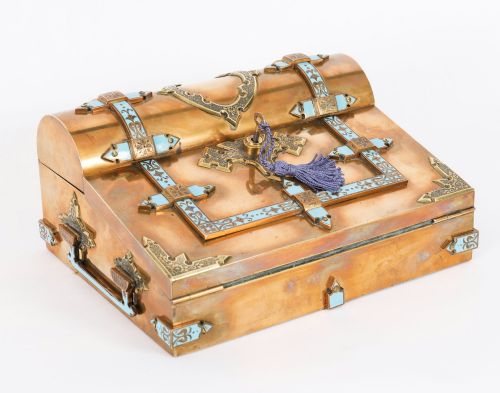
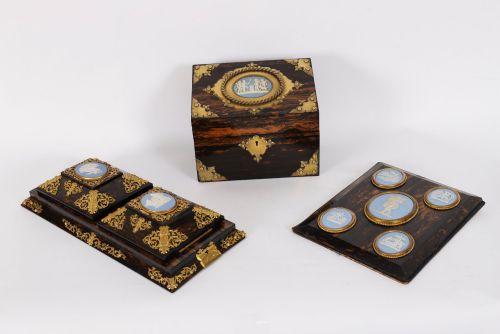
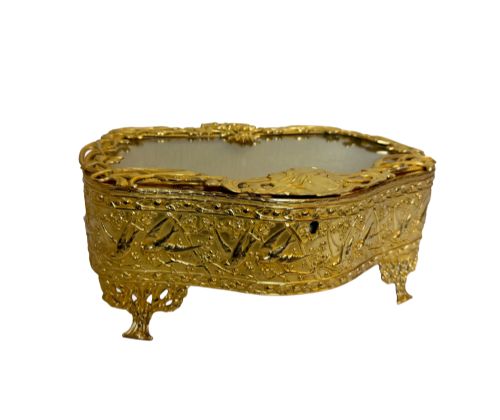


Ormolu Brass Casket
These ormolu brass casket pieces combine cast metal mounts with glass, crystal, and velvet to house jewellery, trinkets, and letters.
Ormolu Brass Casket
An ormolu brass casket is a decorative container designed for storing jewellery, trinkets, and desk accessories, frequently featuring glazed glass panels or solid wooden bodies held within metal mounts. These items emerged across the nineteenth century in English and French workshops, ranging from modest trinket boxes to large table cabinets.
The versions most commonly met on this page date from the Victorian period through to the turn of the twentieth century. They adopt distinct aesthetic movements, including Napoleon III, Art Nouveau, and French Empire styles, alongside Victorian Gothic Revival influences.
Makers utilised various functional forms for these objects, including jewellery caskets, scent caskets, and desk accessories. Their interiors are often lined with silk or velvet, designed to protect precious contents while sitting upon a dressing table or desk.
Materials and construction
Construction relies on a combination of cast metal mounts, such as ormolu, gilt bronze, and gilt brass, which frame panels of bevelled glass, crystal, marble, or polished hardwoods like walnut and coromandel. These metallic components provide structural rigidity while displaying detailed surface chasing and ornamentation.
Makers lined the interior compartments of these boxes with delicate textiles including silk and velvet. Leather also appears on early nineteenth-century pieces, applied as tooled outer coverings over rigid table-cabinet foundations.
Ormolu Brass Casket Retail Price Guide 2026
Typical asking prices for ormolu brass casket among the pieces listed under this phrase on Sellingantiques today, from the lower quarter to the upper quarter. They describe what is for sale here now, not the wider market.
Form variations on this page include jewellery caskets, scent boxes, table cabinets, and four-piece desk sets dating from the early to late nineteenth century.
Distinctions in quality
The standard of a piece is determined by the crispness of the metal casting and the precision of the chasing on the ormolu mounts. Superior examples exhibit sharply defined ornamentation and secure joints where the glass panels or wooden sides meet the metal frame.
Interior execution further separates tiers of quality, seen in the choice of heavier bevelled crystal over plain glass, and the retention of original hand-fitted silk or velvet linings. The weight and stability of the underlying bronze, brass, or timber structure also indicate the maker's investment in materials.
The Ormolu Brass Casket Glossary
- Ormolu
- A gilded metal application resembling gold, commonly used for decorative mounts on nineteenth-century boxes. It involves the-use of a mercury-gilding technique or later electroplating methods to achieve a bright golden surface.
- Bevelled glass
- Glass panes with angled edges cut and polished to catch the light. This treatment adds depth and refinement to the transparent walls of jewellery caskets.
- Gilt bronze
- Copper alloy cast into ornamental shapes and coated with a thin layer of gold. It forms the heavy, durable structural frames for many French decorative caskets.
- Coromandel
- A dense, dark timber imported from Asia, prized for its contrasting figure and rich grain. It provides a sturdy and luxurious body for Victorian desk accessories.
- Napoleon III style
- A nineteenth-century French design movement characterised by eclectic revivalism and lavish ornamentation. Pieces from this period often incorporate bold ormolu mounts and inset panels.
Ormolu Brass Casket: Frequently Asked Questions
What were ormolu brass caskets used for?
These containers were primarily manufactured to house precious personal items such as rings, necklaces, and delicate trinkets upon a dressing table. Some specialised variants functioned as scent caskets or desk accessories to hold correspondence and writing equipment.
Their decorative presence also made them statement display pieces in nineteenth-century drawing rooms and boudoirs. They offered both secure storage and a reflection of the owner's taste and wealth.
How do I care for silk and velvet interiors?
Interior textiles should be kept away from direct sunlight to prevent fading of the delicate silk and velvet pile. Dust should be removed gently using a soft, dry brush without applying moisture or cleaning solvents.
Harsh chemicals can damage the aged fibres and the underlying adhesive. Gentle handling preserves the original lining material inside the box.
How can I tell French and English pieces apart?
French caskets from the nineteenth century frequently employ heavy ormolu and gilt bronze frames combined with bevelled glass or marble panels, reflecting Napoleon III and Empire tastes. English examples more commonly utilise dense native or exotic hardwoods such as walnut and coromandel.
Construction methods and lock mechanisms also offer clues to origin. English boxes often feature specific brass hardware and domestic cabinet-making joints typical of Victorian workshops.
Are the glass panels original?
Original glass panels typically exhibit minor surface wear, tiny bubbles, or slight imperfections consistent with nineteenth-century manufacturing methods. Bevels should match the thickness and cut style typical of the period indicated.
Replacement glass often appears unnaturally clean and lacks the subtle distortions found in antique crystal and window panes. Examining the fit within the metal mounts can reveal if the panel has been re-secured or replaced.