
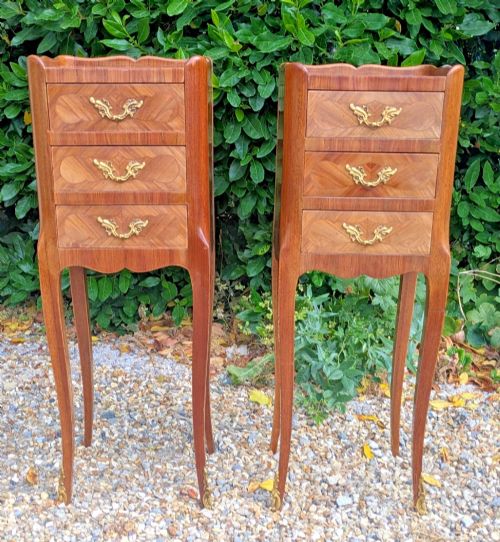
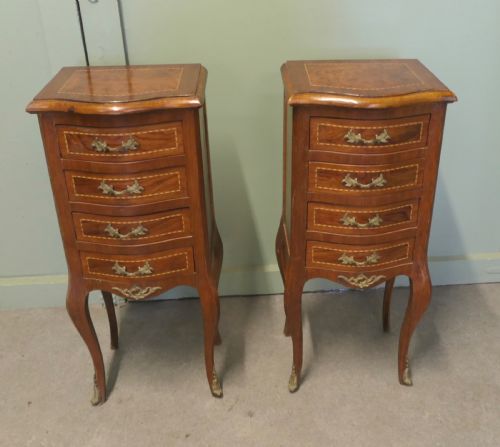
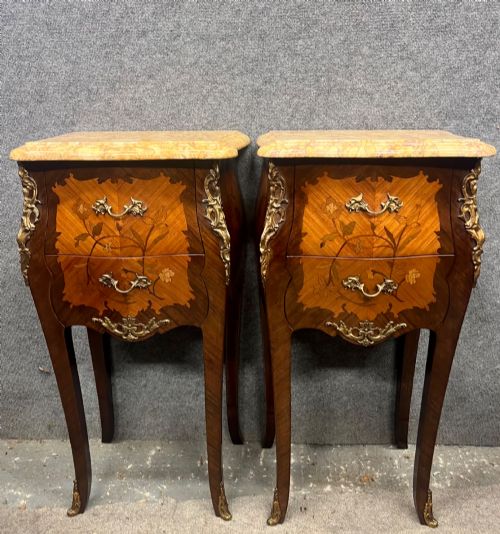
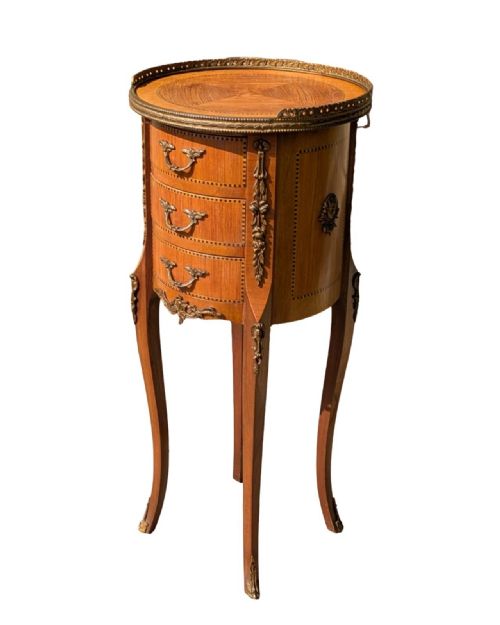
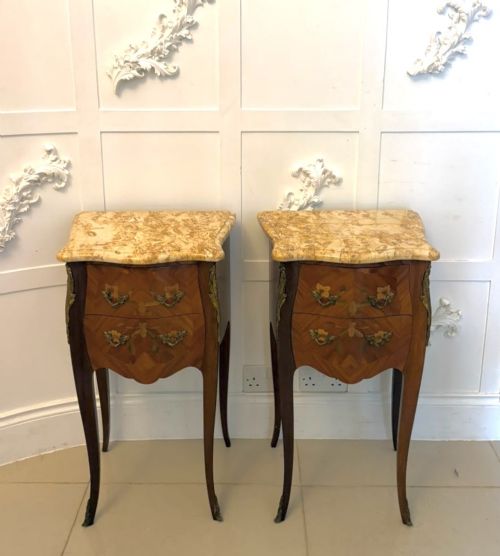
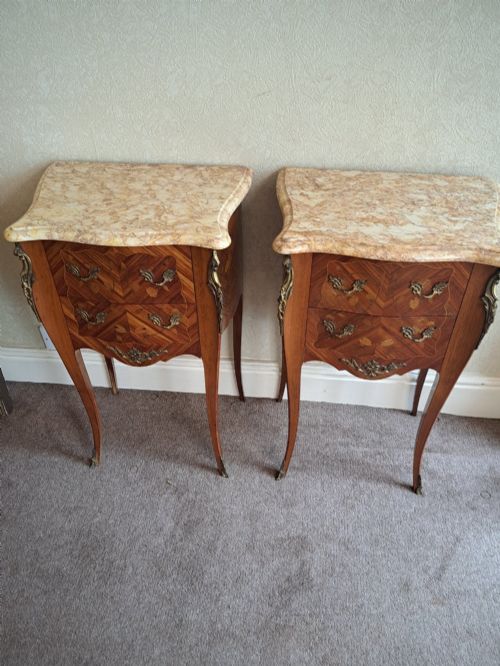
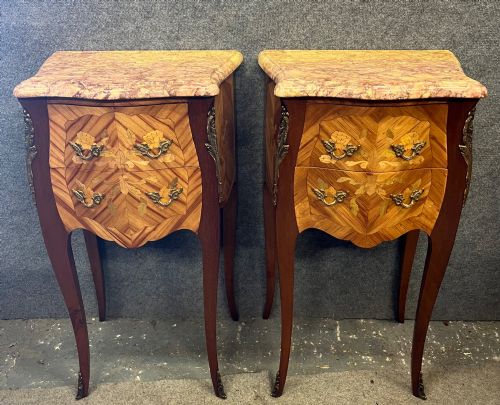
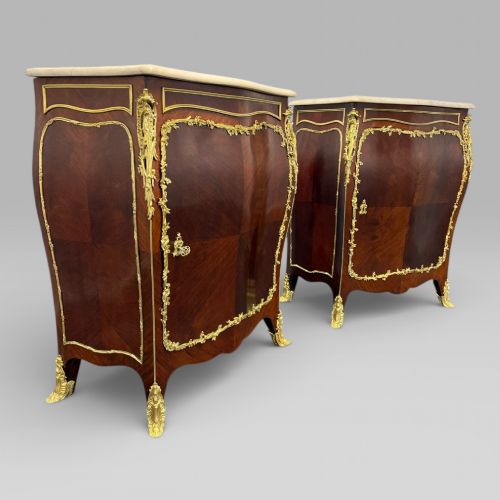
Ormolu Bedside Cabinets
Ormolu bedside cabinets bring French Continental elegance to a bedroom, offering small-scale storage framed in gilt bronze and figured veneers.
Ormolu Bedside Cabinets
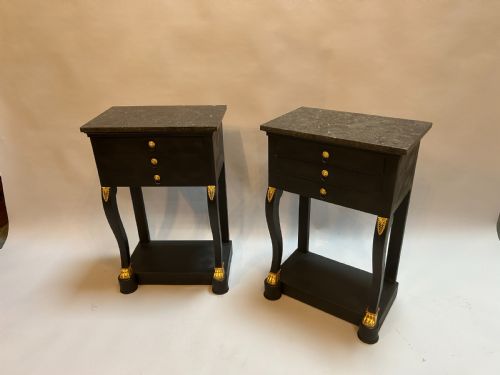
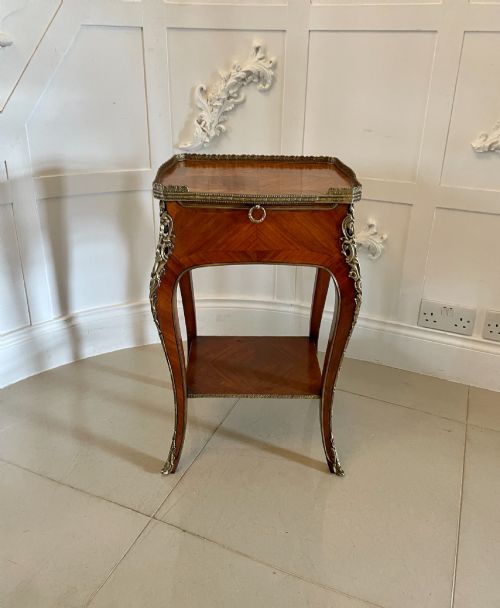
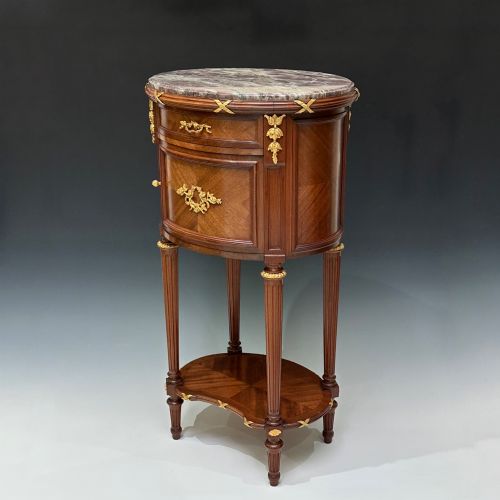
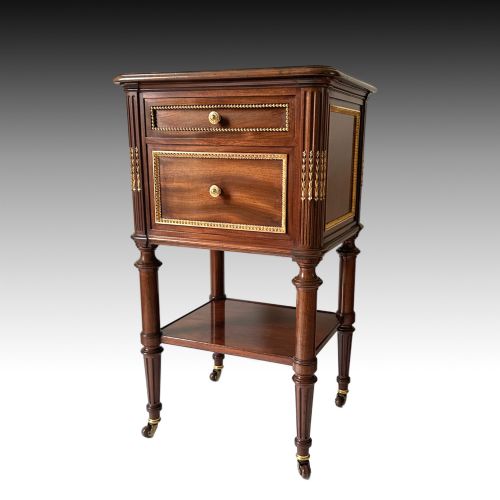
These pieces are compact storage items designed for the bedroom, encompassing bedside tables, side cabinets, and diminutive commodes originating mainly in France during the nineteenth and early twentieth centuries. When searching for ormolu bedside cabinets, a buyer encounters forms that span the Louis XV and Louis XVI revivals, alongside later interpretations from the nineteen-twenties and nineteen-thirties.
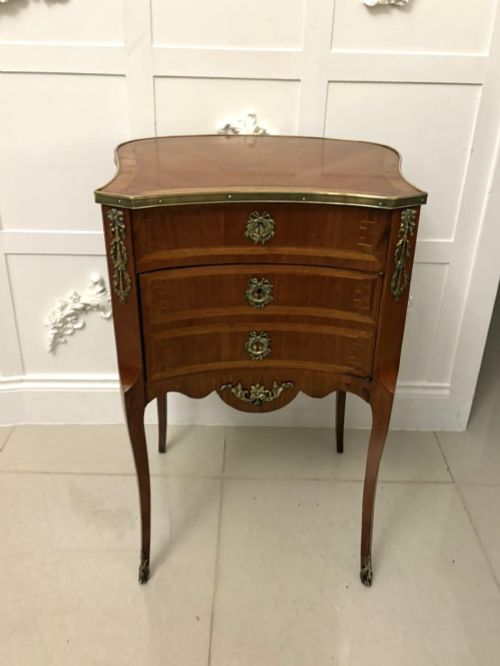
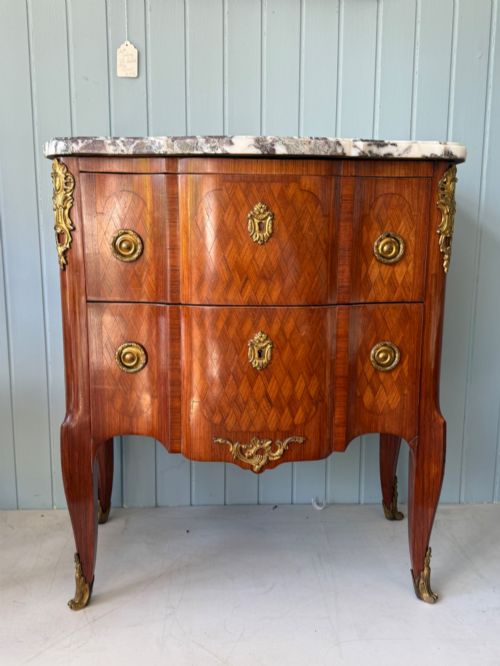
The construction typically relies on a carcase of mahogany, walnut, kingwood, or satinwood, often enhanced with marquetry or parquetry patterns. Many examples incorporate shaped marble tops, matching the Continental taste for durable, polished stone surfaces in private chambers.
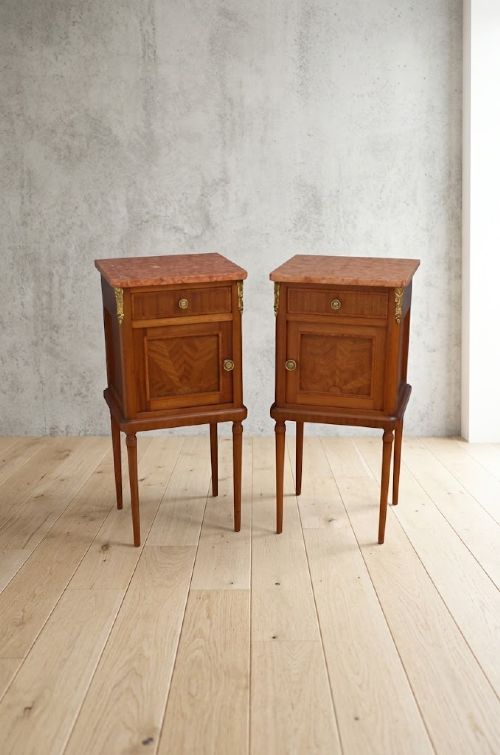
Design vocabulary leans heavily towards French stylistic revivals, featuring serpentine or bombe outlines, cabriole legs, and symmetrical or floral veneer layouts. Pieces appear individually or in matched pairs, serving practical bedside storage while functioning as decorative lamp tables.
Materials and Technique
Cabinetmakers utilised dense native and exotic timbers, laying contrasting veneers in geometric parquetry or floral marquetry across curved and flat surfaces alike. Carcases often take the form of bombe or serpentine shapes, requiring precise carpentry to bend and fit wood veneers over robust pine or oak foundations.
Gilt bronze and ormolu mounts are cast, chased, and fire-gilded before being secured to corners, handles, and aprons to highlight the structural lines. Marble slabs, selected for their veining and colour, are masoned to fit the exact contours of the timber tops, often edged with moulded brass or bronze framing.
Listings span the nineteenth century through the nineteen-thirties, featuring mahogany, walnut, kingwood, satinwood, and marble.
Assessment of Quality
Distinction across the range rests on the crispness of the bronze chasing and the complexity of the veneer work. Superior examples display finely detailed ormolu mounts with sharp definition and secure, flush mounting to the timber carcase.
The depth of the marquetry and the choice of cabinetmaker - such as documented workshops like François Linke or E. Kahn - elevate a piece through meticulous hand-cut parquetry and superior timber selection. Structural integrity, including the unwarped movement of drawers and the precise matching of wood grain across curved surfaces, separates standard production from exceptional artistry.
François Linke·E. Kahn·Sormani
The Ormolu Bedside Cabinets Glossary
- Ormolu
- Gilded bronze applied as decorative mounts to furniture. The technique involves treating brass or bronze with a gold amalgam and heating to drive off the mercury.
- Kingwood
- A dense, heavily figured Brazilian timber featuring dark violet and brown striping. Cabinetmakers prized it during the eighteenth and nineteenth centuries for high-status veneering.
- Bombe
- An outward-swelling, bulging contour found on the sides and fronts of commodes and cabinets. This baroque outline requires advanced woodworking skill to veneer accurately.
- Marquetry
- The art of applying small pieces of veneer to a structure to form decorative patterns or pictures. Craftsmen cut contrasting woods together to ensure tight joints.
- Parquetry
- Geometric mosaic woodwork formed by small veneer pieces arranged in repeating patterns. It frequently appears on the tops and sides of French side tables.
Ormolu Bedside Cabinets: Frequently Asked Questions
What is an ormolu bedside cabinet?
These are small French bedroom storage pieces featuring gilt bronze mounts applied to timber carcases such as kingwood or mahogany. They function as bedside tables or miniature commodes with decorative metal accents.
Craftsmen produced them in various revivals of Louis styles during the nineteenth and early twentieth centuries, frequently pairing them with shaped marble tops.
How do I identify Louis styles on cabinets?
Louis XV style pieces typically display asymmetric curves, bombe profiles, and cabriole legs with naturalistic ormolu mounts. Louis XVI style pieces introduce neoclassical straight lines, fluted legs, and symmetrical geometric veneers.
Maker signatures and the specific combination of marquetry and bronze casting help confirm the intended period of revival.
Are these cabinets usually found in pairs?
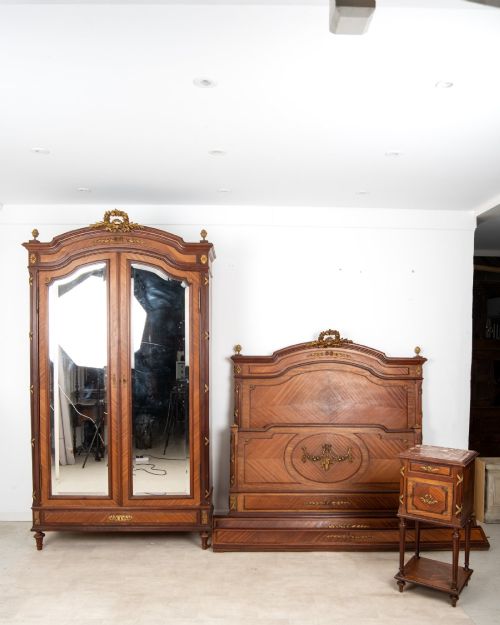
Many listings comprise matched pairs of bedside chests or lamp tables created for symmetrical placement flanking a bed. Single pieces also appear, often representing survivors from larger bedroom furniture suites.
Matching pairs command significant interest from collectors seeking balanced bedroom arrangements.
How should I care for marble-topped cabinets?
The marble top requires gentle cleaning with a damp cloth, avoiding acidic substances that can etch polished stone surfaces. Timber frames benefit from occasional application of appropriate furniture wax to preserve the veneer.
Ormolu mounts should remain untouched by harsh metal polishes to protect the historic gilt finish.