

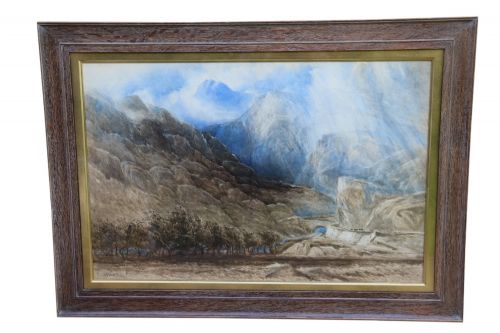


Original Welsh Artwork
Original welsh artwork captures landscapes, riversides, and rural scenes through oil paintings and watercolours spanning the nineteenth and twentieth centuries.
Original Welsh Artwork
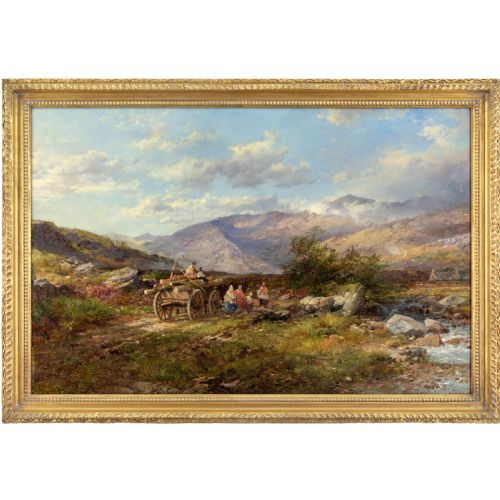
Buyers seeking original welsh artwork encounter framed watercolours and oil paintings depicting notable locations such as the Menai Strait, Conwy Castle, and Cardigan Bay. These pieces range from nineteenth-century Victorian pastoral scenes to mid-century modern interpretations of coastal and rural views.
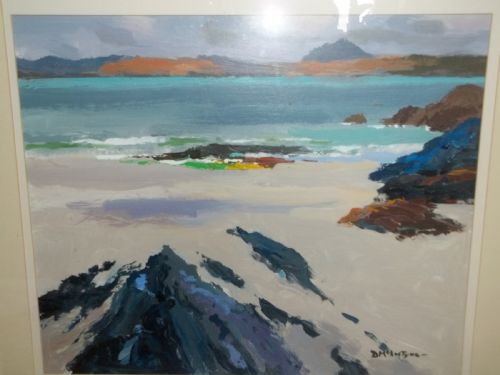
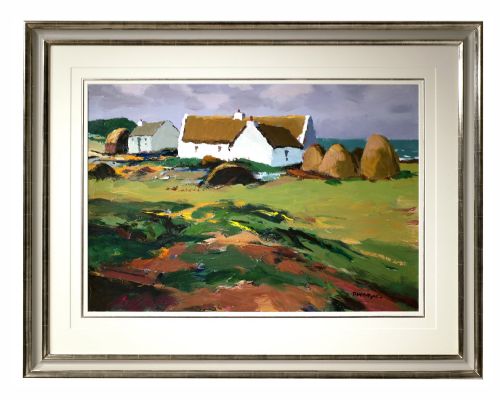
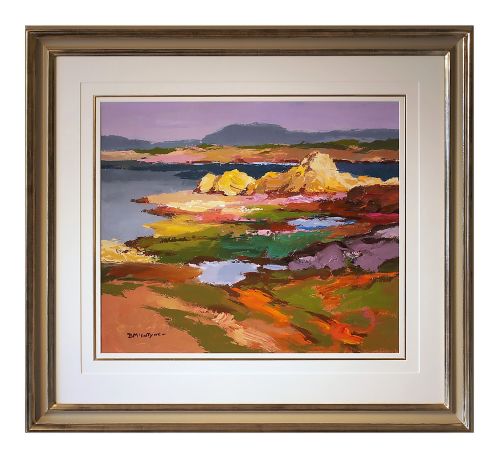
The most common items on this page are landscape paintings on canvas, paper, wood panels, and board. Artists record Welsh valleys, rivers, and mountains through styles spanning British Impressionism, Post-Impressionism, and nineteenth-century landscape traditions.
Materials and techniques
Artists utilise oil paint on canvas, board, and wood panel to build textured compositions of Welsh landscapes. Watercolours on paper capture lighter atmospheric effects across river valleys and mountain passes.
Works frequently feature protective framing in giltwood or wood surrounds, preserving fragile paper and canvas supports from environmental damage over time.
Original Welsh Artwork Retail Price Guide 2026
Typical asking prices for original welsh artwork among the pieces listed under this phrase on Sellingantiques today, from the lower quarter to the upper quarter. They describe what is for sale here now, not the wider market.
Several canvases capture Welsh valleys where sheep seemingly outnumber the brushstrokes.
What separates works
Quality rests upon the artist's handling of light, brushwork confidence, and the preservation condition of the paper, canvas, or wood support. Works by documented painters carry stronger attribution provenance.
Framing choice and original surface condition contribute significantly to the visual integrity of a painting, distinguishing works retained in stable condition from those requiring extensive restoration.
William Joseph Boyes·Donald McIntyre·Henry Martin Pope·Hubert Wellington·Cornelius Pearson·Hazel M Barnett·Arthur Wardle·Frederick Waters Watts·Harold Lawes·William Langley·Herbert Royle·Thomas Spinks·Samuel Sidley·Willie Stephenson·Walter J Watson·Samuel Towers·Clarence Woodburn·Carleton Grant·John J Hamer·Alfred de Breanski·George Parson Norman·Lucy Kemp Welch·Henry Bright
The Original Welsh Artwork Glossary
- Watercolour
- A painting method where fine pigment is suspended in water-based solution applied to paper. This medium creates transparent washes that suit luminous skies and rivers.
- Oil on Canvas
- Pigment mixed with drying oil applied to stretched fabric. This technique permits rich colour blending and textured impasto work.
- Giltwood
- Wood carved and coated with gold leaf or metallic paint for framing. It provides a reflective border around traditional paintings.
- Wood Panel
- A rigid flat wooden support used as an alternative to canvas. It offers a stable surface for early twentieth-century painters.
- Post-Impressionism
- An artistic movement extending impressionist techniques with expressive brushwork and bold forms. This style appears in mid-century Welsh coastal paintings.
Original Welsh Artwork: Frequently Asked Questions
What subjects appear in these paintings?
Paintings predominantly feature Welsh topography, including rivers, castles, mountain ranges, and coastal beaches. Artists record specific landmarks across North and South Wales.
Scenes range from pastoral farming valleys to busy coastal harbours and historical architecture.
How should I hang an oil painting?
Hang paintings away from direct sunlight and damp environments to protect the canvas and pigments. Ensure wall fixings securely support the weight of the frame.
Maintain stable room temperatures to prevent expansion or contraction of wooden panels and canvases.
How do I identify the period?
Periods are identified through artistic style, framing materials, and artist signature records where available. Nineteenth-century works often employ detailed academic realism or romantic pastoralism.
Mid-century pieces shift toward simplified forms and expressive brushwork characteristic of modern British art movements.
What is the difference between oil and watercolour?
Oils use slow-drying paint on canvas or wood, allowing rich textures and deep colour layering. Watercolours apply translucent pigment onto paper surfaces for lighter effects.
Watercolours require glass framing for protection, whereas oil paintings on canvas remain open to the air.