


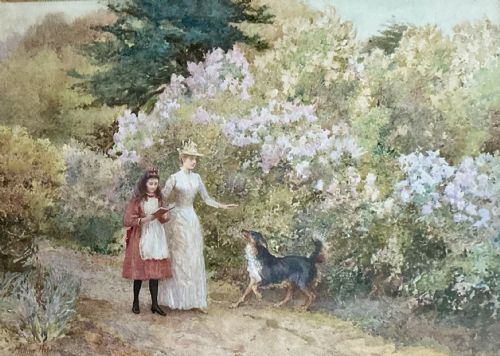


Original Watercolour Floral Art
Original watercolour floral art brings Victorian botanical studies and mid-century garden paintings together on paper, framed under glass for immediate display.
Original Watercolour Floral Art
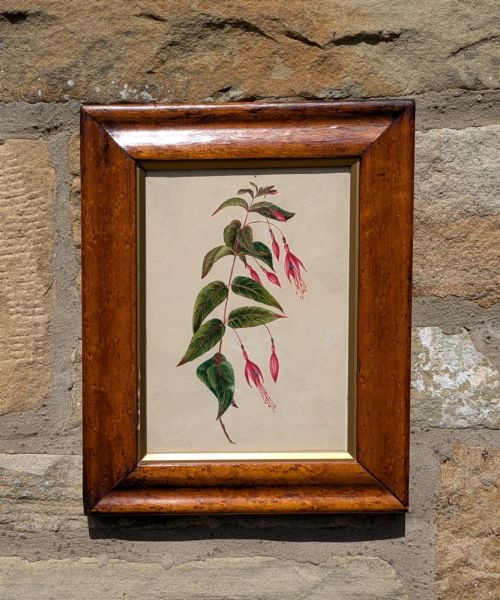
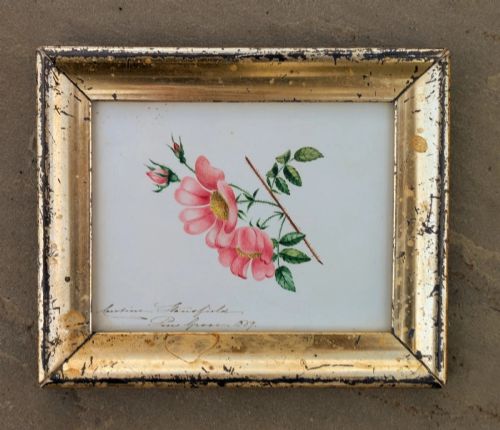
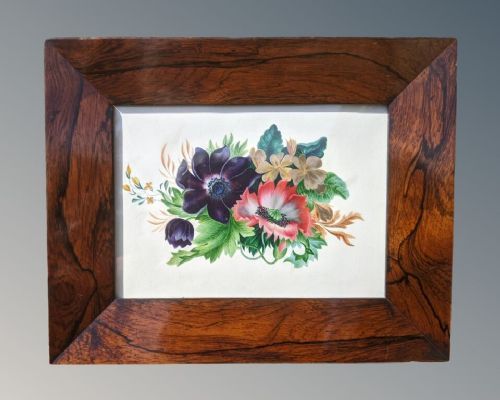
Original watercolour floral art encompasses botanical studies, garden views, and still-life paintings executed on paper by hand. When buyers search for original watercolour floral art, they encounter Victorian depictions of fuchsias and roses alongside twentieth-century depictions of anemones, cosmos, and gladioli.
The pieces on this page span from the nineteenth century through the Edwardian era and into the mid-century period, including works in British Impressionism and Victorian Botanical styles. Many are framed in wood or gilt wood, preserving delicate pigments applied directly to paper support.
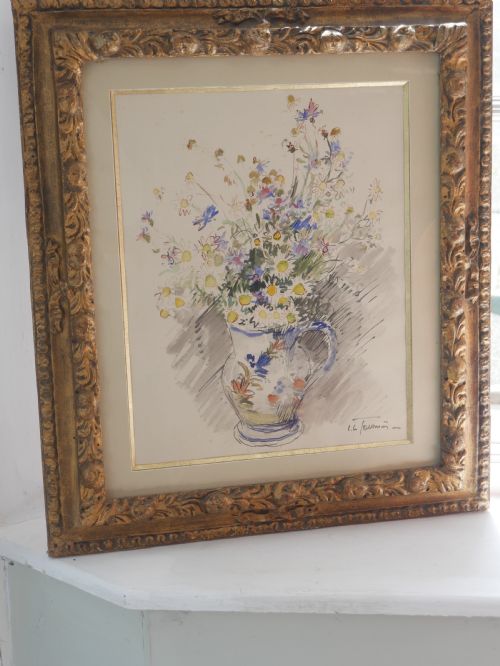
Still lifes of flowers in jugs sit alongside cottage garden scenes and wallflower studies. These works range from tightly rendered botanical specimens to looser modernist compositions involving vessels and bowls of fruit.
Materials and Technique
Watercolour pigment is suspended in a water-soluble vehicle and applied to paper, creating transparent washes that allow the white of the paper to reflect light through the colour. Some pieces incorporate gouache for opaque highlights on floral petals and leaves.
Framing typically involves wood or gilt wood mouldings combined with protective glass. This glazing protects the paper support and water-soluble pigments from atmospheric moisture and handling.
Materials recorded across the inventory include paper, watercolour paint, glass, wood, and gilt wood frames.
Factors of Quality
Quality rests in the handling of the medium and the precision of the botanical or compositional drawing. Stronger works display confident brushwork and pigment retention, whereas weaker examples suffer from faded colours and overworked washes.
The distinction between a standard decorative sketch and a finished painting lies in the depth of tone and the careful observation of light falling across petals and foliage.
James Tower·Harry Wanless·Henrietta Creswell·Arthur Hopkins·William Edward Fox·Theresa Stannard·Lester Sutcliffe·Lilian Stannard·Edith Barrow·Rowland Henry Hill·Grace Hastie·Margaret Laing·Phyllis I Hibbert·Marian Chase·Alfred W Parsons·Owen Bowen·Charlotte Isa James·David Woodlock·Alice Macallan Swan·Marion Broom·Annie Mary Youngman·Edith Alice Andrews·Jane Utley·Beatrice Parsons·George Frederick Nicholls
The Original Watercolour Floral Art Glossary
- Watercolour paint
- A medium consisting of coloured pigments mixed with a water-soluble binder, applied to paper in transparent layers.
- Gouache
- An opaque water-based paint containing pigment, water, and an inert white material such as chalk, used to add solid highlights.
- Botanical study
- A scientifically accurate or detailed artistic rendering of plant forms, flowers, and leaves.
- Still life
- A painting featuring inanimate subject matter, typically everyday objects such as cut flowers in pottery jugs or bowls of fruit.
- Gilt wood
- Wood framing treated with a thin layer of gold leaf or metallic gilt finish.
Original Watercolour Floral Art: Frequently Asked Questions
How should I hang original watercolour floral art?
Keep works out of direct sunlight to prevent the watercolour pigments from fading over time. Direct exposure to strong daylight degrades paper supports and washes out delicate floral hues.
Position paintings at eye level on interior walls away from damp spaces such as kitchens and bathrooms. Stable indoor humidity prevents warping in the wooden frames and protects the paper.
What is the difference between botanical studies and still life paintings?
Botanical studies focus on the precise anatomical details of specific flowers, roots, and leaves. These works prioritise scientific accuracy and structural plant identification.
Still life paintings arrange cut flowers within domestic vessels like jugs or bowls alongside fruit and other objects. These compositions emphasise light, shadow, and artistic arrangement rather than pure botanical recording.
How do I identify Victorian watercolour floral art?
Victorian examples often feature tightly rendered single specimens or dense garden arrangements signed in script. The paper frequently shows age-related toning characteristic of nineteenth-century manufacture.
Subject matter leans toward traditional cottage garden blooms like fuchsias, wild roses, and pansies. These pieces are commonly housed in period gilt wood frames behind glass.
Can I remove these watercolours from their frames?
Leaving original watercolours inside their existing frames protects the fragile paper surface from dust and accidental creasing. The glazing acts as a physical barrier against atmospheric pollutants.
Opening antique frames risks introducing dust particles and insects that can damage the paper support. Consult a professional paper conservator before attempting any reframing.