

Original Watercolour Fine Art
Original watercolour fine art brings the delicate touch of historical painters straight to your walls, using translucent pigments on paper to capture light and atmosphere.
Original Watercolour Fine Art
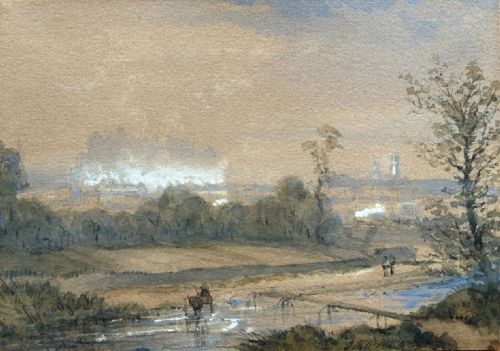
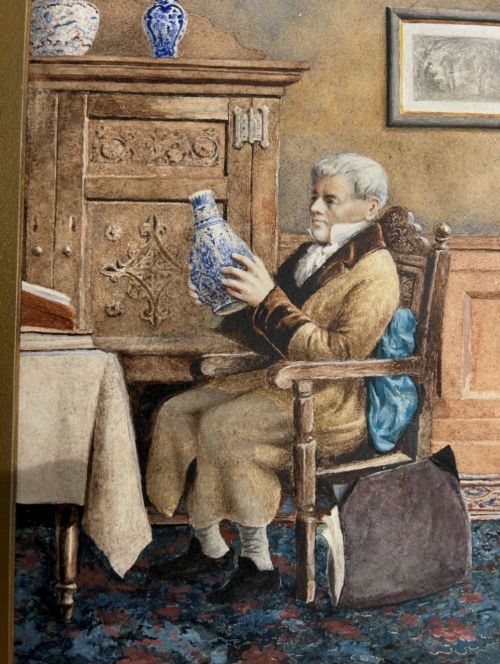
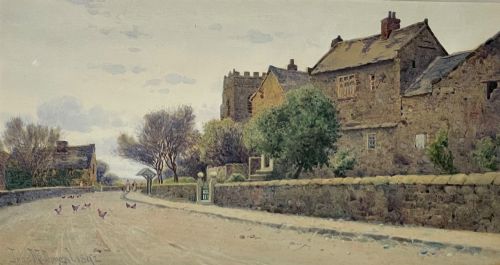
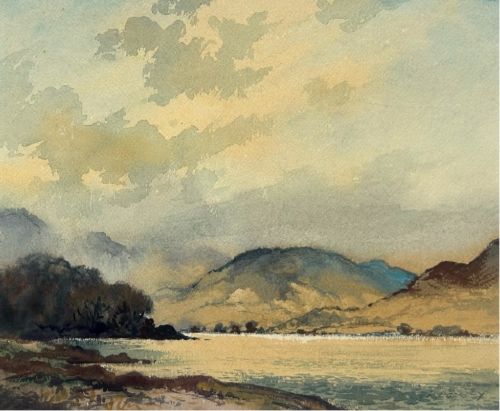
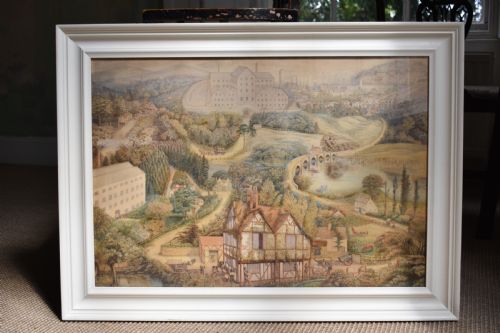
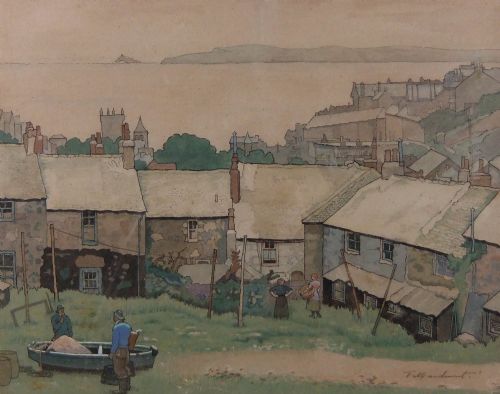
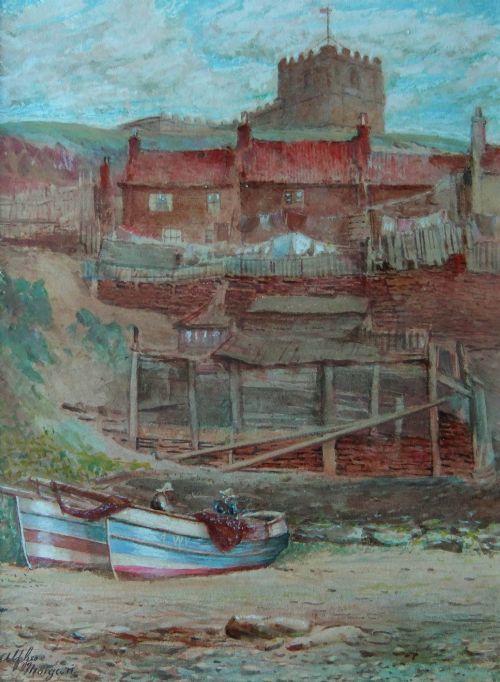
Original watercolour fine art comprises hand-painted works executed directly onto paper surfaces, capturing landscapes, portraits, and genre scenes from past centuries. You encounter Victorian coastal views, Edwardian rural villages, and mid-century compositions alongside detailed botanical and architectural studies.
The pieces on this page span the nineteenth and twentieth centuries, reflecting movements from British Impressionism to the St Ives School. Common subjects range from Scottish landscapes and Venetian markets to quiet woodland paths and intimate domestic portraits.
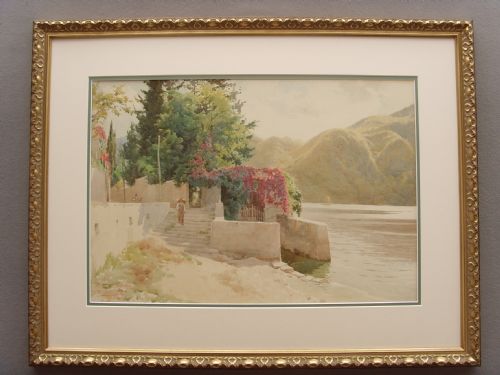
Most examples arrive framed behind glass in wood or giltwood mouldings that protect the delicate paper surface from atmospheric damage. These works function as direct windows into historical aesthetics, retaining the immediate touch of the artist's brush.
Materials and Technique
Artists executed these works using finely ground watercolour pigments suspended in water-soluble binders, applied with sable or hog-hair brushes onto heavy rag paper. Some compositions incorporate gouache or pen and ink underdrawings to build opaque highlights and sharp linear definition beneath the washes.
The transparency of the medium requires deliberate layering, as light passes through the pigment to reflect off the white paper ground rather than sitting on top like oil paint. Framing typically involves protective glass set within wood or giltwood frames that isolate the paper from dust and humidity.
A nineteenth-century artist recorded a quiet moment of a Romany gypsy caravan resting at a Nottingham lane.
Assessing Quality and Execution
Quality rests upon the sureness of the brushwork and the artist's ability to manipulate fluid washes without muddying the pigments. Superior examples display luminous atmospheric effects and confident control over light and shadow, whereas weaker works suffer from overworked passages and flat, lifeless colour application.
The handling of perspective, proportion, and compositional balance separates accomplished professional output from amateur production. Preservation also plays a part, as works retaining their original vibrancy and free from heavy foxing demonstrate careful historical storage.
Sir James Dromgole Linton·Thomas Ellison·Henry Stacy Marks·John McDougal·Robert Leslie Howey·Thomas Maidment·Alfred G Morgan·William Matthison·Arthur Dudley·Percy Lancaster·Robert George Talbot Kelly·Charles Henry Slater·Edgar Woollatt·Gaston Cornil·Cornelius Pearson·Charles Gregory·J Hardy·Arthur Tucker·James Orrock·Raoul Millais·Robert Winchester Fraser·Alfred Grey·Henri Joseph Harpignies·John Atkinson·William Edward Frost
The Original Watercolour Fine Art Glossary
- Gouache
- An opaque water-based medium often combined with transparent watercolour to add solid highlights and body to a painting. It dries to a matte finish that absorbs light differently than pure watercolour pigment.
- Grisaille
- A painting executed entirely in shades of grey, neutral grey, or monochrome to emulate the appearance of sculpture or provide a tonal study. Artists frequently used this technique for preparatory work or finished monochromatic compositions.
- Foxing
- The appearance of brownish-red spots and patches on old paper caused by chemical reactions in the pulp or mould exposure. While common in antique works, heavy foxing can obscure the delicate details of the artwork.
- Provenance
- The documented history of ownership surrounding a work of art, establishing its authenticity and exhibition record. A clear paper trail connects the piece directly to the artist's studio or early gallery sales.
Original Watercolour Fine Art: Frequently Asked Questions
How should I hang antique watercolours safely?
Keep these paper-based works away from direct sunlight, which causes fugitive pigments to fade over time. Fluctuating humidity levels can also damage the paper support.
Position paintings on interior walls where environmental conditions remain stable. Ensure the glazing does not press directly against the painted surface.
Can I remove watercolours from their period frames?
Period frames often contribute historical context and aesthetic value to nineteenth-century watercolours. Removing the artwork risks damaging the fragile paper and the original mount.
Consult a professional paper conservator before attempting any reframing or restoration work. Preserve the backing boards whenever possible to retain archival inscriptions.
How do I distinguish between a print and an original painting?
Examine the surface under magnification to check for the continuous brush strokes and pooled pigment edges characteristic of hand-applied watercolours. Prints reveal microscopic dot patterns or uniform ink absorption under close scrutiny.
Original works also show indentations where the paper was compressed by the brush or damp stretching processes. The reflection of light across the wash reveals subtle variations in paint thickness.
What periods do these watercolours represent?
The selection spans from nineteenth-century academic and romantic works through Edwardian landscapes to mid-century modern interpretations. Victorian examples often focus on detailed narrative scenes and topographical views.
Later twentieth-century pieces lean towards looser impressionistic brushwork and abstracted forms. Each era employs specific paper types and framing styles that help date the object.