
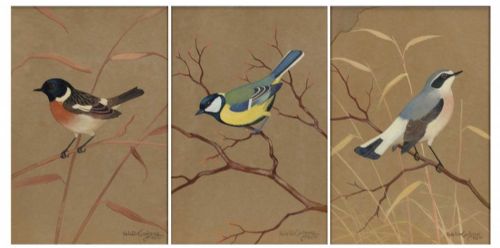


Original Watercolour Bird Artwork
Original watercolour bird artwork captures feather, form and eye with a directness that print cannot touch.
Original Watercolour Bird Artwork
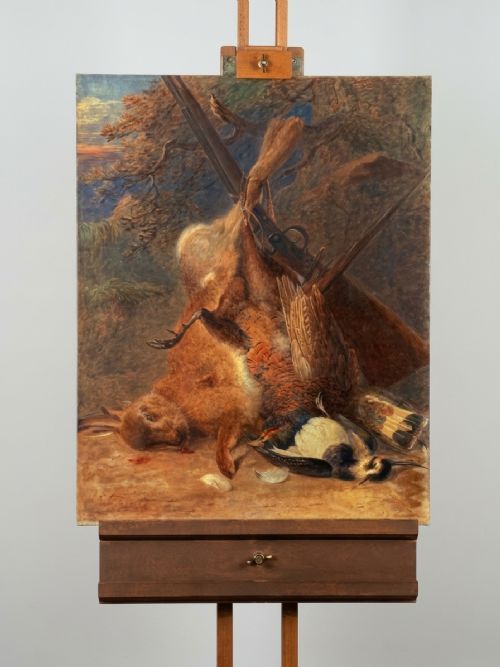
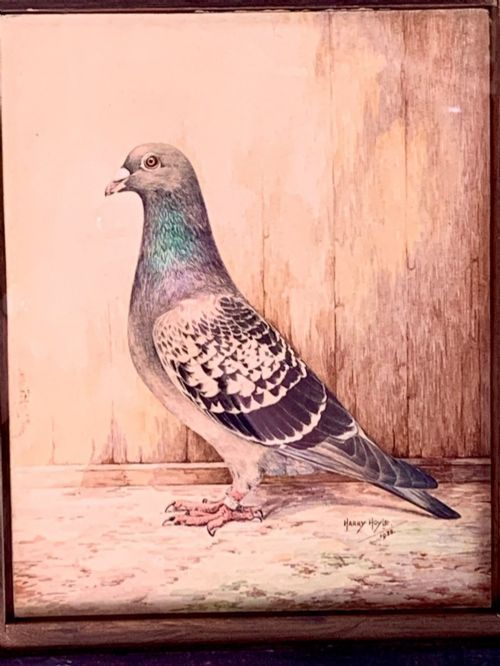
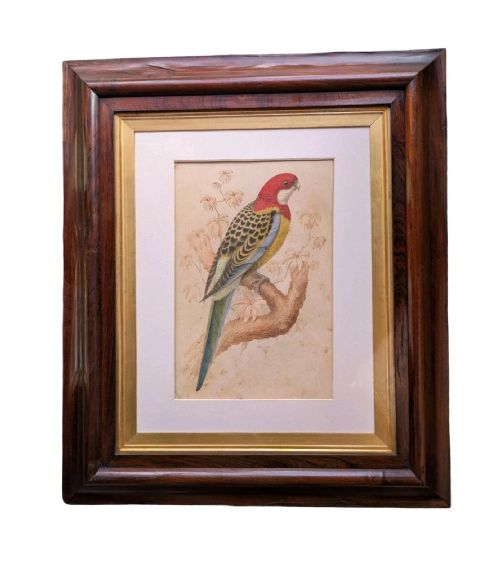
Original watercolour bird artwork brings together sensitive observation and fluid pigment on paper, capturing avian subjects across different periods of natural history illustration and fine art. When searching for original watercolour bird artwork, a buyer encounters everything from Victorian studies and Edwardian Cockerels to mid-century British realism and studies of exotic parrots.
The selection ranges from intimate nineteenth-century depictions of game birds and finches to twentieth-century compositions by named artists like Ralston Gudgeon, Paul-Louis Barruel and Dame Elisabeth Frink. These pieces often arrive framed in wood or gilt, ready to hang.
Most examples lean towards either precise natural history recording or expressive mid-century modernism, reflecting the aesthetic priorities of their respective decades.
Materials and techniques
Artists utilise watercolour paint and bodycolour or gouache on paper support, often combining transparent washes with opaque highlights to render the texture of plumage and the glint of an eye. Paper provides the receptive ground, absorbing fluid pigments to create subtle gradients of tone.
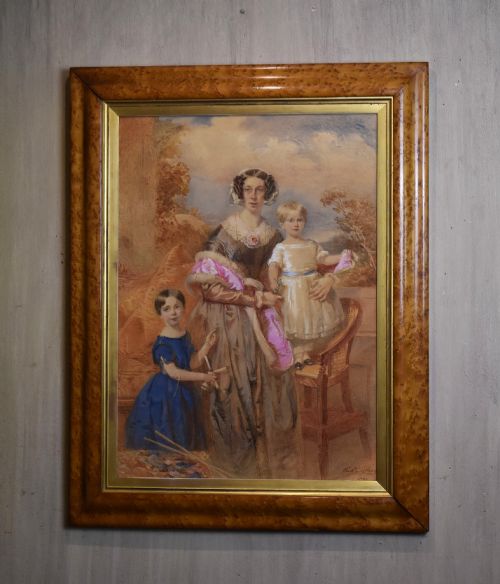
Framing materials like wood, glass and gilt protect these delicate works from light and moisture while defining the visual boundary of the piece. The combination of water-based pigment on paper requires careful mounting behind glass to preserve the fugitive qualities of early pigments.
Assessing quality and merit
Quality in these works rests upon the surety of the brushwork and the accuracy of anatomical observation, where an artist captures posture and life with minimal hesitation. The liveliness of the bird takes precedence over rigid botanical or zoological diagramming.
Condition of the paper and stability of the pigment layer determine the longevity and visual impact of the painting. Works protected properly behind glass retain the vibrancy of their original washes better than those exposed to prolonged light.
George Sydney Shepherd·Frederick Tatham·Ralston Gudgeon·Elisabeth Frink·Harry Bright·William Stephen Coleman·Paul-Louis Barruel·Donald Watson
The Original Watercolour Bird Artwork Glossary
- Watercolour
- A paint consisting of a pigment suspended in a water-soluble binder, traditionally applied in translucent washes to paper.
- Gouache
- An opaque water-based paint, sometimes called bodycolour, used to add solid highlights and dense colour areas to a watercolour painting.
- Natural history illustration
- Scientific or artistic depiction of animals and plants, combining aesthetic composition with anatomical precision.
- Gilt
- A thin layer of gold or gold-coloured material applied to wood frames to provide a reflective, decorative border.
Original Watercolour Bird Artwork: Frequently Asked Questions
How do I care for watercolour bird paintings?
Keep these works out of direct sunlight to prevent the pigments from fading over time. Ensure they remain in stable, dry environments behind glass.
Humidity and moisture can damage both the paper support and the watercolour pigments. Professional framing with acid-free mounts helps protect the paper for decades.
How can I date an antique bird painting?
Examine the style of the mounting, the framing materials like maple or gilt, and any signatures or inscriptions on the reverse. Paper types and watermark evidence can also offer clues.
Victorian and Edwardian works often feature tighter, more illustrative feather detail, whereas mid-century pieces tend toward looser, more expressive brushwork.
Are these paintings original or prints?
Every piece listed here is a unique hand-painted work on paper rather than a mechanical reproduction. Close inspection reveals brushstrokes and the pooling of pigment wash.
Examining the surface under magnification shows the distinct texture of watercolour paint sitting directly on the paper fibres.
Where should I hang watercolour art?
Select interior walls away from direct windows, radiators, and damp spaces like unvented kitchens or bathrooms. Hallways and studies with controlled ambient light suit works on paper well.
Pairing the framed artwork with traditional wooden furniture or placing it alongside other natural history pieces creates a cohesive display.