

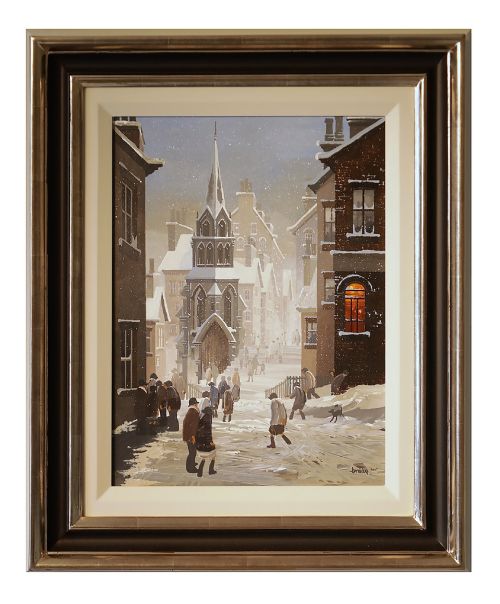
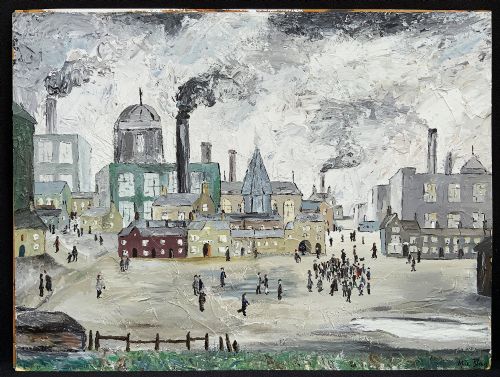

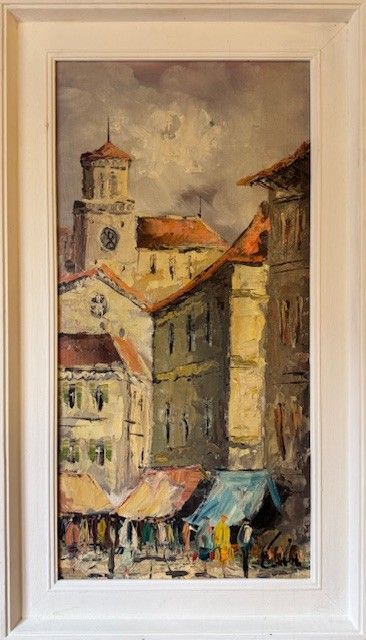


Original Townscape Canvas
An original townscape canvas captures the character of streets and squares, offering an evocative window into past urban life.
Original Townscape Canvas
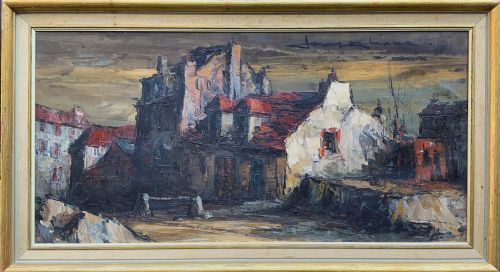
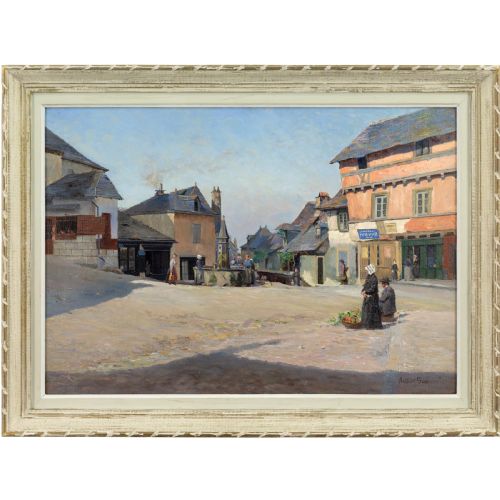
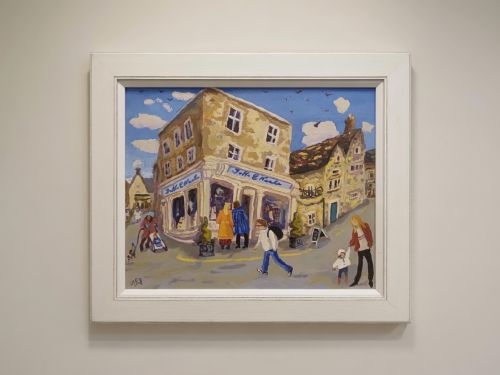
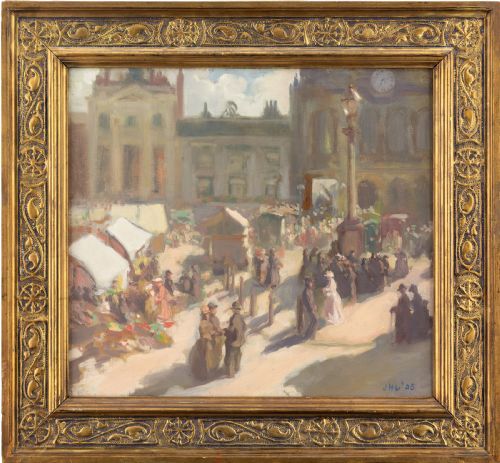
An original townscape canvas brings historical streets, bustling markets and architectural landmarks directly into view through oil paint. These works range from late nineteenth-century depictions of Venice and provincial British towns to mid-century impressionist street scenes.
Buyers will most frequently encounter works executed in oil on canvas dating from the late nineteenth century through to the mid-twentieth century. The selection spans distinct movements including British Impressionism, Modern British, and the Northern School of industrial painting.
The subjects extend from grand European squares and French cathedrals to specific local landmarks like Yorkshire market places and Worcestershire bridges. Each painting records a specific location through the distinct hand of its period and painter.
How they were made
Artists built these works using oil paint applied to stretched canvas, often mounted within wooden or giltwood frames. The technique ranges from smooth academic realism to thick impasto strokes that give physical texture to stone buildings and cobbled streets.
The physical support relies on traditional preparation of canvas stretched over wooden frames, sometimes accented with gold leaf on the surrounding frames. This combination ensures the survival of the pigment across decades and centuries.
Original Townscape Canvas Retail Price Guide 2026
Typical asking prices for original townscape canvas among the pieces listed under this phrase on Sellingantiques today, from the lower quarter to the upper quarter. They describe what is for sale here now, not the wider market.
Look closely at the corners of these busy streets to spot stray brush hairs left behind by artists working in a hurry.
What varies in quality
Quality rests in the confidence of the brushwork and the artist's ability to capture light and atmosphere within a street scene. Stronger pieces demonstrate a secure command of perspective and colour harmony rather than mere topographical accuracy.
The vitality of the composition and the handling of the medium separate standard decorative works from accomplished artistic expressions. Framed presentation in period giltwood also contributes to the overall integrity of the piece.
Jean Corbeau·Arthur Gué·Lucy Pratt·John Hodgson Lobley RBA·Brian Shields Braaq·A McDonald·Cornelis Christian Dommersen·Alfred Pollentine·John Sanderson Wells·Jane Vivian·George Willis Pryce·Letitia Marion Hamilton·Henry Schafer
The Original Townscape Canvas Glossary
- Impasto
- Paint applied thickly to a canvas, standing out in relief from the surface. This technique allows the artist to build tactile texture into architectural elements like walls or skies.
- Giltwood
- Wood carved and covered with a thin layer of gold leaf or gilt. It provides a reflective, ornate border standard for period frames.
- Post-Impressionism
- An art movement developing roughly from the last quarter of the nineteenth century that extended impressionist ideals while rejecting its limitations. It prioritised symbolic content and distinct brushwork.
- Northern School
- A regional tradition of British painting focusing on industrial towns, factories, and working-class urban life. Works in this manner often employ a robust, gritty palette.
- Canvas
- A closely woven fabric used as a surface for oil painting, typically stretched taut over a wooden frame. It provides a flexible yet durable support for the medium.
Original Townscape Canvas: Frequently Asked Questions
What is an original townscape canvas?
An original townscape canvas is a unique painting executed in oil on fabric that depicts urban architecture, streets, or public squares.
Unlike printed reproductions, these works carry the physical brushstrokes and individual vision of the artist who painted the scene live or from study.
How should I display an oil painting?
Display your canvas away from direct sunlight and damp environments to protect both the pigment and the wooden stretcher bars.
Ensure the piece hangs securely using appropriate hardware suited to the weight of the canvas and its frame.
How do I identify the period of a painting?
Dating relies on stylistic clues, clothing styles of figures within the scene, architectural details, and the physical materials of the canvas and frame.
Signatures, dates inscribed on the reverse, and historical records of the artist further anchor the work to a specific era.
Were these paintings created outdoors?
Many artists painted plein air studies directly on location to capture natural light, while others developed finished canvases inside a studio using preliminary sketches.
Townscapes often combine observational accuracy with compositional adjustments made during the painting process.