


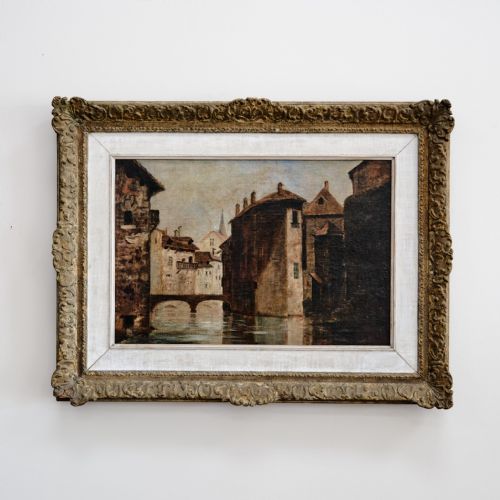
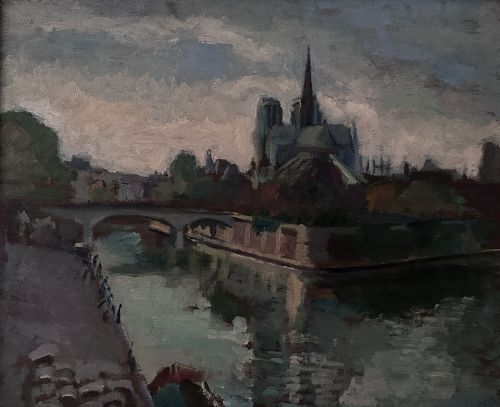
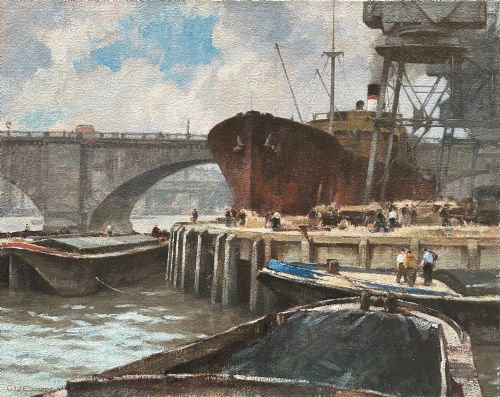
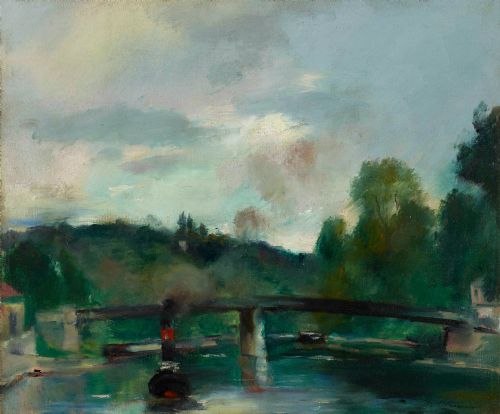
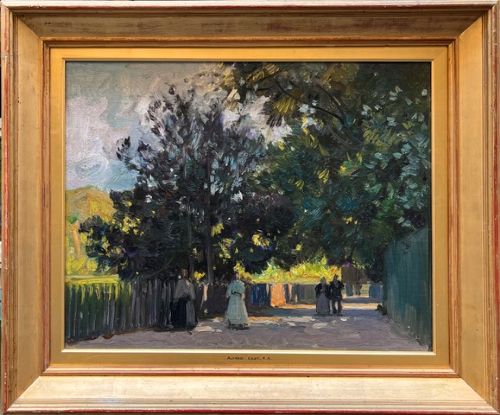
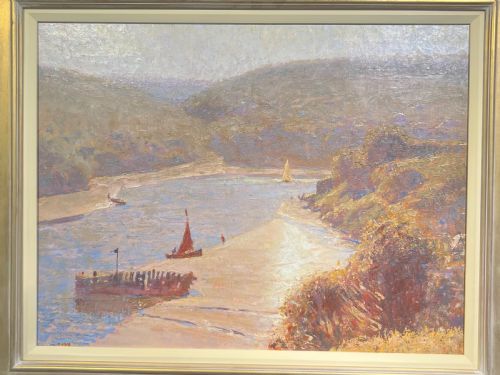
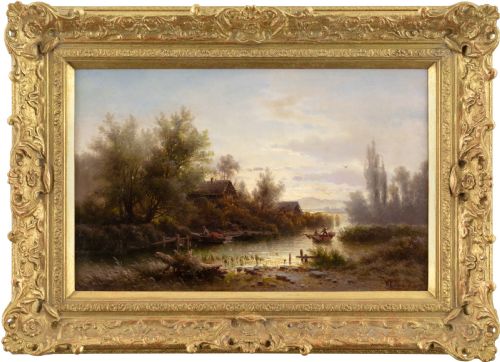
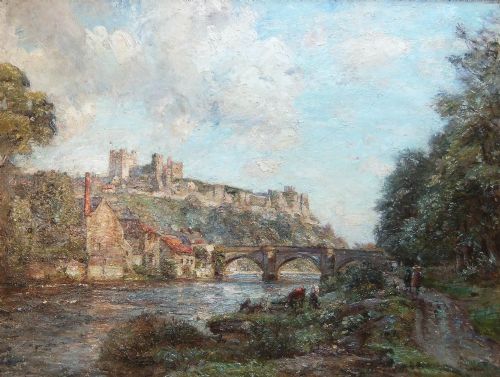
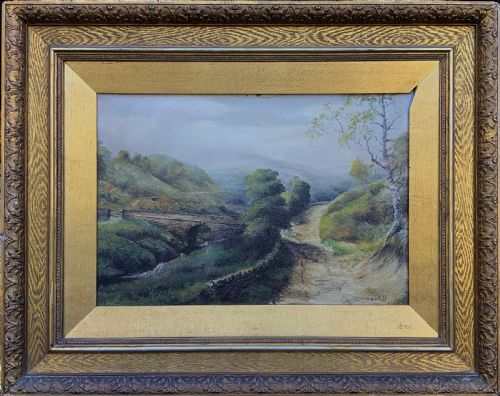

Original River Landscape Oil
Original river landscape oil paintings capture the enduring appeal of moving water and quiet banks across centuries of British and European art.
Original River Landscape Oil
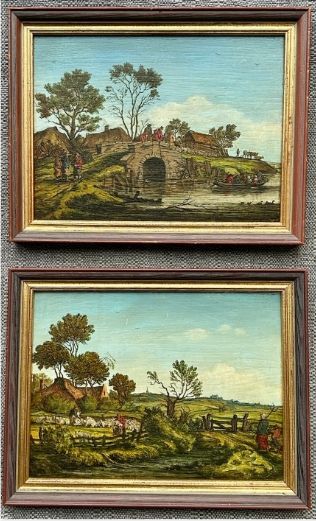
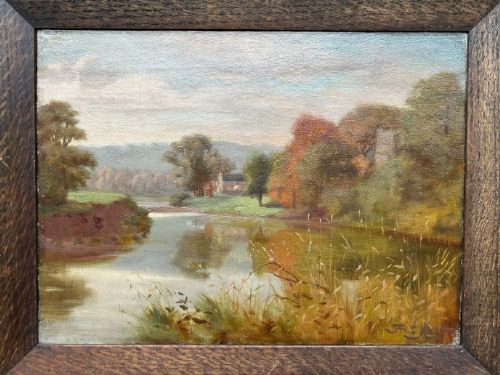
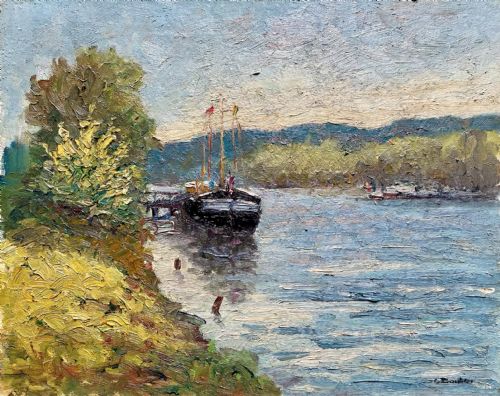
An original river landscape oil depicts scenes of waterways, banks, bridges, and riparian life rendered in oil paint by artists working from the nineteenth century into the mid-twentieth century. Buyers searching this phrase typically encounter works attributed to British, French, and continental schools spanning Victorian naturalism through to mid-century impressionist movements.
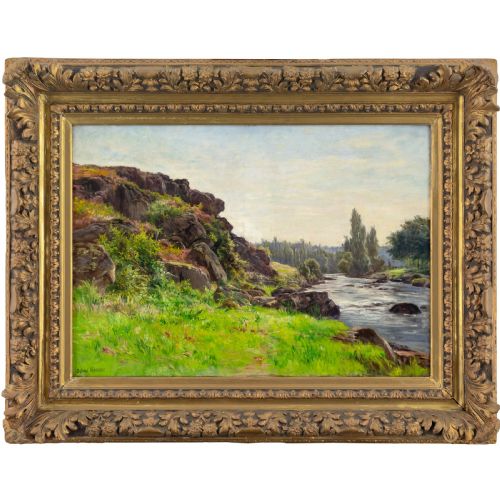
The selections available include compositions on stretched canvas, wood panels, board, and card, ranging from intimate local studies of Yorkshire streams to grand continental river views. Many examples preserve historical frames of gilt wood or gesso that complement the pastoral or atmospheric mood of the painted water scene.
How They Were Made
Artists applied oil paint using brushes and palette knives onto prepared surfaces such as canvas, wood panels, milk glass, and card, building up layers of pigment to capture the shifting light on water. Supports were frequently primed with gesso before painting, allowing the oil medium to adhere securely and retain its luminous quality over decades.
Many of these works were housed in decorative wooden frames, often finished with gilt or carved details that enhanced the visual depth of the landscape. Panel paintings commonly utilised seasoned wood to prevent warping, while canvas works relied on wooden stretchers to maintain tautness.
Several canvases quietly record industrious nineteenth-century cattle pausing mid-river for a refreshing drink.
What Varies in Quality
Quality rests upon the artist's handling of light, atmosphere, and spatial depth, distinguishing dynamic compositions from formulaic topographical records. Superior works demonstrate confident brushwork and a subtle understanding of reflections on water, whereas lesser examples rely on rigid perspective and flat application.
The preservation of the original paint surface and its housing also dictates distinction, with intact period gilt frames and stable, unlined canvases commanding greater regard among collectors.
Kenneth Cozens·George Graham·Frederick Marriott·Gabriel Mathieu·Cyril Walduck Edwards·Henri Ottmann·Sir Alfred East·Albert Rieger·Herbert Royle·Paul Désiré Trouillebert·Henry H Parker·John Horace Hooper·John Ferneley Senior·William George Tennick·Hubert Wellington·Honore Cavaroc·Archibald Kay·Charles Clair·Sir David Murray·André Prévot-Valéri·Mario Pinetti·Arthur Herbert Rigg·Gabriel Dauchot·James Aumonier·James Peel
The Original River Landscape Oil Glossary
- Canvas
- A heavy woven fabric stretched across a wooden frame to serve as a support for oil painting. It provides a flexible and durable ground favoured by artists since the Renaissance.
- Gesso
- A traditional paint mixture consisting of a binder mixed with chalk, gypsum, or pigment used to prepare wood or canvas surfaces. This layer ensures the oil paint adheres properly.
- Barbizon School
- A nineteenth-century French movement of painters who emphasised direct observation of nature and atmospheric landscapes. Their plein-air approach heavily influenced subsequent impressionist styles.
- Impressionism
- An art movement characterised by relatively small, thin yet visible brush strokes and accurate depiction of changing light. It emerged in France before spreading to British and continental practitioners.
- Panel
- A flat piece of wood used as a rigid support for painting instead of fabric. Panels were often utilised for smaller or earlier works to ensure stability.
Original River Landscape Oil: Frequently Asked Questions
How do I date an antique river landscape?
Dating relies upon stylistic markers, clothing of any figures depicted, framing materials, and stretcher construction. Pigment analysis and artist signatures also help establish the decade of creation.
Comparison with documented works by the same hand or school offers further chronological precision for nineteenth and twentieth-century canvases.
Where should I hang an oil painting?
Select an interior wall away from direct sunlight, heating vents, and dampness to protect the canvas and oil pigments from environmental stress. Stable room temperatures preserve the integrity of both paint and wood.
Ensure the hanging height places the centre of the composition at eye level for comfortable viewing within your living space.
What is the Barbizon School?
The Barbizon School refers to French landscape painters active near the forest of Fontainebleau during the mid-nineteenth century. They championed working directly from nature rather than inside a studio.
Their focus on natural light and atmospheric river scenes paved the way for later impressionist movements across Europe.
How do I clean an old oil painting?
Surface dust should be removed gently using a very soft, dry brush without applying pressure to the pigment layer. Avoid using water, household cleaners, or solvents on the painted surface.
Professional conservation is recommended for removing aged varnish or deeper grime to prevent accidental damage to the original brushwork.