




Original River Canvas Painting
An original river canvas painting captures moving water and quiet banks through historic oils, bringing traditional British and continental landscapes straight to your wall.
Original River Canvas Painting
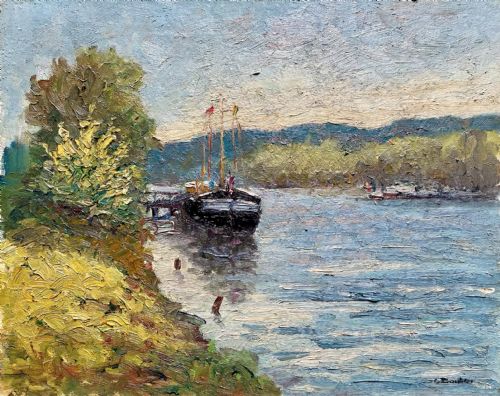
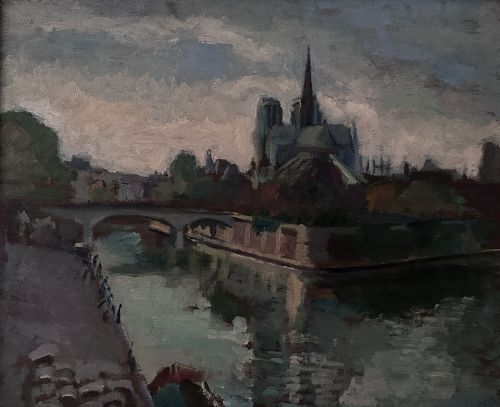
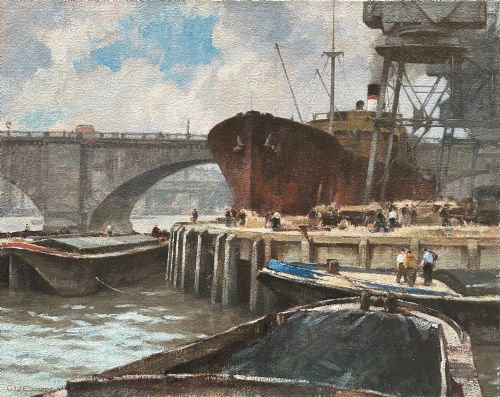
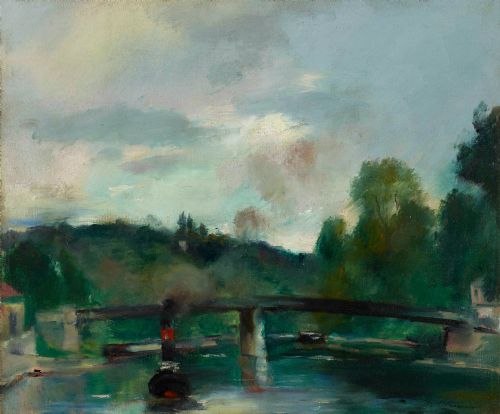
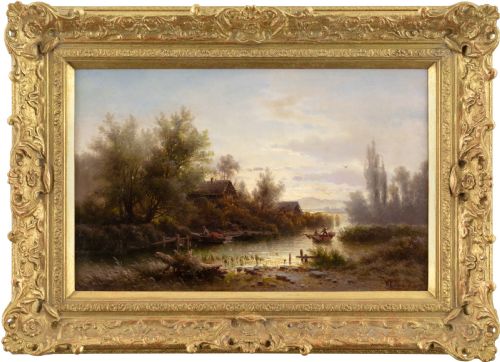
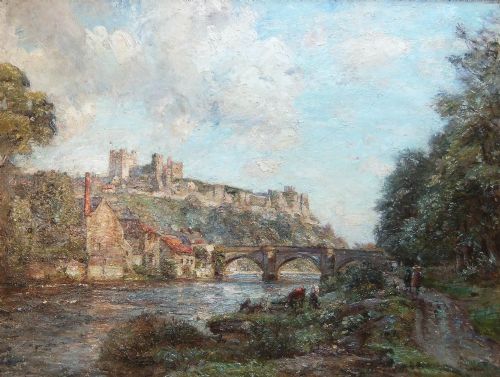
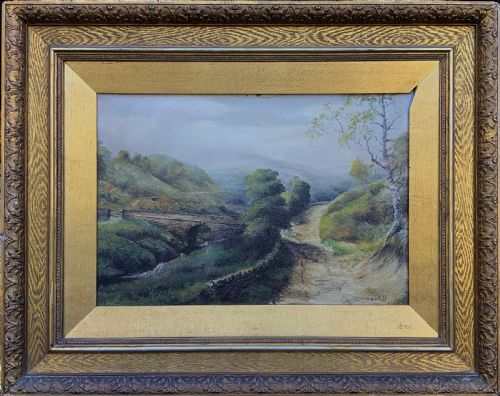
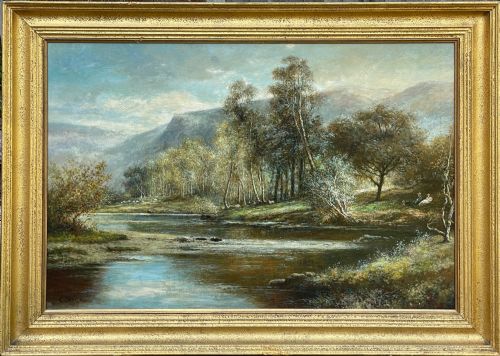
An original river canvas painting represents traditional landscape subjects spanning the nineteenth and twentieth centuries, executed by British and European artists. Buyers encounter rural riverbanks, pastoral scenes featuring cattle and fishermen, and French impressionist water views.
Most examples originate from the Victorian era up to the mid-century period, rendered in oil paint on woven textile supports or stretched board. These works range from intimate pastoral studies to large decorative canvases housed in period gilt frames.
How They Were Made
Artists applied oil paint using brushes and palette knives directly onto woven linen or cotton canvas stretched over wooden frames, sometimes later laid onto board for stability. The pigment mixtures relied on oil binders to achieve rich opacity and subtle tonal gradations.
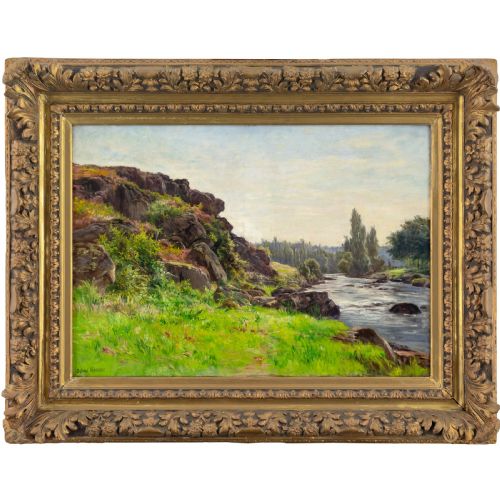
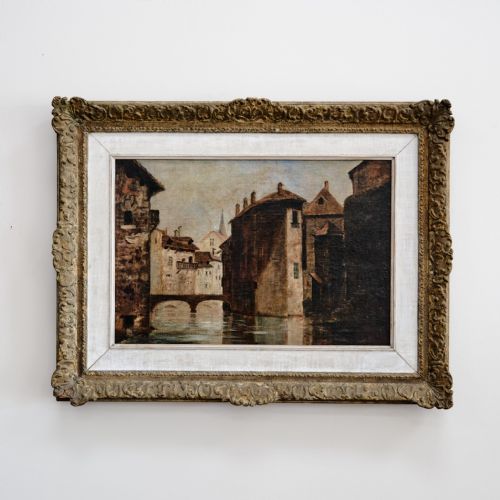
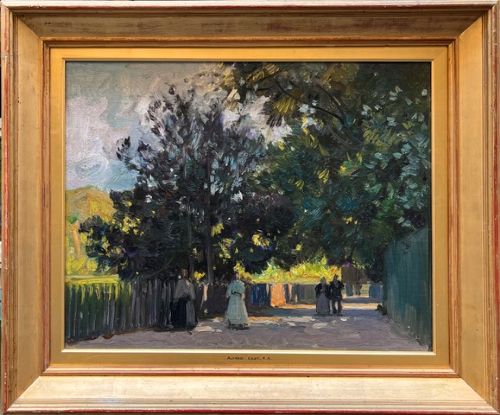
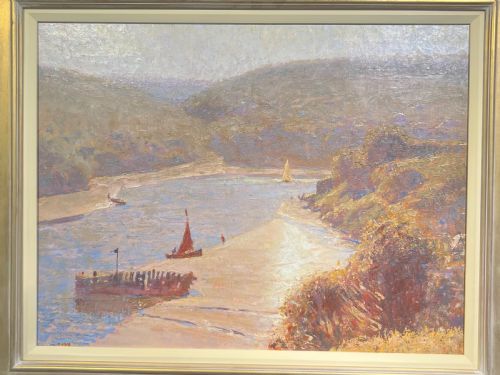
Many works retain their original gesso and gilt wood frames, constructed with moulded ornamentation that complements the painterly style of the period.
Spot the hidden fishing rods and grazing cattle tucked away beside historic bridges in these nineteenth-century riverbanks.
What Varies In Quality
The strength of composition and the artist's ability to render light reflecting on water distinguish finer works from simpler decorative pieces. Skilled brushwork captures atmospheric mood and depth, whereas lesser examples rely on formulaic foliage and flat washes.
The integrity of the canvas support, the stability of the paint layer, and the presence of an appropriate period gilt frame contribute significantly to the historical and aesthetic standing of the painting.
Kenneth Cozens·George Graham·Frederick Marriott·Gabriel Mathieu·Cyril Walduck Edwards·Henri Ottmann·Sir Alfred East·Cecil Allan Mould·Albert Rieger·Herbert Royle·Paul Desire Trouillebert·Henry H Parker·John Horace Hooper·John Ferneley Senior·Honore Cavaroc·Archibald Kay·Charles Clair·Henri Jaques Delpy·Mario Pinetti·Arthur Herbert Rigg·Gabriel Dauchot·Ron Folland·James Aumonier·AF de Breanski·Owen Bowen
The Original River Canvas Painting Glossary
- Canvas
- A heavy woven fabric, usually linen or cotton, stretched across a wooden frame to serve as the foundation for oil paintings.
- Gesso
- A plaster-like mixture applied to wooden frames or panels as a smooth base before gilding or painting.
- Gilt Wood
- Timber embellished with a thin layer of gold leaf or metallic powder, commonly found on period picture frames.
- Impressionism
- A nineteenth-century painting style characterised by relatively small, thin, yet visible brush strokes and an emphasis on accurate depiction of light.
Original River Canvas Painting: Frequently Asked Questions
How do I hang a heavy framed canvas?
Heavy oil paintings require sturdy wall fixings screwed directly into masonry or wooden wall studs to support the combined weight of the canvas and its wooden gilt frame.
Position the artwork at eye level, ensuring the hanging wire or brass D-rings are secure and evenly balanced before placing it on the wall.
What subjects appear in these paintings?
Common subjects include rural English and Welsh riverbanks, Scottish mountain streams, French impressionist waterways, and pastoral scenes featuring figures fishing or cattle watering.
Artists frequently depicted bridges, watermills, and coastal estuaries during different times of day, capturing morning light or sunset.
Are these paintings signed by the artist?
Many of the listed works feature visible signatures, monograms, or dates applied by the artist, while others are attributed to specific schools or identified through period exhibition records.
Signatures often appear in the lower corners of the canvas, sometimes accompanied by exhibition labels on the reverse of the frame.