





Autumn River Landscape Painting
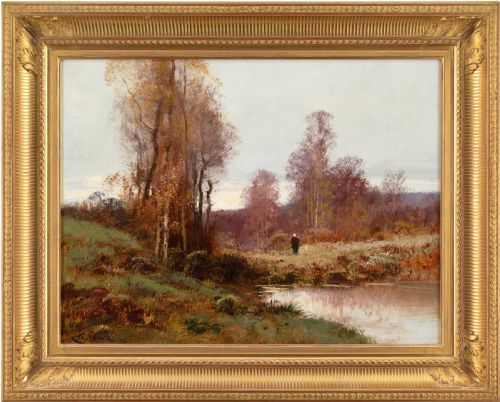
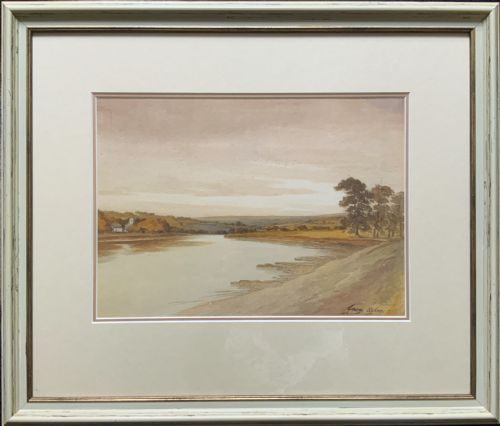
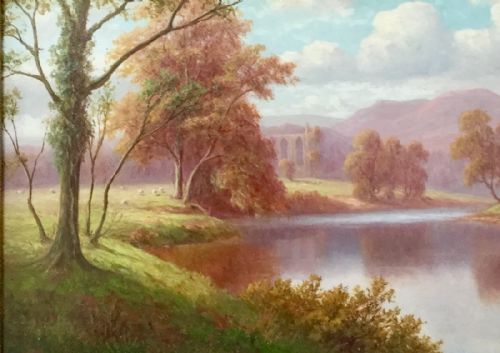
An autumn river landscape painting captures seasonal foliage along water, offering buyers atmospheric depictions of woodland waterways.
Autumn River Landscape Painting
An autumn river landscape painting depicts seasonal waterways and wooded banks, capturing the changing foliage characteristic of the season. These works range from late nineteenth century Victorian compositions to early twentieth century British impressionist views.
Most pieces meeting this search phrase are oil paintings on canvas or wood panel, alongside watercolours on paper. Subjects frequently focus on specific northern rivers, woodland streams, and pastoral valleys executed during the Victorian and Edwardian eras.
How They Were Made
Painters utilised oil paint applied to prepared canvas and wood panels, building rich textures and deep tones for autumnal foliage. Watercolour paintings on paper employ washes and fine brushwork to achieve lighter atmospheric effects along riverbanks.
Framing typically involves gilded wood, which enhances the visual warmth of the autumn palette. Supports range from sturdy stretcher frames to solid wood panels and paper sheets.
Geese frequently inhabit the riverbanks, quietly inspecting the artistic proceedings from the water.
What Varies In Quality
Execution of light and atmospheric depth distinguishes finer works, where brushwork handles water reflections and dense foliage with precision. Compositional balance and the rendering of seasonal colour gradation separate accomplished regional artists from standard commercial output.
The integration of the river setting with the surrounding woodland defines the success of each piece. Superior examples demonstrate confident handling of pigment, whether in heavy oils or fluid watercolours.
Frederick Marriott·Charles Clair·Arthur Herbert Rigg·Owen Bowen·William Mellor·Walter Follen Bishop·Berthe des Clayes·Robert Lesley Howey·Ernest Higgins Rigg·George Sykes·Ernest Moore·Augustus William Ennes·Everett Watson Mellor·Frank Walton·J Halford Ross·Mary Groves Moseley·David Mead·Peter Wishart
The Autumn River Landscape Painting Glossary
- Oil on canvas
- Pigment suspended in drying oil applied to stretched fabric. This traditional support allows for impasto texture and layered blending.
- Watercolour painting
- Pigment ground in a water-soluble binder applied to paper. It produces translucent washes and delicate tonal shifts.
- Wood panel
- A rigid wooden support used by painters before stretching canvas became standard. Panels offer a smooth, stable surface for fine detail.
- Gilded wood
- Wood frames coated with a thin layer of gold leaf or metallic gilt. They provide traditional decorative borders for period paintings.
- Impressionism
- An art style focused on accurate depiction of light and its shifting qualities. Artists utilised visible brushstrokes and unblended colour.
Autumn River Landscape Painting: Frequently Asked Questions
How do I identify the period?
Examine the materials, framing styles, and signatures documented in the work. Victorian and Edwardian pieces often utilise specific canvas preparation and labelling conventions.
Contextual clues such as artist records and regional landscape titles help narrow the date of execution.
Where were these painted?
Many works depict specific British rivers and valleys, including Yorkshire waterways like the Wharfe. Other scenes record Scottish rivers and regional European landscapes.
Artists frequently worked outdoors on location to capture immediate atmospheric conditions along the water.
How should I display them?
Hang paintings away from direct sunlight and excessive humidity to protect canvas, wood panels, and paper supports. Stable indoor environments preserve both the pigment and the original frame.
Ensure adequate wall space allows the gilded wood frames and rich autumn palettes to be viewed clearly.
Are watercolours fragile?
Watercolour paintings on paper require protection behind glass to prevent atmospheric damage and fading. Proper framing guards the delicate medium against moisture and dust.
Keep these works out of direct light to maintain the integrity of the original pigments.