






Original Pencil Portrait Study
An original pencil portrait study captures a likeness directly on the page, offering a raw and intimate glimpse into past lives.
Original Pencil Portrait Study
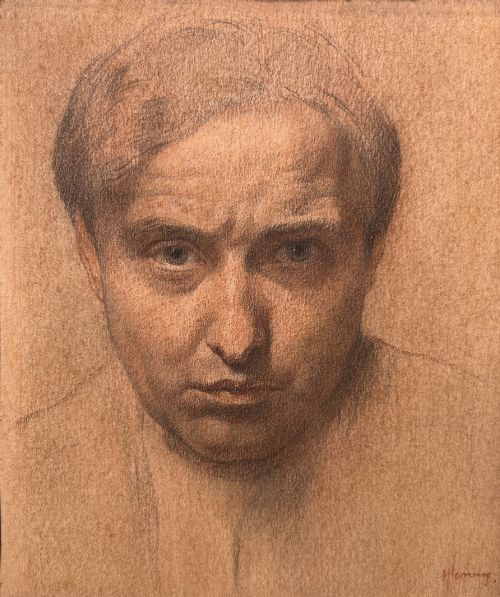
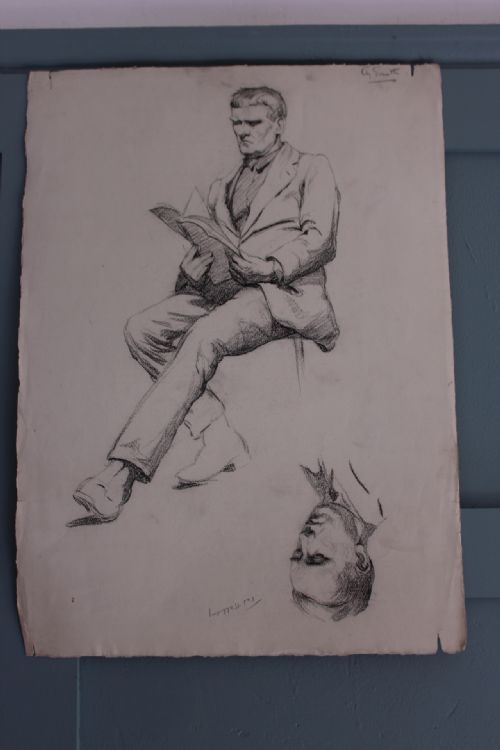
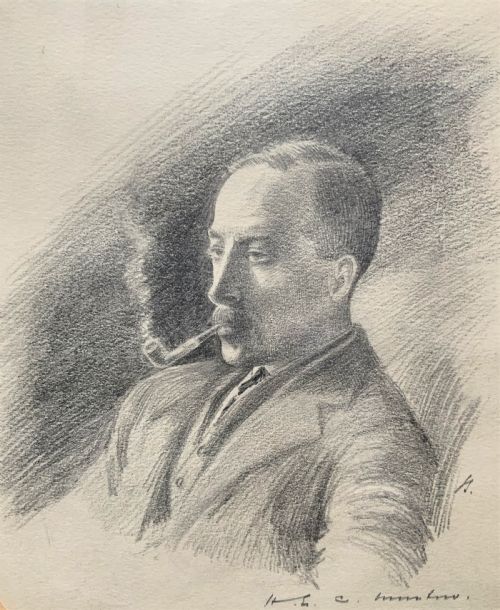
An original pencil portrait study brings you face to face with historical figures, artists' models, and everyday people rendered through intimate graphic works on paper. When you browse this selection, you encounter drawings that range from rapid preparatory sketches made in the studio to finished likenesses capturing a specific sitter's expression.
The works appearing here span from the mid-nineteenth century through the mid-twentieth century, encompassing Victorian academic exercises, early twentieth-century British character studies, and continental European works. These pieces often serve as direct records of observation, preserving the immediacy of the artist's initial encounter with the subject.
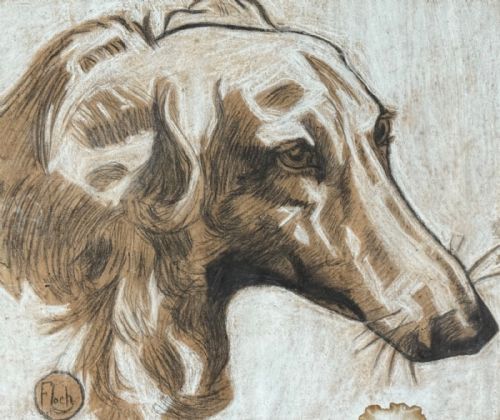
Most examples present framed or unframed works on paper, frequently utilising complementary media such as charcoal, chalk, watercolour, or gouache alongside the core graphite lines. Buyers seeking character and historical resonance find that these hand-drawn portraits offer a direct connection to the draftsmanship of previous eras.
Materials and Techniques
These works rely fundamentally on graphite, pencil, or charcoal applied to various grades of paper, ranging from standard drawing sheets to tinted buff paper that accepts white chalk highlights. Artists built form and shadow through careful hatching, blending, and tonal gradation, establishing volume and expression with minimal tools.
Many pieces incorporate supplementary water-soluble media like watercolour or gouache washes over the initial pencil armature, adding subtle colour to skin tones or clothing. Framing typically involves wood and glass to protect the delicate paper surface from atmospheric moisture and handling.
The physical support often shows its age through natural toning, foxing, or edge wear, which serves as physical evidence of the piece's survival through the Victorian and twentieth-century periods.
At least one drawing preserves the likeness of an explorer labelled as a bio-pirate.
Measures of Quality
Quality in these works rests upon the surety of the line and the psychological depth achieved in capturing the sitter's likeness and personality. A superior study demonstrates confident draftsmanship where the artist understands bone structure and musculature beneath the skin, avoiding stiff or hesitant strokes.
The preservation of the paper surface and the strength of the composition further distinguish the collection, as works executed with deliberate economy of line often outshine heavily overworked drawings. Provenance and attribution to documented artists or recognised schools elevate certain pieces beyond anonymous studio exercises.
Herbert Johnson Harvey·Augustus John·Raoul Millais·Dame Laura Knight·Ernest Borough Johnson·Leo Klin·Francis Dodd·Harry Epworth Allen·Harold Hope Read·Jean Betourne·Sir George Hayter
The Original Pencil Portrait Study Glossary
- Graphite
- A form of crystalline carbon used as a drawing medium in pencils, producing tones from silvery grey to deep black depending on the hardness grade.
- Gouache
- An opaque water-based paint often applied over pencil and charcoal drawings to add highlights and solid areas of colour.
- Academic Realism
- A style of painting and drawing produced under the influence of European academies of art, emphasising precise anatomical accuracy and classical proportions.
- Buff paper
- A pale brownish-yellow paper commonly utilised by artists in the nineteenth and early twentieth centuries to provide a mid-tone background for chalk and pencil highlights.
- Studio drawing
- An artwork produced during practice sessions, life-drawing classes, or as preparatory work within an artist's workspace rather than as a fully commissioned portrait.
Original Pencil Portrait Study: Frequently Asked Questions
How do I display works on paper safely?
Keep drawings out of direct sunlight to prevent the graphite and paper from fading or discolouring over time.
Use UV-protective glass when framing and maintain stable indoor humidity levels to protect the paper support.
What is the difference between a study and a finished portrait?
A study is typically a rapid, exploratory drawing focused on capturing a specific feature, pose, or expression without necessarily aiming for commercial polish.
Finished portraits tend to be more formal, highly detailed works intended for exhibition or commission.
How do I identify the period of an unsigned drawing?
Examine the paper type, watermark, framing style, and the sitter's clothing and hairstyle for period-specific indicators.
Stylistic cues such as the loose handling of Modern British works versus the tight precision of Victorian academic drawings also help date the piece.
Why are some portraits executed on tinted paper?
Artists used tinted or buff paper so they could work in both dark media like pencil and light media like white chalk.
This middle tone allowed creators to build three-dimensional volume and dramatic lighting effects much faster than working on stark white paper.