
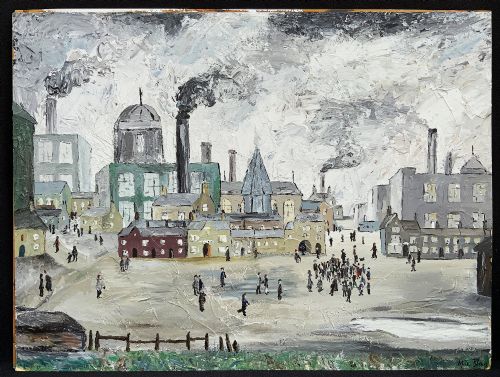

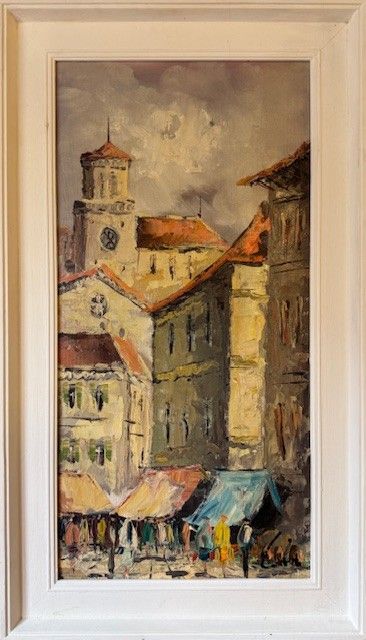


Original Painted Townscape Canvas
An original painted townscape canvas captures the pulse of historic streets and busy squares, offering a timeless window into urban life.
Original Painted Townscape Canvas
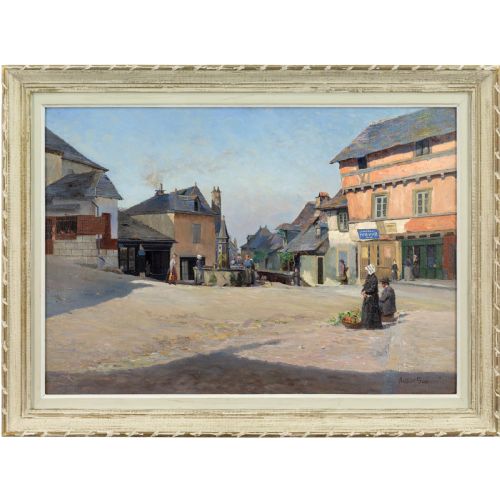
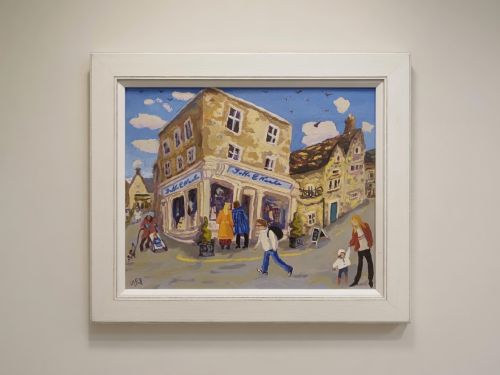
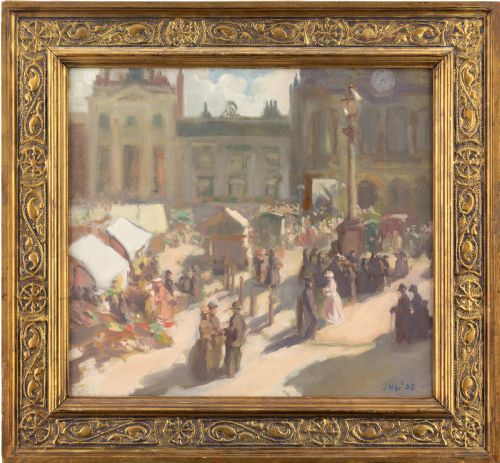
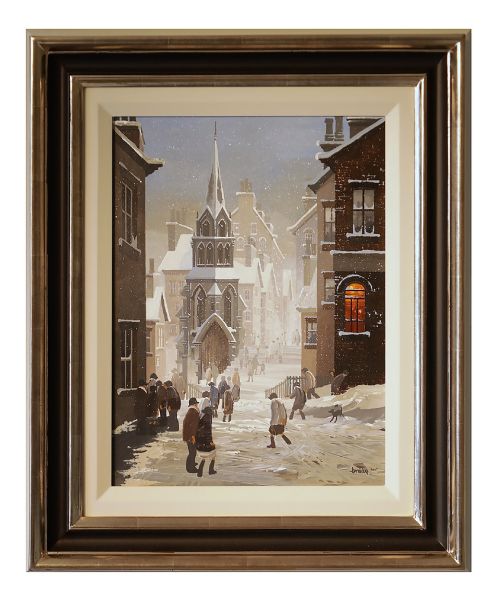
An original painted townscape canvas brings architectural views and bustling urban scenes directly to the interior wall through traditional brushwork. These works span multiple decades, drawing on periods from the nineteenth century through to the mid twentieth century and beyond.
Subjects stretch from British market towns and industrial streets to continental cityscapes in Venice, France, and the Netherlands. Buyers will encounter both signed works by known artists and pieces attributed to specific schools or anonymous hands.
Materials and Technique
Artists built these works using oil paint applied to stretched canvas surfaces, employing methods ranging from tight realism to loose impressionistic brushstrokes. Pigments were manipulated to capture light on stone buildings, wet pavement, and crowded public squares.
Many of the canvases are paired with wooden frames, occasionally enhanced with gilt or gold leaf to complement the painted composition. The physical support relies on traditional wooden stretchers holding the woven canvas tight.
Assessing Quality
The strength of the composition and the confidence of the brushwork separate the finest examples from simpler decorative works. Skilled handling of light, perspective, and atmospheric depth distinguishes superior townscapes.
The integrity of the canvas surface and the harmony of the original frame contribute significantly to the standing of a piece. Preserved surface textures and untouched historic condition elevate the desirability of these paintings.
John Hodgson Lobley RBA·Brian Shields Braaq·Cornelis Christian Dommersen·Alfred Pollentine·Jane Vivian·George Willis Pryce·Josephine Haswell Miller ARSA·Henry Schafer·Letitia Marion Hamilton
The Original Painted Townscape Canvas Glossary
- Canvas
- A heavy woven fabric used as a surface for oil painting. It is typically stretched tightly over a wooden frame before the artist begins work.
- Giltwood
- Wood that has been coated with a thin layer of gold leaf or gilt. This finish is frequently found on the decorative frames enclosing period oil paintings.
- Post-Impressionism
- An art movement developing roughly from the late nineteenth century that extended impressionist ideals while rejecting its limitations. Artists focused on expressive brushwork and symbolic use of colour.
- Northern School
- A regional artistic style associated with industrial Northern England towns. Works often depict working class urban life and industrial streetscapes with robust character.
Original Painted Townscape Canvas: Frequently Asked Questions
Where should I hang a townscape canvas?
These works suit dining rooms, studies, or living areas where adequate wall space allows the composition to be viewed clearly from a distance. Natural indirect light helps reveal the texture of the oil paint and the details of the street scene.
Avoid placing canvas paintings in areas subject to direct sunlight, high humidity, or rapid temperature fluctuations, such as near radiators or damp exterior walls.
How do I date a painted townscape?
Dating often relies on architectural clues within the scene, such as street furniture, clothing styles of figures, and transport methods depicted. Signatures, artist biographies, and framing styles provide additional chronological markers.
The construction of the canvas stretcher, the type of nails used, and the composition of the canvas weave also offer reliable evidence for determining the age of the piece.
What is the difference between realism and impressionism?
Realist townscapes focus on precise architectural details, accurate perspective, and clear depiction of everyday urban life. Brushwork is typically smooth and hidden to create a lifelike window onto the scene.
Impressionist works prioritise light, atmosphere, and movement over fine detail, using visible, energetic brushstrokes to capture the immediate feeling of a busy market square or city street.