

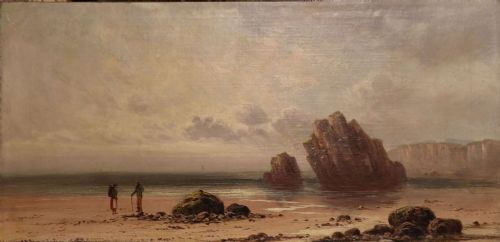
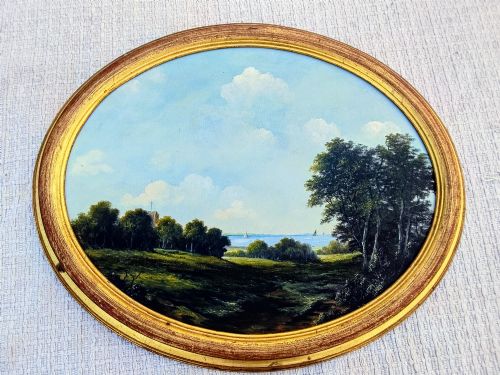
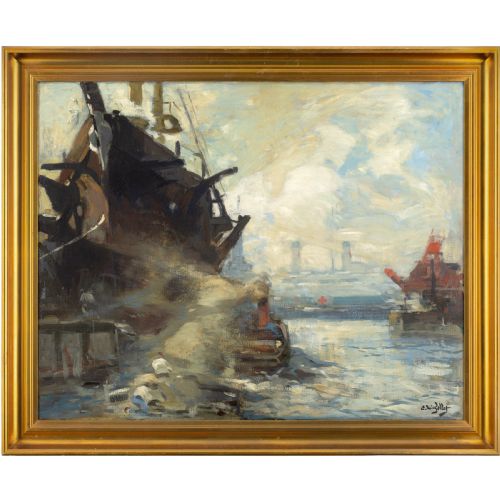
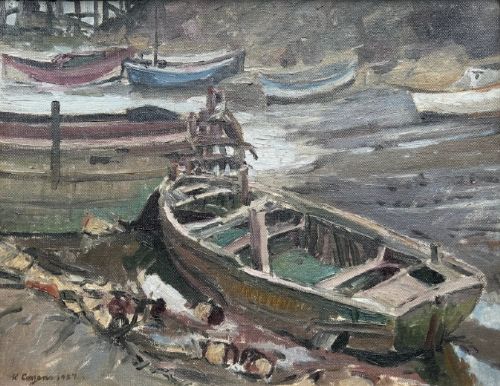
Original Oil Seascape Canvas
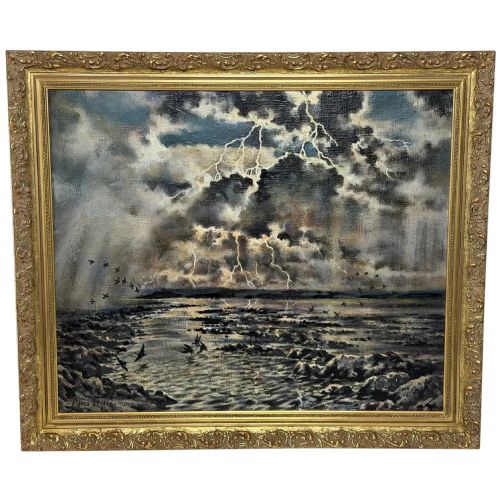
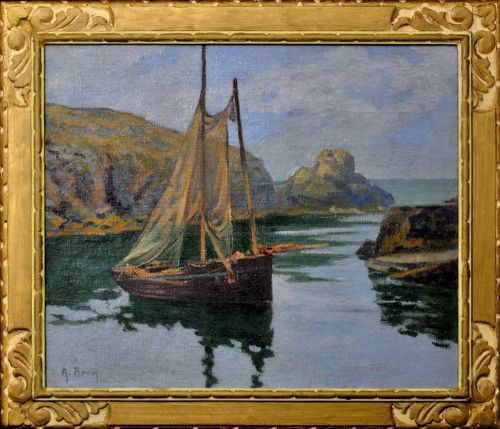
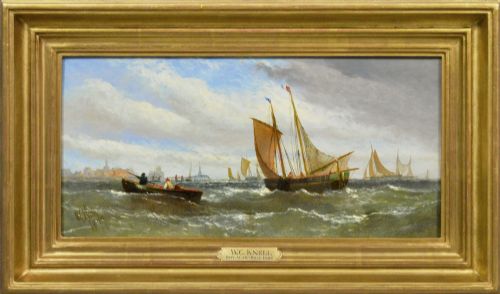
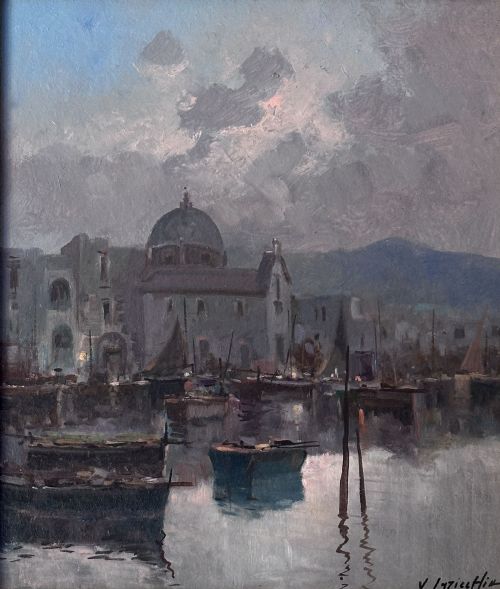
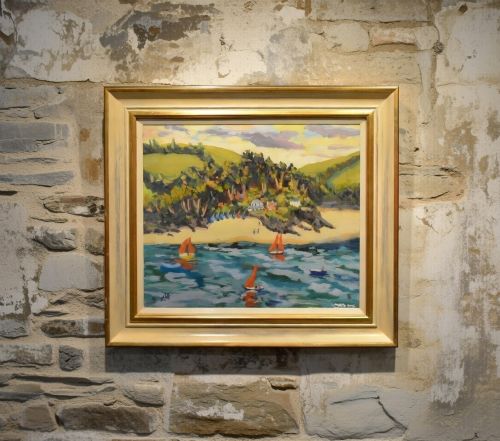
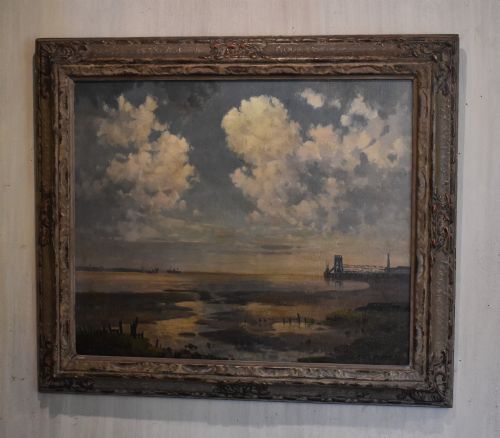
An original oil seascape canvas captures the restless movement of water, light and sky across British and European coastal views.
Original Oil Seascape Canvas
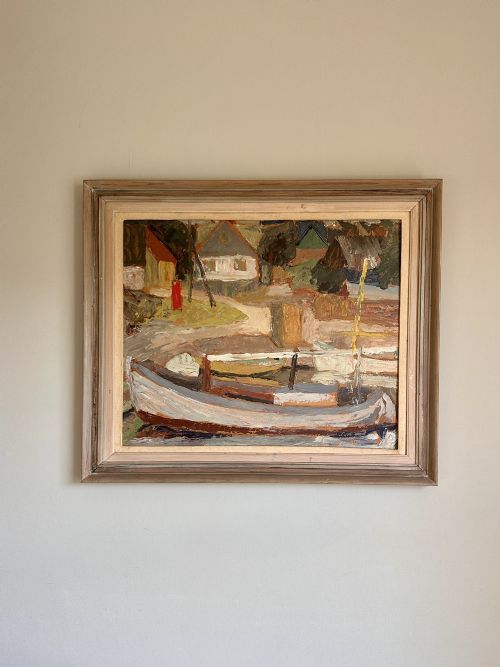
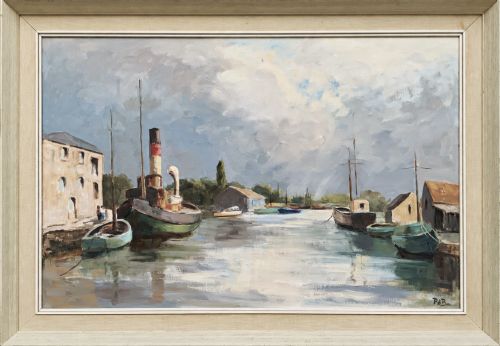
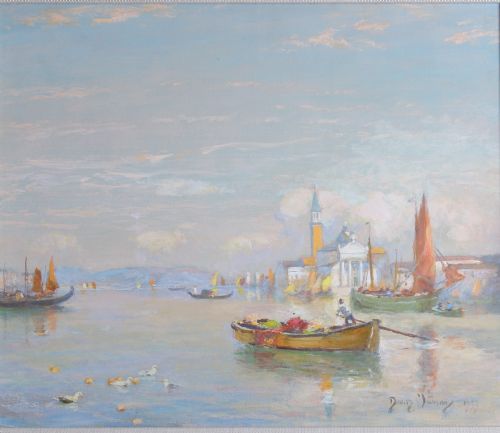
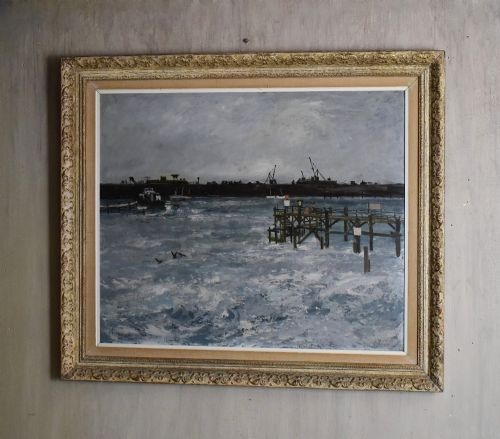
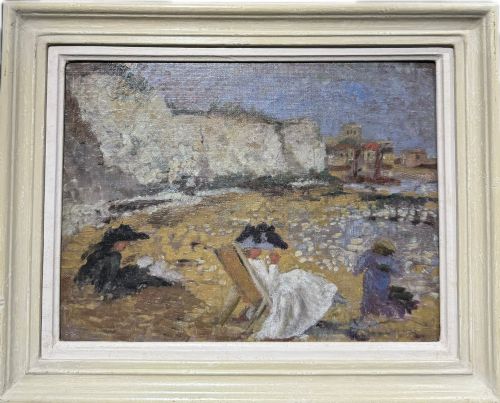
When searching for an original oil seascape canvas, buyers encounter framed works depicting maritime scenes, rocky beaches, bustling harbours and open ocean swells. The selection spans the nineteenth century through to the mid-twentieth century, featuring British, French and wider European coastal landscapes.
Most pieces on offer present traditional harbour scenes, fishing trawlers at low tide or dramatic coastal cliffs rendered in oil paint on canvas or board. These works range from tightly detailed Victorian maritime records to looser impressionistic studies of light on water.
How they were made
Artists built these compositions using oil paint applied directly to stretched woven canvas, sometimes mounted on wooden stretchers or occasionally adhered to rigid board. Pigments were manipulated with brushes or palette knives to build up textured impasto surfaces that mimic the choppy weight of waves and sea spray.
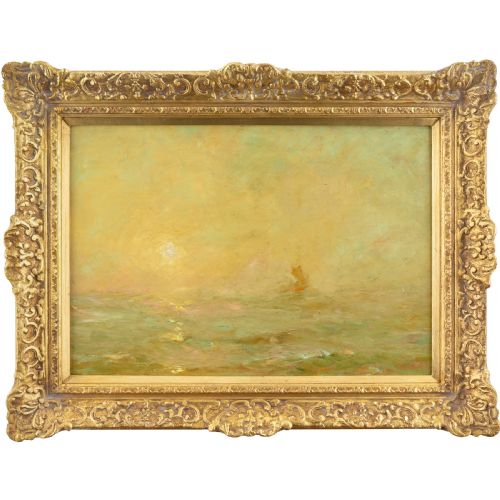
Finished works were typically housed in wooden frames, frequently decorated with carved or moulded gilt surfaces that enhanced the luminous quality of the coastal light within the painted scene.
Original Oil Seascape Canvas Retail Price Guide 2026
Typical asking prices for original oil seascape canvas among the pieces listed under this phrase on Sellingantiques today, from the lower quarter to the upper quarter. They describe what is for sale here now, not the wider market.
What varies in quality
Quality in these coastal works rests primarily on the artist's command of atmospheric light and spatial depth, distinguishing a lively, convincing marine study from a rigid, formulaic record. The handling of water movement, shifting cloud formations and tonal harmony across the sea and sky reveals the true hand of the painter.
The preservation of the original pigment layer and the integrity of the canvas stretcher further define the standing of a piece, alongside the harmony of any period gilt wood frame encasing the artwork.
Kenneth Cozens·Clifford Hanney·Eugène-Louis Gillot·Clive Browne·Peter Brannan·Francis Moltino·Lucy Pratt·Ethel Sands·Cecil Allan Mould·Joseph Farquharson·Thomas Hodgson Liddell·Walter Goodin·Abraham Hulk I·Edward Matthew Elliott·Charles Napier Hemy·Louis Suire·Helen Layfield Bradley·Gustave Vidal·Gyrth Russell·Jean-Baptiste Olive·George Turland Goosey·Norman Lloyd·Gustave De Bréanski·Adrian Van Porten·Edward Henry Eugene Fletcher
The Original Oil Seascape Canvas Glossary
- Impasto
- Paint applied thickly to a canvas, standing out in relief from the plane so that the artist's brush or knife marks remain visible. This technique is frequently utilised in seascapes to convey the physical bulk and texture of crashing waves.
- Stretcher
- The wooden frame over which an artist's canvas is pulled tight before painting. Traditional frames allow for minor adjustments using corner keys.
- Gilt Wood
- Wood that has been coated with a thin layer of gold leaf or gilt powder. Many nineteenth-century marine paintings retain their original decorative gilt frames.
- Maritime
- Depicting ships, shipping or the sea. The term encompasses everything from bustling commercial ports to solitary fishing smacks in open water.
- Provenance
- The documented history of ownership surrounding an artwork. A clear provenance helps establish attribution and exhibition history.
Original Oil Seascape Canvas: Frequently Asked Questions
What periods do these seascapes come from?
The available selection spans widely across the nineteenth and twentieth centuries, capturing evolving artistic interpretations of the coastline. You will find tightly rendered Victorian marine scenes alongside looser impressionist views from the mid-twentieth century.
Earlier works often focus on commercial shipping and traditional fishing craft, while later twentieth-century canvases lean towards abstracted light and expressive coastal colours.
How should I care for an oil painting on canvas?
Keep the artwork away from direct sunlight and fluctuating humidity levels to protect both the wooden stretcher and the fragile oil pigments. Gentle dusting with a soft, dry brush is generally sufficient for routine maintenance.
Avoid using water or chemical cleaning agents on the painted surface. Professional conservators should handle any deeper cleaning or structural repairs.
Are these paintings supplied with frames?
Many listings include period wooden frames, frequently featuring gilt ornamentation that complements the maritime subject matter. These frames are typically original or period-appropriate additions.
Examining the individual listing details will confirm whether a specific canvas is sold framed or unmounted.
How can I tell a nineteenth-century marine painting from a later one?
Nineteenth-century works tend to feature meticulous detailing of rigging, vessel types and atmospheric weather conditions, reflecting a strong maritime record. Mid-twentieth-century examples often employ looser brushwork and a greater focus on colour harmonies over fine line.
Examining the canvas preparation, stretcher construction and any artist signatures provides further clues to dating the work.