






Original Nude Portrait Painting
An original nude portrait painting brings direct human presence and expressive brushwork into a room, offering both character and historical depth.
Original Nude Portrait Painting
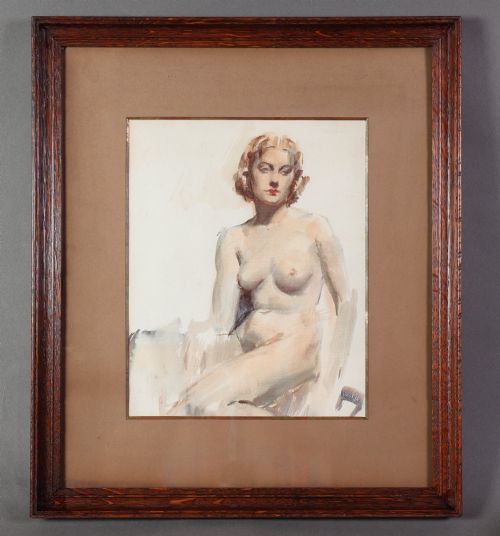
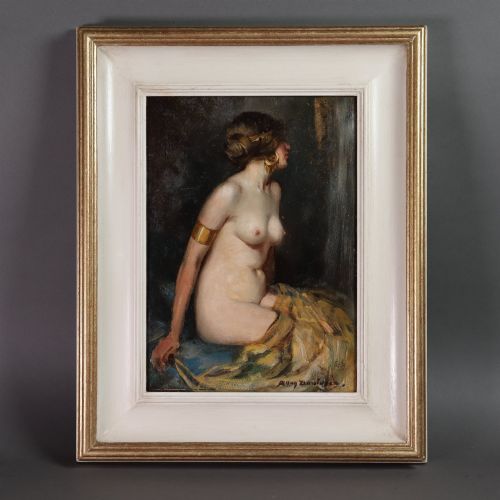
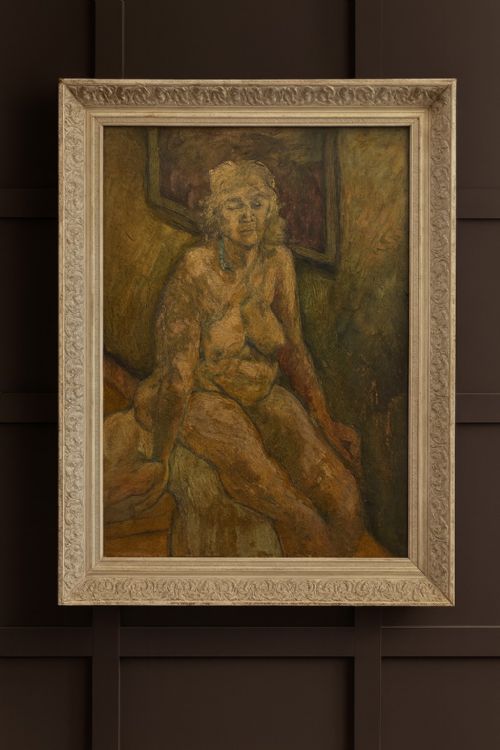
When you search for original nude portrait painting, you encounter works ranging from Victorian and Edwardian academic realism to mid-century figurative and post-impressionist studies. These pieces capture the human form through oil paint, watercolour, and pastel on supports such as canvas, board, and paper.
The versions most commonly met on this page date from the early twentieth century, spanning the 1920s, 1930s, and 1950s. Subjects include seated, standing, and reclining female figures, often created within British and French artistic circles.
Materials and Technique
Artists relied primarily on oil paint applied to canvas or board, utilising brushwork and colour to render form and light. Watercolour and pastel appear on paper and board for studies executed with directness.
Framing often complements the work, with wood used to house canvases and boards, sometimes preserved behind glass depending on the medium.
Evaluating Quality
Quality rests on the confidence of the draughtsmanship and the handling of paint. A resolved composition demonstrates an understanding of anatomy and tonal balance, whether the style leans toward academic realism or expressionism.
The distinction between standard life studies and notable works lies in the depth of character captured by the artist and the cohesion of the palette across the canvas or board.
Raymond Moritz·Henri Vincent-Anglade·Gaetan Dumas·Allan Douglas Davidson·Fernand Jean Barbier·Peter Jackson·Jean Hippolyte Marchand·Pinchus Krémègne·Raymond Arthur Roadnight·Montagu Barstow·Walter Goodin
The Original Nude Portrait Painting Glossary
- Oil on Canvas
- Pigment suspended in drying oil applied to a woven fabric stretched across a wooden frame. This remains the primary medium for enduring portraiture.
- Post-Impressionism
- An art movement extending beyond impressionist limits to emphasise symbolic content and geometric forms. Artists in this tradition prioritised expressive brushwork over strict naturalism.
- Academic Realism
- A style governed by the rules of art academies, focusing on precise anatomical accuracy and polished surfaces. It represents traditional training methods of the Victorian and Edwardian periods.
- Gouache
- An opaque water-based paint composed of pigment and binder, sometimes combined with watercolour. It creates flat areas of dense colour.
- Expressionism
- A modernist style where the artist distorts reality for emotional effect. These works use intense colour and vigorous application to convey subjective moods.
Original Nude Portrait Painting: Frequently Asked Questions
How do I date a nude painting?
Dating relies on stylistic markers, framing, and recorded artist timelines. Works from the 1920s and 1930s often reflect Art Deco or post-impressionist sensibilities.
Inscriptions on the reverse or artist signatures provide further verification when matched against exhibition records and period documentation.
Where should I hang these paintings?
These works suit private living spaces, studies, or libraries where their character can be appreciated up close. Placing them away from direct sunlight protects the oil paint and canvas.
Pairing a framed canvas with neutral walls allows the brushwork and tonal variation to remain the focal point.
What is the difference between board and canvas?
Canvas provides flexibility and texture through its woven fabric support, which is stretched over a wooden frame. Board offers a rigid support that painters frequently used for smaller or more immediate studies.
Both materials were widely used across the nineteenth and twentieth centuries depending on the artist's preference.
How do I care for an oil painting?
Maintain a stable room temperature and avoid humid environments to prevent the canvas or board from warping. Dust the surface gently with a soft, dry brush.
Keep the painting out of direct sunlight to preserve the integrity of the pigments.