

Original Edwardian Landscape Watercolour
An original edwardian landscape watercolour captures the quiet charm of the countryside and coastal ports through delicate washes and brisk brushwork.
Original Edwardian Landscape Watercolour
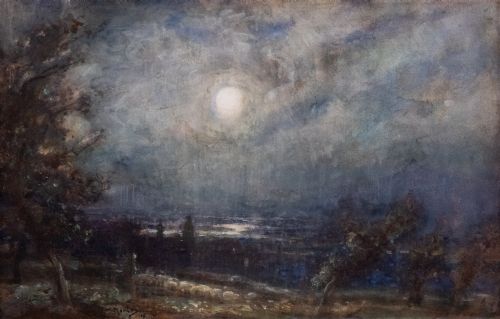
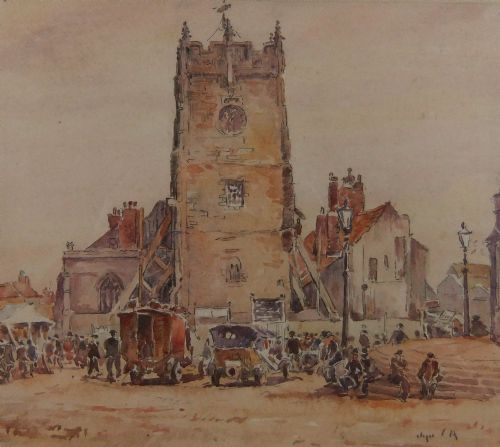
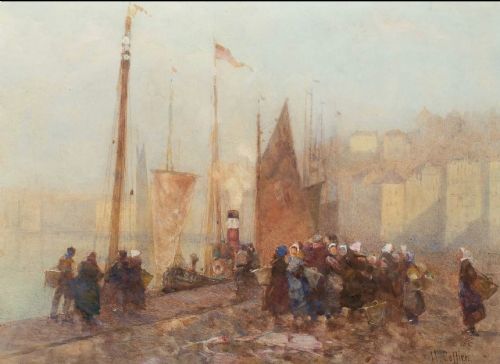
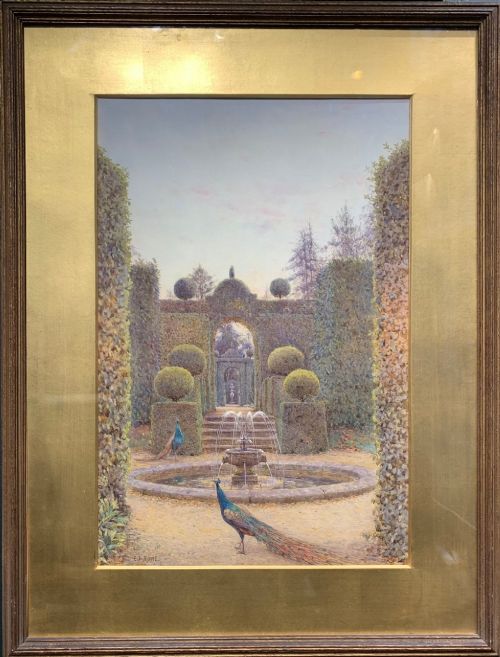
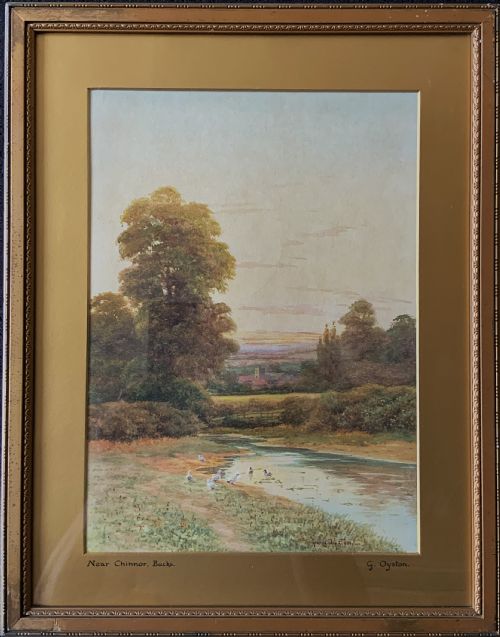
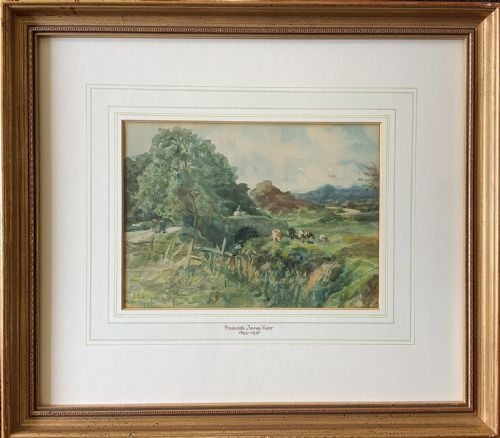
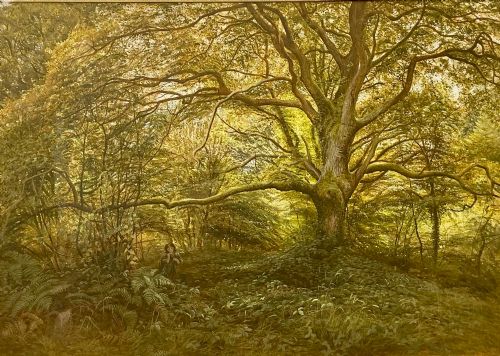
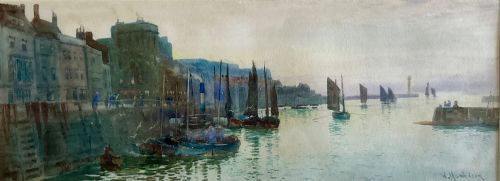
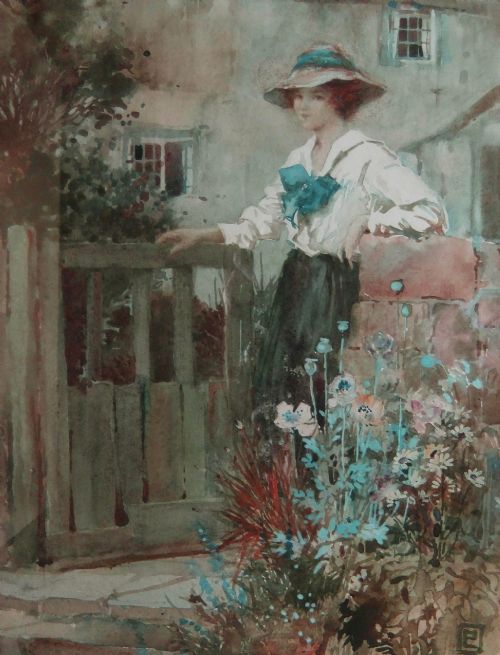
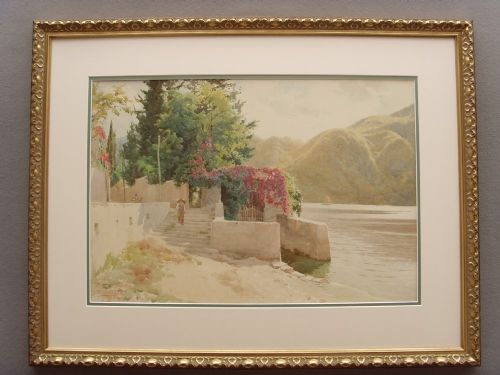
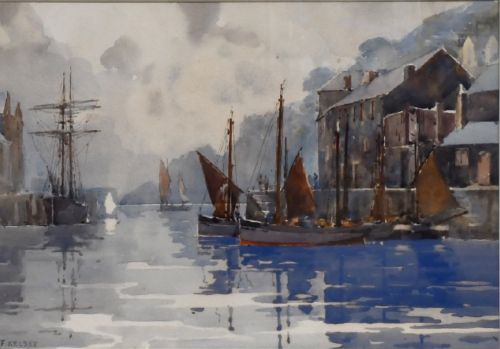
An original edwardian landscape watercolour comprises works executed on paper during the early twentieth century, capturing rural vistas, moorlands, and coastal harbours. The selection spans traditional British fine art, impressionism, and orientalist scenes, recording pastoral life and topography from the period.
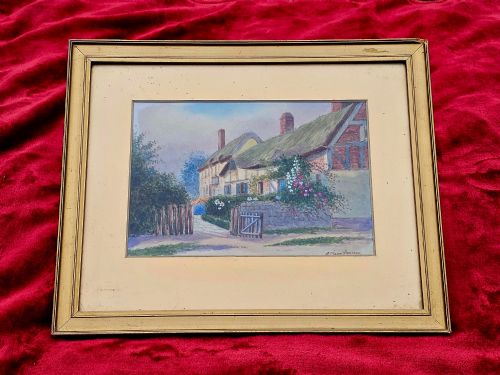
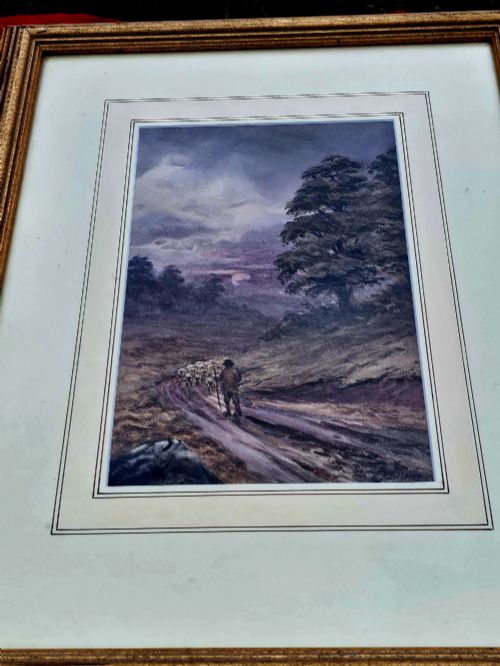
Buyers will encounter framed artworks depicting scenes such as sheep herding, fishing docks, and country gardens, signed by artists working across Britain and abroad. These paintings reflect the stylistic transition from Victorian naturalism into early twentieth-century impressionism.
How they were made
These works rely on watercolour pigment applied to paper, occasionally augmented with ink, bodycolour, or gouache to build tonal depth and highlight details. Artists employed washes of varying transparency to capture atmospheric light, coastal haze, and the texture of foliage.
Finished paintings are typically mounted behind glass and housed within wood frames, sometimes retaining original gilt or moulded surrounds that complement the palette of the artwork.
Listings feature paper, watercolour pigment, glass, wood, and gold leaf across Victorian and Edwardian periods.
What varies in quality
The strength of the composition and the confidence of the brushwork set individual watercolours apart, distinguishing hurried sketches from fully resolved landscapes. Subtle control over pigment and light creates a more convincing atmosphere, particularly in depictions of coastal skies and pastoral valleys.
The condition of the paper and pigment stability also influence quality, as exposure to light can diminish delicate hues. Surviving works preserved in period frames with clear artist signatures retain greater documentary and aesthetic value.
Thomas Ellison·A. Marie Parsons·EJ Letheren·Thomas William Morley·John Smith Atherton·Hector Caffieri·Ernest Arthur Rowe·George Oyston·Frederick James Kerr·Bonomi Edward Warren·William Matthison·Percy Lancaster·Robert George Talbot Kelly·Frank Kelsey·F A Roylance·F.J. Snell·George F Pennington·Alfred George Morgan·Philip Richard Morris·Edgar Woollatt·Oswald Garside·Henry Charles Fox·Cuthbert Crossley·Arthur Tucker·Charles James Lauder
The Original Edwardian Landscape Watercolour Glossary
- Watercolour pigment
- Finely ground colour mixed with a water-soluble binder, applied in translucent layers to create luminous effects on paper.
- Gouache
- An opaque watercolour paint containing added white pigment, utilised by artists to introduce solid highlights and dense areas of colour.
- British Impressionism
- A painting style emerging in the late nineteenth and early twentieth centuries, focusing on light, brushwork, and everyday scenes rather than rigid academic finish.
- Diptych
- An artwork composed of two distinct panels or sheets presented together as a paired composition.
Original Edwardian Landscape Watercolour: Frequently Asked Questions
How do I date an edwardian watercolour?
Dating relies primarily on signatures, gallery labels, framing techniques, and the recorded active years of the artist. Stylistic cues such as the transition from Victorian narrative detail to impressionistic brushwork also help narrow the period.
Written inscriptions on the reverse of the paper or the backing board frequently provide specific locations and dates recorded by the artist at the time of creation.
Where should I hang these paintings?
Watercolours require careful placement away from direct sunlight to prevent the pigments from fading over time. Interior walls with stable humidity levels preserve the integrity of both the paper support and the wood frame.
Displaying them at eye level in principal rooms allows the fine details of the wash and brushwork to be appreciated closely.
Are these paintings signed by the artists?
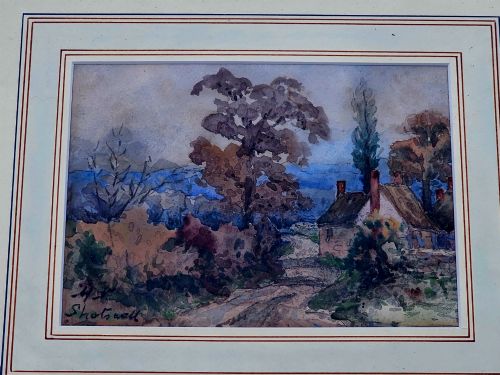
Many examples bear the artist signature, monogram, or initial, often inscribed directly into the lower corner of the watercolour pigment. Some pieces include additional handwritten titles or location notes on the mount or reverse.
Unsigned works still appear from the period, attributed through style, technique, and subject matter characteristic of known regional painters.
What subjects are most common?
Coastal harbours, fishing docks, and pastoral farming scenes dominate the surviving output of this era. Landscapes featuring sheep herding, country cottages, and woodland paths reflect the popular rural subjects of early twentieth-century British art.
Topographical views of specific rivers, towns, and lakes across Britain and Europe also form a substantial portion of the available watercolours.