
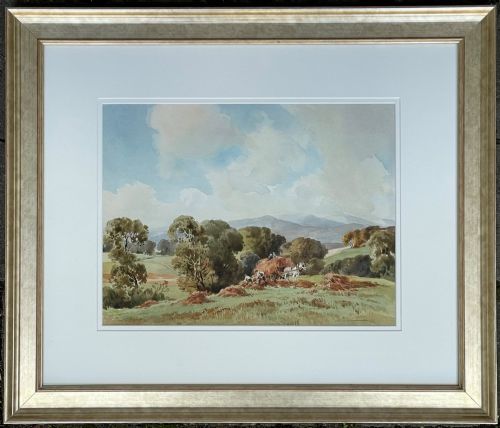
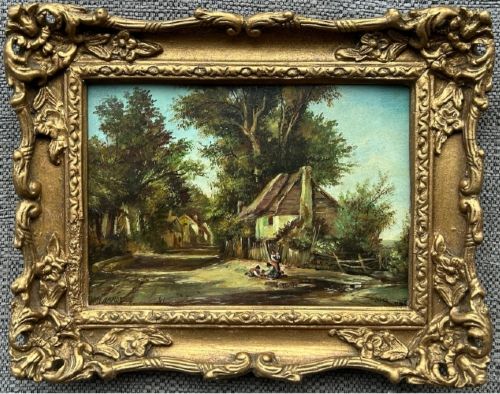
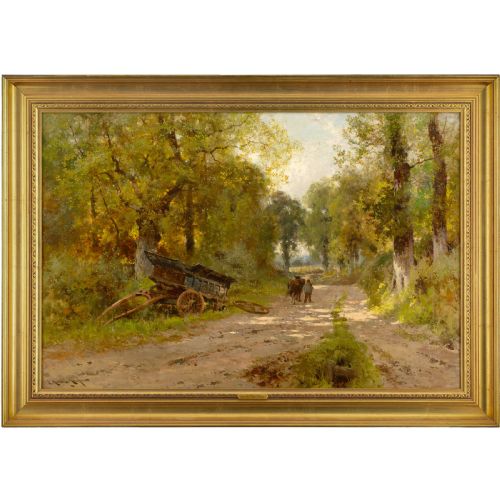
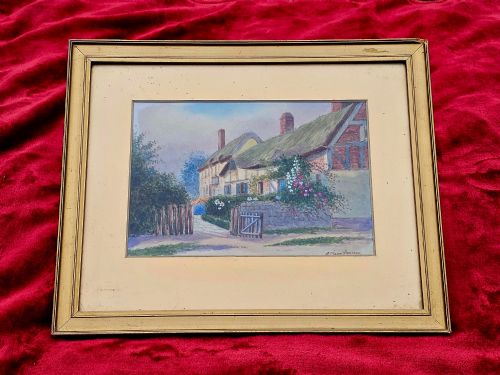
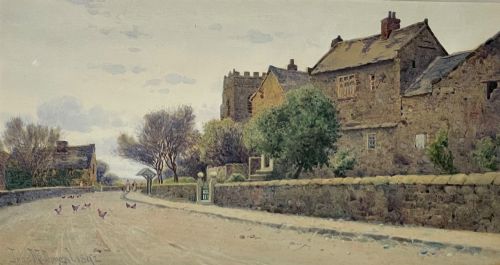
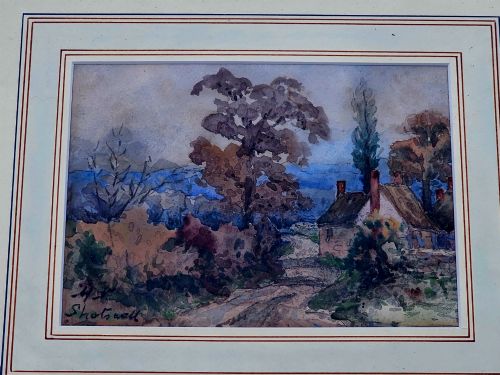
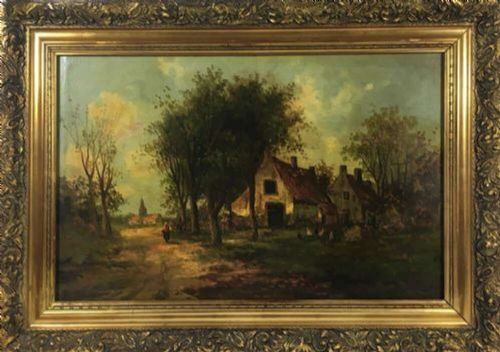
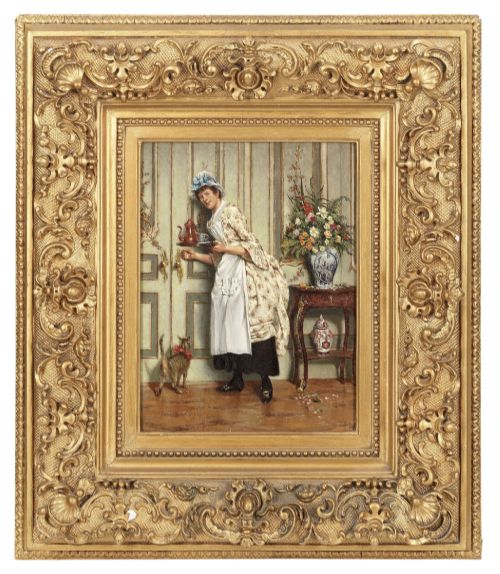
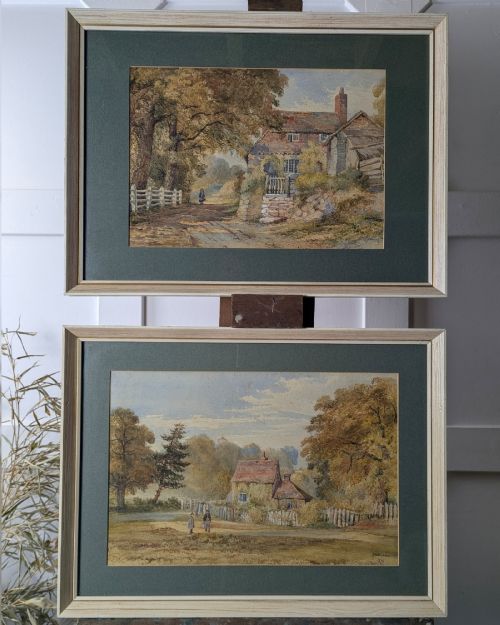
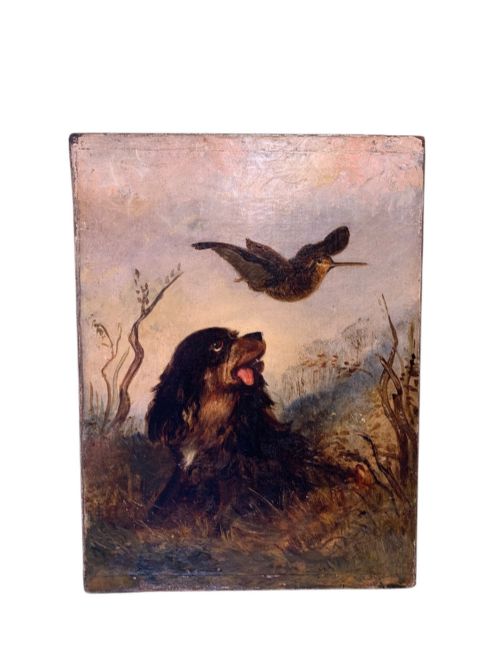
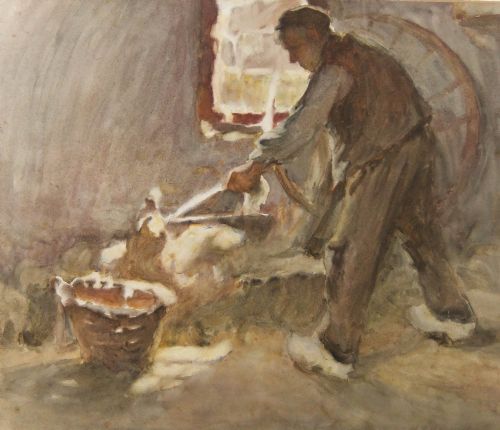
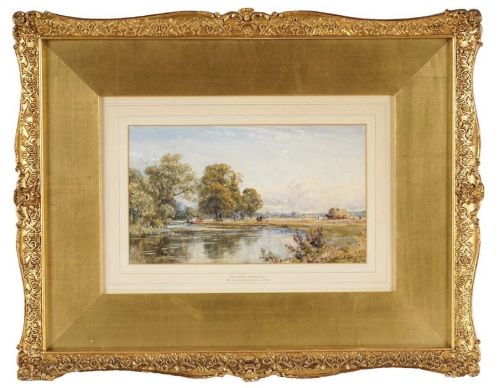
Original Country Scene Painting
An original country scene painting brings the quiet fields, rivers and farmyards of past centuries directly onto a wall.
Original Country Scene Painting
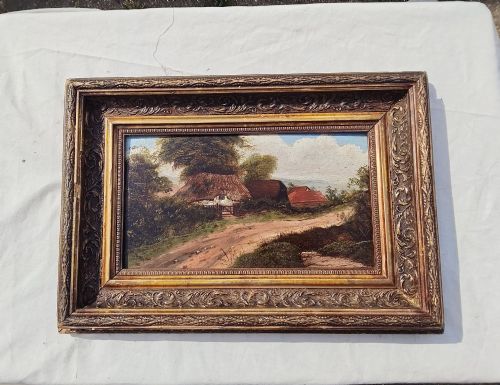
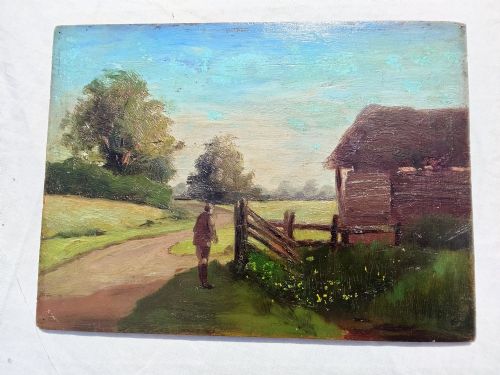
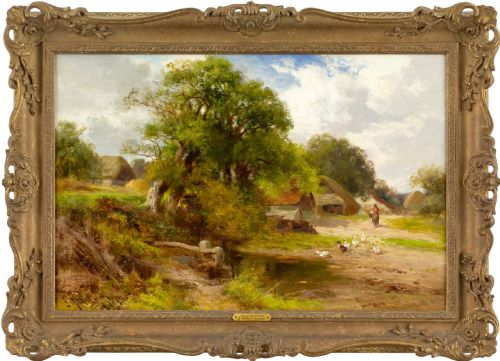
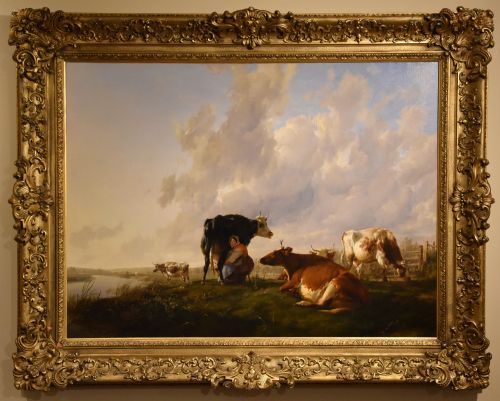
An original country scene painting captures rural life, agricultural labour and natural landscapes across the nineteenth and twentieth centuries. Buyers encounter compositions depicting thatched cottages, livestock grazing in pastures, blacksmiths at work and quiet riverbanks.
The works span periods from the Victorian era through Edwardian times into the mid-twentieth century, created by both named artists of the British and French schools and anonymous hands. Oil on canvas, wood panel, oil on card and delicate watercolour on paper form the primary visual records.
How they were made
Artists painted using oil paint or watercolour applied to prepared canvases, wooden boards, card or heavy paper supports. Many works retain their original giltwood frames, which complement the depth of the pigments.
Techniques range from the detailed realism of the Victorian period to the looser brushwork of British Impressionism and the Barbizon School. Pastel and gouache also appear on larger paper supports for rich colour saturation.
Listings feature watercolours, oil paintings on canvas and wood panel, pastels and gouache spanning from the Victorian era to the mid-twentieth century.
What varies in quality
Quality rests upon the artist's command of light, shadow and atmospheric perspective within the landscape. Superior brushwork brings texture to foliage, water and fabric, whereas lesser works rely on flat washes and rigid composition.
Condition also separates examples, particularly the stability of the paint surface and the integrity of the original wood or gilt framing. Signed works by documented painters carry greater historical weight than unsigned pieces from the English school.
Percy Lancaster·William Howard Hardy·John Horace Hooper·A. Marie Parsons·John McDougal·Stephen Samuel Lewin·Robert A. Nottingham·Henry Silkstone Hopwood·Robert Thorne Waite·Thomas Sidney Cooper·Frederick James Kerr·Edgar Hunt·Herbert Royle·Johann Friedrich Voltz·Henry H Parker·Charles Edward Wilson·Joseph Knight·Hubert Wellington·Henri Jaques Delpy·Richard Harry Carter·Ernest Higgins Rigg·Henry John Kinnaird·Arthur Hopkins·Ernest Pile Bucknall·J. Phipps
The Original Country Scene Painting Glossary
- Watercolour
- A painting method in which the paints are made of pigments suspended in a water-based solution. It is traditionally applied to paper to achieve translucent washes of colour.
- Giltwood
- Wood carved and coated with a thin layer of gold leaf or gilt. This material is frequently found on the period frames enclosing nineteenth-century canvases.
- Barbizon School
- A nineteenth-century French movement towards naturalism in landscape painting. Painters of this circle focused on rural farmyards and untamed pastoral views.
- Impressionism
- A style involving thin, open brush strokes that emphasise accurate depiction of light. British practitioners applied this approach to domestic rural scenery.
- Oil on Canvas
- Pigments bound in a medium of drying oil applied to stretched fabric. This combination provides rich depth and longevity to antique rural compositions.
Original Country Scene Painting: Frequently Asked Questions
What subjects appear in these paintings?
The compositions generally depict rural British and French life, including harvested fields, cottages with thatched roofs and farm animals at rest. Rivers, cattle grazing and village blacksmiths also feature prominently.
Artists drew inspiration from everyday agricultural labour and pastoral scenery, recording rural districts before modern industrial expansion changed the horizon.
How do I care for an antique painting?
Protect the artwork from direct sunlight to prevent the watercolours or oil pigments from fading over time. Keep paintings away from damp walls and sudden temperature shifts.
Dust the surface and the accompanying giltwood frame gently with a dry, soft brush without applying liquid cleaners to the paint layer.
How can I tell the period of a painting?
Clues appear in the framing materials, the mounting boards and the clothing worn by any figures included in the landscape. Victorian works often display heavy gilt frames and detailed realism.
Later twentieth-century pieces frequently adopt looser brush techniques associated with impressionism. Signatures, dates and inscriptions on the reverse of the panel also aid dating.
Where should I hang a country scene?
These works suit traditional living spaces, studies and hallways where natural wood furniture complements the rural subject matter. Pair watercolours with simple mounts and oils with traditional gilt frames.
Consider eye-level placement in rooms with stable ambient light to appreciate the fine brushwork and colour palette properly.