


Original Cattle Watercolour Art
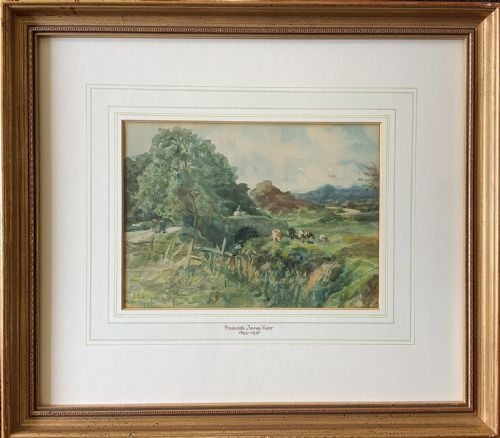
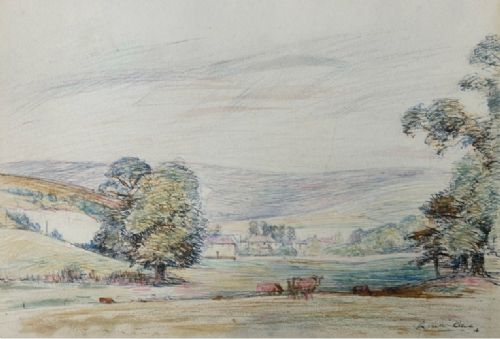
Original cattle watercolour art captures pastoral life through delicate pigment on paper, offering buyers a serene window into agricultural history.
Original Cattle Watercolour Art
Original cattle watercolour art comprises framed paintings depicting beasts of burden, cows in fields, and rural landscapes across the nineteenth and twentieth centuries. These works reflect British pastoral realism, Victorian naturalism, and British impressionism through diverse regional scenes.
Buyers meet pieces originating from the mid nineteenth century through to the mid twentieth century, including Edwardian and Victorian creations. Most examples present framed paintings executed on paper using watercolour pigment.
The subjects range from tranquil riverscapes with grazing herds to ploughing scenes and Welsh valley views. Artists captured these rural moments with varying palettes and framing styles, from burr wood frames to original antique mountings.
Materials and technique
Artists applied watercolour pigment and occasionally gouache, pastel, or graphite onto paper supports to build up depth and texture in these pastoral scenes. Some compositions incorporate subtle touches of gold leaf, while others rely entirely on washes of pigment.
Finished watercolours were housed beneath glass within wooden frames, occasionally featuring burr wood moulding that complements the earthy tones of the countryside subjects. These protective housings preserve the delicate water-soluble pigments from atmospheric degradation.
Listings feature paper, watercolour pigment, gouache, graphite, gold leaf, glass, and wood across Victorian and twentieth-century British pastoral art.
Distinctions in quality
Quality rests in the handling of light, atmosphere, and bovine anatomy by the artist, distinguishing masterly pastoral realism from simpler topographical records. Stronger works convey palpable moisture in river air and convincing movement in herds of cattle.
The integrity of the paper support and the vibrancy of surviving pigment determine the enduring presence of each piece. Superior examples retain their original framing and retain crisp brushwork without excessive fading across the pastoral expanse.
Frederick James Kerr·Russell Sidney Reeves·Oswald Garside·Frederick Septimus Lewis·Ernest Pile Bucknall·Thomas Hunn·Alfred Grey·Harold Lawes·Bernard Walter Evans·Basil Bradley·Henry Earp Senior·John R K Duff·Milton Drinkwater·Henry John Kinnaird·John J Hamer·Thomas Pyne·Angus Rands·George Graham·James Walsham Baldock
The Original Cattle Watercolour Art Glossary
- Watercolour
- A painting method in which the paints are made of pigments suspended in a water-based solution. This technique creates transparent washes of colour on paper.
- Gouache
- An opaque water-based paint method that includes a binding agent and white pigment to create heavier, solid areas of colour. It appears alongside traditional watercolour in several pastoral works.
- Pastoral realism
- An artistic style focusing on the accurate, unidealised depiction of rural life and agricultural landscapes. It forms the backbone of many nineteenth-century farm and cattle compositions.
Original Cattle Watercolour Art: Frequently Asked Questions
What periods do these watercolours span?
The works span from the mid nineteenth century through the Edwardian era and into the mid twentieth century. Most pieces reflect Victorian naturalism and early twentieth-century British pastoral styles.
Dates on these paintings commonly cluster around the late nineteenth and early decades of the twentieth century, capturing a changing agricultural landscape.
How should I display watercolour art safely?
Watercolours require placement away from direct sunlight to prevent the pigments from fading over time. Maintaining stable indoor humidity levels also protects the paper support and wooden frame.
Using conservation-grade glass during any future reframing helps filter ultraviolet light while keeping the delicate painted surface secure.
What subjects appear besides cattle?
Cattle often share the composition with sheep, horses, and farm workers engaged in ploughing or watering scenes. Riverscapes, hills, and distant farmland frequently frame the primary animal subjects.
These elements combine to create cohesive depictions of British and Irish rural life, from the Wye Valley to the Welsh countryside.
Are original frames important?
Original frames provide historical context and often complement the aesthetic of the period in which the watercolour was painted. Burr wood frames and period mouldings enhance the overall presentation of antique art.
Retaining the original housing preserves the integrity of the piece as a complete historical object from the artist's era.