


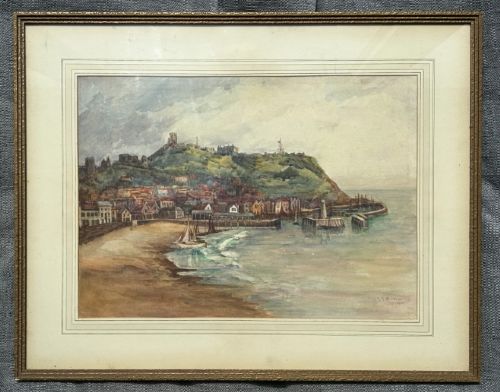


Original Beach Landscape Painting
An original beach landscape painting brings the salt air, shifting tides and open horizons of the coast directly into a room.
Original Beach Landscape Painting
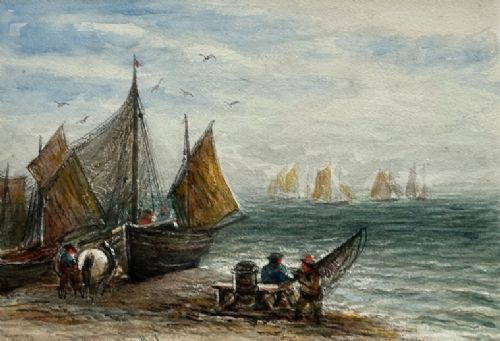
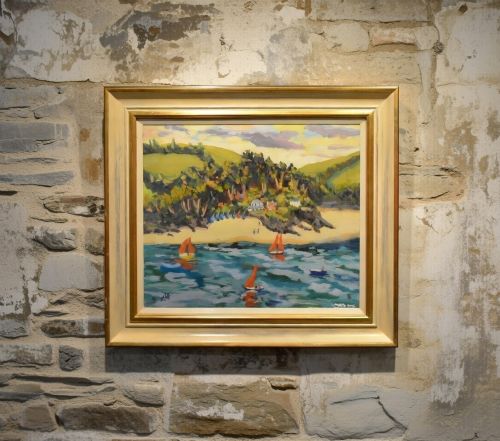
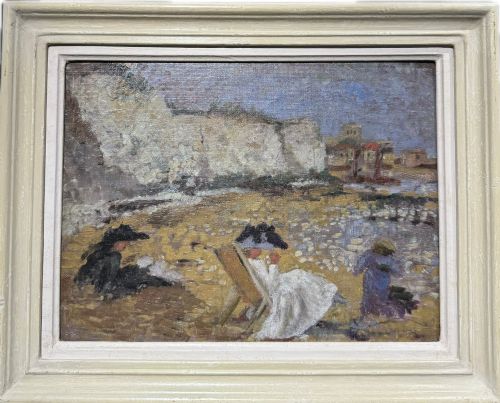
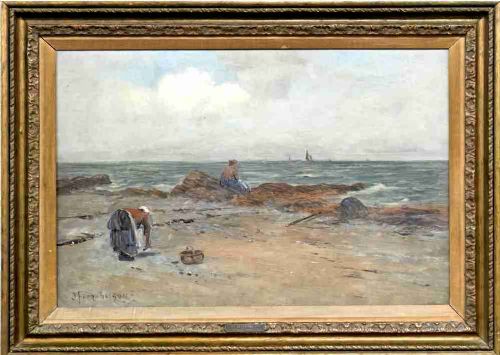
An original beach landscape painting captures coastal views, harbours, and shores through the eyes of artists working from the nineteenth century onward. These works record specific stretches of sand and sea, from Cornish fishing ports to French shores, often populated by figures, boats, or distant lighthouses. Collectors encounter these scenes executed in oil paint, watercolour, or gouache, reflecting changing artistic movements across decades.
The selections available here lean heavily towards British and European traditions, spanning Victorian realism, impressionism, and post-impressionism. A buyer will find works on canvas, paper, and panel, ranging in date from the eighteen-hundreds through to the mid-twentieth century. Each piece provides a window into historical coastal life, preserving the atmosphere of a particular shore at a specific moment in time.
Distinctions in Quality
The strength of a coastal artwork rests upon the artist's ability to render light, atmosphere, and the movement of water convincingly. Superior pieces demonstrate a confident handling of pigment that suggests the chill of the wind or the glare of low tide without relying on excessive detail. Weaker examples often slip into rigid formulas, losing the vital sense of air and space that defines a compelling shore scene.
Composition and provenance elevate certain works above others, particularly when an identified hand captures a recognisable stretch of coastline with distinct character. The harmony between the painted subject and its period framing also contributes to the overall integrity of the piece. A successful painting holds the viewer's attention through a balanced arrangement of land, sea, and sky.
Coastal scenes from British and French locations feature prominently, capturing harbours from Yorkshire to Cornwall.
James Orrock·William Banks Fortescue·Joseph Farquharson·Donald McIntyre·Thomas Bush Hardy
The Original Beach Landscape Painting Glossary
- Watercolour pigment
- A water-soluble colour medium that relies on the white of the underlying paper to provide luminosity and light.
- Impressionism
- A nineteenth-century style focusing on loose brushwork and the accurate depiction of light in its changing qualities.
- Seascape
- A work of fine art that depicts the sea, coastal views, beaches, or marine vessels as its primary subject.
- Gouache
- An opaque watercolour medium containing a binding agent, producing a heavier, more solid matte finish on paper.
Original Beach Landscape Painting: Frequently Asked Questions
How do I date a beach painting?
Dating relies on stylistic clues, framing methods, and the type of canvas or paper support used by the artist. Signatures, inscriptions on the reverse, and historical records further help place the work within a specific era.
Victorian pieces often display tighter brushwork and heavier gilt frames, whereas mid-century examples tend towards looser impressionist marks and simpler wooden mouldings.
Where should I hang a coastal artwork?
These paintings suit rooms with good natural light, where the tones of the sea and sand can complement the interior surroundings. Avoid placing works in direct, harsh sunlight to protect delicate watercolours and oil pigments from fading.
Pairing a framed maritime scene with neutral walls allows the atmospheric colours of the coastline to stand out clearly.
What is the difference between oil and watercolour?
Oil paint utilises a slow-drying linseed base that allows artists to build rich textures and deep, layered tones on canvas or board. Watercolour relies on thin washes of pigment on paper, creating a lighter, more translucent effect.
Oils generally require a protective frame without glass, whereas works on paper need glass glazing to prevent atmospheric damage.
Are these paintings signed by the artist?
Many works bear the original signature, monogram, or date of the painter, either on the front face or inscribed on the reverse. Unsigned pieces are often attributed through stylistic comparisons, gallery labels, or documented archives.
A signature adds historic context, though unsigned works from recognised periods still hold substantial artistic merit.