



Twentieth Century Coastal Oil
Twentieth century coastal oil paintings capture sea and shore through varied Impressionist and Modern British eyes.
Twentieth Century Coastal Oil
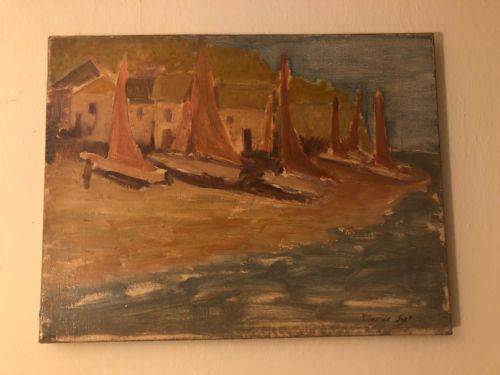
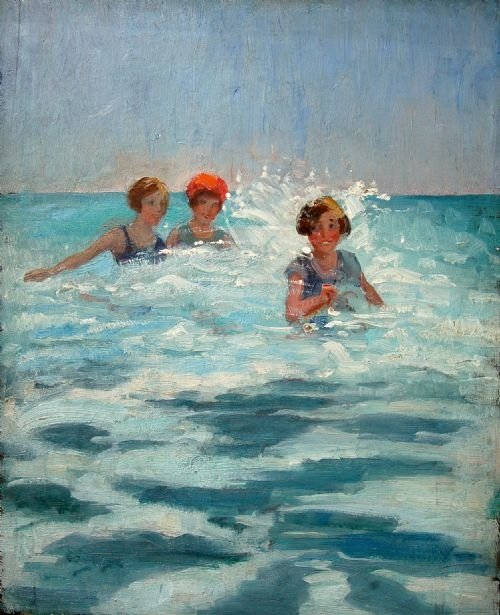
Twentieth century coastal oil pieces encompass maritime scenes, harbour views, and cliff landscapes produced across several decades of the last hundred years. These works record ports, beaches, and coastal villages in Britain, France, and further afield.
Buyers encounter compositions ranging from early twentieth century Edwardian and British Impressionist visions to later Modern British and Newlyn School interpretations. The selection frequently includes framed oils on canvas or board created by listed artists.
Subjects stretch from busy Breton seaweed gatherers and Cornish harbours to quiet Scottish borders and sunlit French coastal towns. Each piece reflects the specific palette and brushwork of its decade, spanning from the nineteen-tens through to the nineteen-sixties.
Materials and methods
Artists painted these coastal scenes using oil paint applied to prepared canvas or wooden board supports. The medium allowed for rich textures and varied impasto, particularly when rendering rough seas, sandy beaches, and white chalk cliffs.
Canvases and boards were typically set within wood frames, many retaining their original or period mouldings that complement the palette of the painting. The combination of oil pigments and sturdy supports ensured the survival of these outdoor and studio works over the decades.
Several canvases carry microscopic grains of actual sea sand embedded in the thickest waves by windswept coastal artists.
Assessing quality and execution
Quality in twentieth century coastal oil paintings rests upon the confidence of the brushwork and the artist's command of light and atmosphere. Stronger works demonstrate a deliberate handling of tone that successfully conveys the movement of water and the salt air of the shore.
The sensitivity of the colour palette and the compositional balance distinguish finer examples from standard decorative views. Provenance, clear signatures, and well-preserved original wood frames further elevate the standing of a piece within this category.
Clifford Hanney·Donald McIntyre·William Lambert Bell·Owen Bowen·Ernst Louizor·Augustus William Enness·Maurice Sijs·Alfred Egerton Cooper·Harry John Pearson
The Twentieth Century Coastal Oil Glossary
- Oil on canvas
- Pigment suspended in a drying oil applied to a stretched woven fabric support. This traditional method allows for expressive textures and subsequent conservation.
- Oil on board
- Pigment applied to a rigid wooden panel or stiff board rather than fabric. This surface provides a firm base that resists sagging over time.
- Impressionism
- A style of painting that focuses on capturing the visual impression of a moment, especially regarding shifting light and colour. Artists utilise visible brushstrokes and open compositions.
- Newlyn school
- An art colony based in Cornwall during the late nineteenth and twentieth century that focused on plein air painting. Members recorded local fishermen, coastal scenes, and harbour life directly from nature.
- Impasto
- Paint applied in thick layers that stand out visibly from the surface. This technique adds tactile dimension to representations of crashing waves or rugged cliffs.
Twentieth Century Coastal Oil: Frequently Asked Questions
How do I date a coastal oil painting?
Dating relies on stylistic clues, framing materials, and recorded dates for signed artists. Painters often worked across multiple decades, so costume, architecture, and brushwork style help narrow the period.
Signatures, exhibition labels on the reverse, and the type of canvas or board support offer further chronological evidence. Comparing the technique to known dated works by the same hand confirms the timeline.
Where were these coastal scenes painted?
Artists travelled to active fishing ports, quiet estuaries, and dramatic cliff edges across Britain and continental Europe. Popular locations included Cornish harbours, Norman cliffs, and French coastal towns.
Many painters worked plein air directly on the shore to capture changing weather and light conditions. Others sketched outdoors and finished the canvases in their studios.
How should I hang a coastal oil?
Select a wall with stable temperature and humidity away from direct sunlight and heating vents. Proper placement protects both the oil paint layer and the supporting wood frame from warping.
Ensure the hanging hardware matches the weight of the framed canvas or board. Secure fixings into wall studs or use appropriate heavy-duty wall anchors.
What is the difference between canvas and board?
Canvas consists of woven fabric stretched over a wooden frame, offering slight give under the brush. Board provides a completely rigid surface that requires no tension adjustments.
Both materials supported oil paint successfully throughout the twentieth century. Board was often chosen for smaller plein air studies due to its portability and durability.