



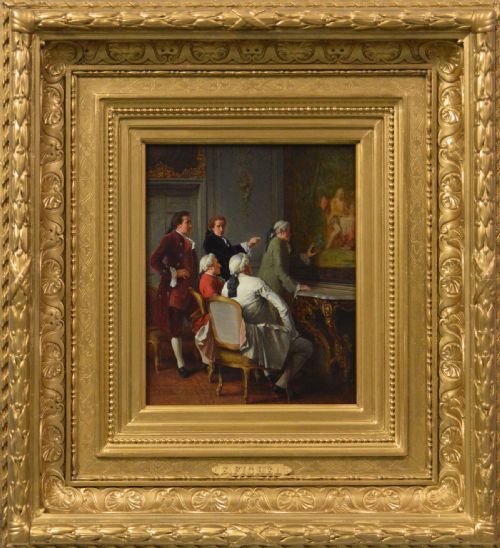


Original 18th Century Artwork
Original 18th century artwork brings centuries of hand-rendered pigment and ink onto paper, panel and canvas into modern interiors.
Original 18th Century Artwork
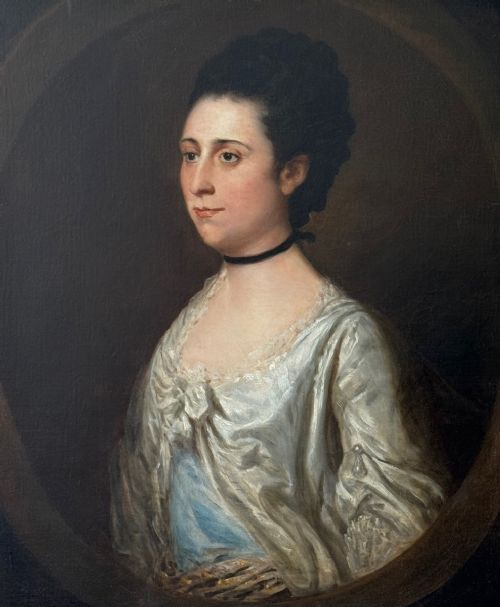
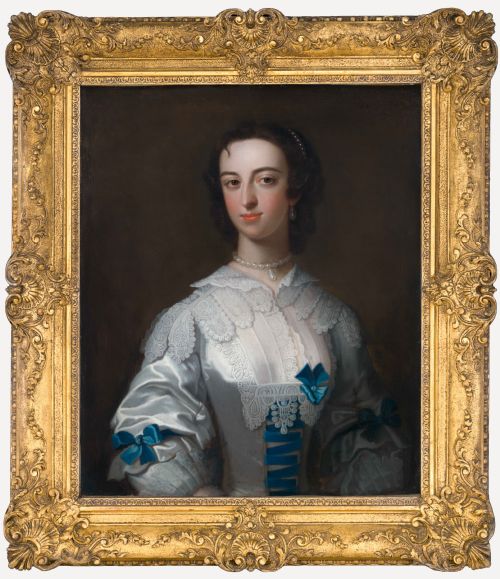
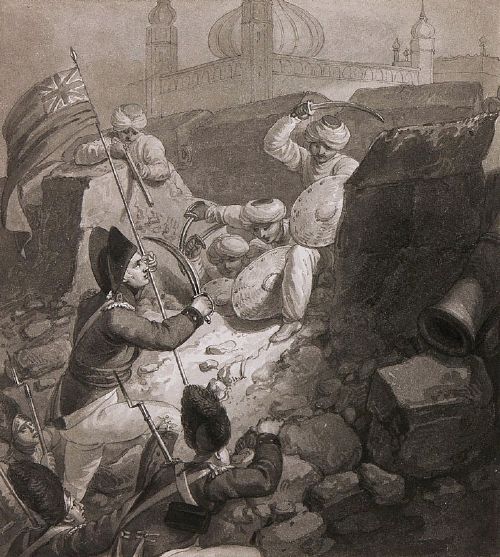
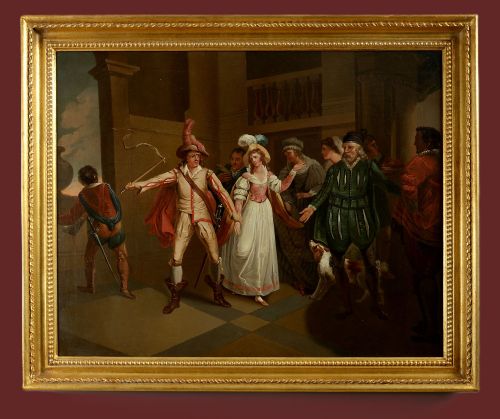
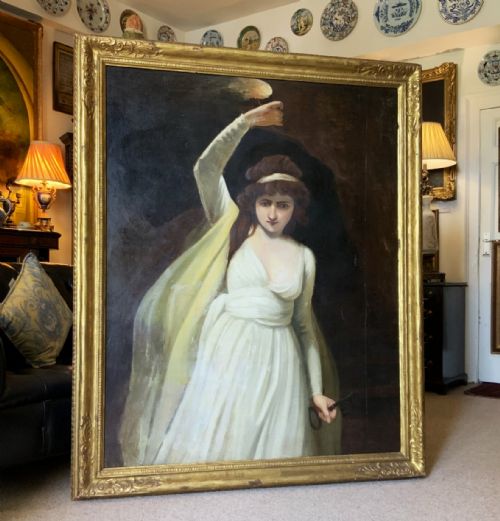
When searching for original 18th century artwork, buyers encounter a diverse selection of period oil paintings, watercolours, sketches and engravings. These works span domestic portraits, classical landscapes, maritime scenes and historical genre subjects originating from British, Dutch and French traditions.
The objects on this page predominantly present as framed paintings on canvas or board, alongside delicate ink drawings and watercolours on paper. Many retain their original or period frames, preserving the complete historic presentation.
While the core inventory centres on the 1700s and Georgian eras, the selection also includes related works from adjacent periods such as the 17th and 19th centuries.
Materials and technique
Artists of the period applied oil paints to woven canvas or wooden panels, building rich textures and deep tones that survive across centuries. Watercolour, pen, ink and wash were executed on paper, often capturing preparatory sketches or finished topographical views with precise line work.
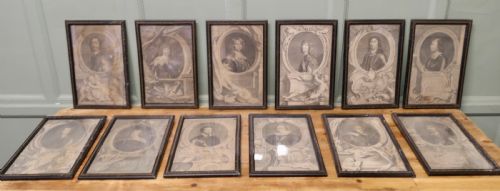
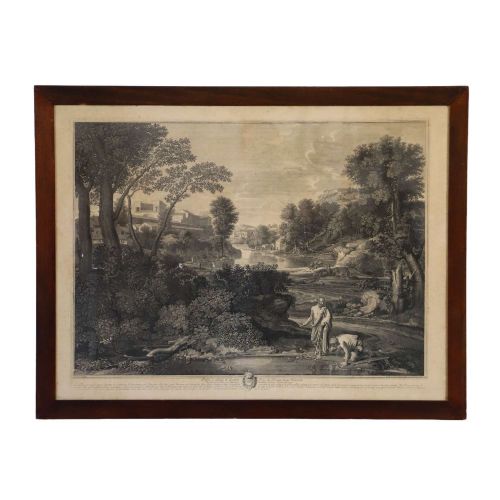
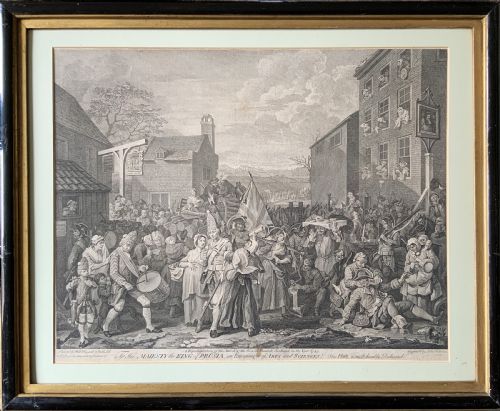
Engravings utilised metal plates to produce multiple impressions on paper, frequently hand-finished or paired with wash. Frames were constructed from wood and finished with giltwood, providing structural support and ornamentation tailored to each picture.
Listings span the 17th, 18th, and 19th centuries, featuring oil on canvas, paper, wood, and giltwood frames.
Qualities of distinction
The distinction between standard works and exceptional pieces lies in the sureness of the draftsmanship and the expressive depth of the composition. Masterful handling of light, anatomical precision in portraiture, and atmospheric perspective in landscapes elevate certain works above routine production.
Condition also plays a vital role, where the integrity of the original pigment, the stability of the canvas or paper support, and the presence of a matching period frame contribute to the overall historical value.
William Marshall Craig·Benjamin Barker of Bath·John Opie·Jacobus Howbraken·Étienne Baudet·David Teniers·William Hogarth·George Morland·Benjamin Eugene Fichel·John Sanderson Wells·Edward Dayes·J Laporte·Francesco Zuccarelli·Joseph Farrington·John Inigo Richards·Thomas Rowlandson·John Hoppner·Arturo Orselli·Johan Noah Bemmel·Henry Singleton·Edmund Alphonse Andre·Frank Moss Bennett·John Russell·Hermanus van Brussel·Nathaniel Dance Holland
The Original 18th Century Artwork Glossary
- Giltwood
- Carved wood treated with a thin layer of gold leaf. This material was widely utilised for decorative antique frames.
- Wash
- A thin, transparent layer of diluted watercolour or ink applied to paper. It creates subtle tonal gradations in sketches and drawings.
- Panel
- A flat piece of wood used as a rigid support for oil paintings before canvas became dominant. Oak and mahogany were common choices.
- Genre painting
- A depiction of everyday subjects and ordinary people engaged in domestic or social scenes. These works offer a window into daily life.
- Engraving
- A printmaking technique where an image is incised into a metal plate with a burin. The inked plate transfers the design onto paper under pressure.
Original 18th Century Artwork: Frequently Asked Questions
How do I hang antique art safely?
Support heavy oil paintings on canvas using secure wall anchors rated for the weight of the piece and its wooden frame. Hang works on paper away from direct sunlight to prevent the fading of delicate watercolours and inks.
Maintain stable room temperatures to protect organic materials like wood, paper and canvas from warping or cracking over time.
What is the difference between an oil painting and a watercolour?
Oil paintings utilise pigments suspended in drying oils applied to canvas or wood panels, allowing for thick impasto and deep, blendable colours. Watercolours combine water-soluble pigments on paper, producing translucent effects and lighter compositions.
Oils are generally more robust and traditionally require frames with glass only if unvarnished, whereas works on paper need glass protection.
Are these artworks entirely original?
The listings include original hand-rendered works such as oil paintings, sketches and watercolours created directly by the artist. They also feature original period engravings, which are authentic printed impressions pulled from plates in the era.
Descriptions specify whether a work is an original creation from the period or executed by a later follower after an earlier master.
How can I tell an 18th century frame from a later copy?
Period frames display hand-carved wooden ornament, traditional gesso application and signs of age such as shrinkage cracks in the gilding. Modern reproductions often show uniform composition materials or machine-tooled uniformity.
Examine the back of the frame for old fixings, hand-cut joinery and signs that the artwork has remained in its housing for generations.