






Orientalist Style Painting
These orientalist style painting examples and related decorative works bring distant landscapes and intricate regional motifs into the home through rich oils, canvases, and framed prints.
Orientalist Style Painting
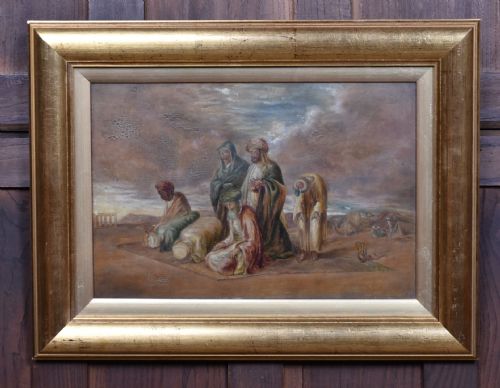
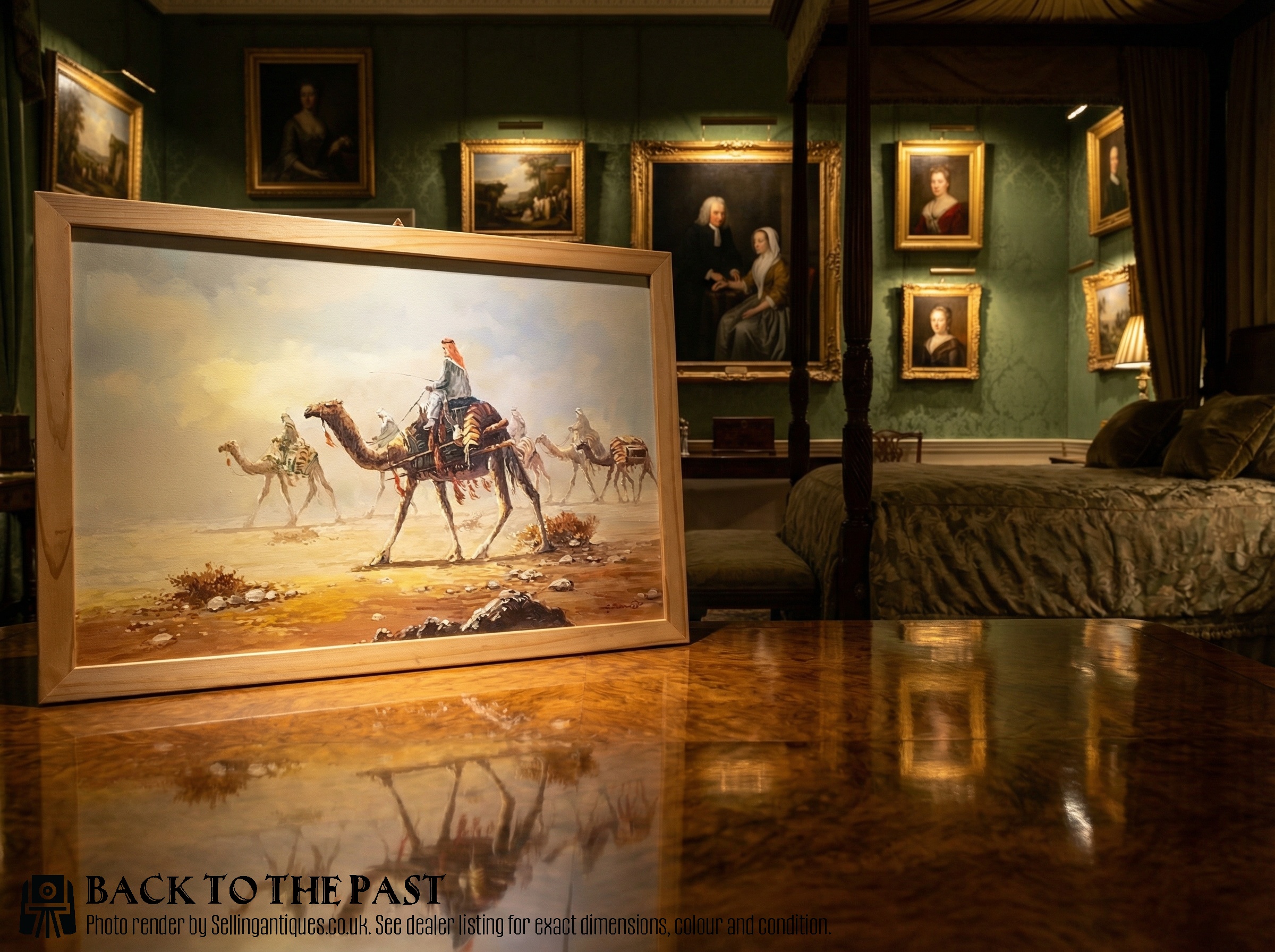
When you search for orientalist style painting, you encounter works spanning the nineteenth and twentieth centuries that capture scenes of deserts, figures, and architectural details. These oil paintings on canvas often depict subjects such as Bedouin landscapes and historical figures.
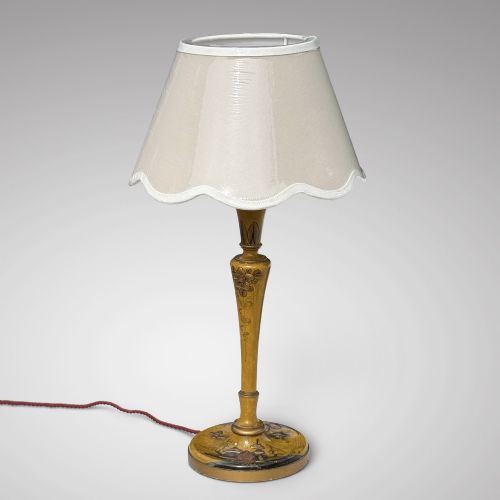
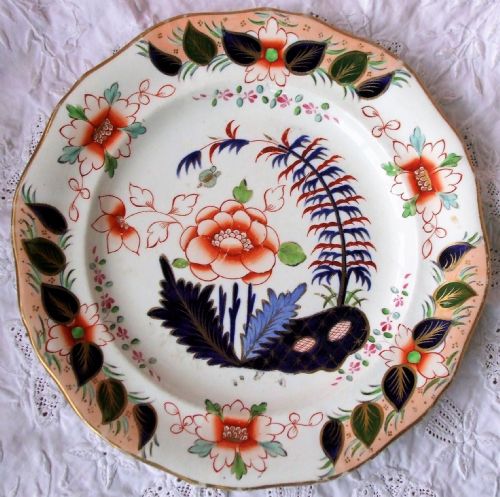
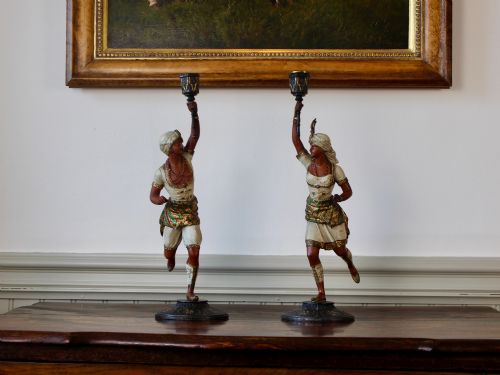
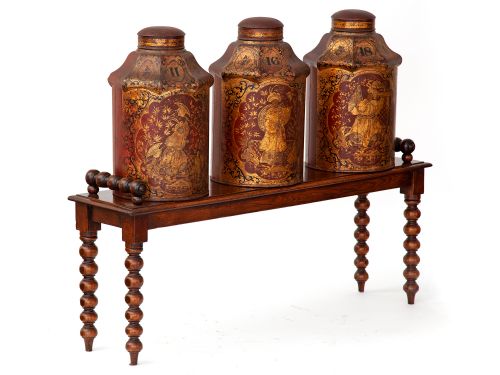
The category extends beyond flat canvas to encompass related decorative arts like Chinoiserie lacquer table lamps, Wedgwood Persian style vases, and cold painted spelter figures. Pieces range from nineteenth century Georgian ironstone plates to mid twentieth century canvases.
Materials and construction
Paint applied to canvas forms the primary medium for these visual works, often enhanced by gold leaf and framed prints. Artisans also utilised enamel, porcelain, and lacquer across decorative objects such as tea canisters and table lamps.
Sculptural items utilise metalworking techniques, particularly cold painted spelter and bronze, alongside plaster and wood. These varied substrates support intricate surface decoration spanning European interpretations of Middle Eastern, Persian, and East Asian motifs.
Listings feature items spanning the eighteenth, nineteenth, and twentieth centuries, utilising canvas, bronze, spelter, lacquer, and porcelain.
Quality and execution
The standard of execution in the painted works rests upon the handling of brushwork, pigment depth, and compositional balance. Canvas pieces by named artists or attributed hands demonstrate finer control over light and narrative detail than anonymous decorative outputs.
Material richness distinguishes the physical objects accompanying the canvases. Heavier cast spelter, detailed polychrome finishes, and intact lacquer or gold leaf indicate superior craftsmanship compared to simpler moulded or massed production.
Herbert Gustave Schmaltz·John Davenport of Longport·Thomas Allen·William James Muller·R.A Bartlett·Abraham Cooper·Richard Wilson·Louis Pierre Malpass
The Orientalist Style Painting Glossary
- Orientalist
- An artistic style depicting scenes, figures, and architecture of the Middle East and North Africa. It gained prominence through nineteenth century European travel and exploration.
- Chinoiserie
- A decorative style reflecting European interpretations of Chinese and East Asian artistic traditions. It frequently appears on lacquer furniture, panels, and ceramics.
- Spelter
- An alloy of zinc and lead used widely for decorative figures, candlesticks, and match strikers. It was often cold painted to imitate bronze.
- Garniture
- A set of three or more ornamental vases or vessels designed to be displayed together on a mantelpiece or sideboard.
- Imari
- A style of Japanese porcelain featuring blue, iron red, and gold patterns, which was extensively copied by European potteries like John Davenport.
Orientalist Style Painting: Frequently Asked Questions
What subjects do these paintings show?
The canvases typically present scenes of Middle Eastern landscapes, desert vistas, and figural studies. Works capture subjects like Bedouin encampments and historical figures.
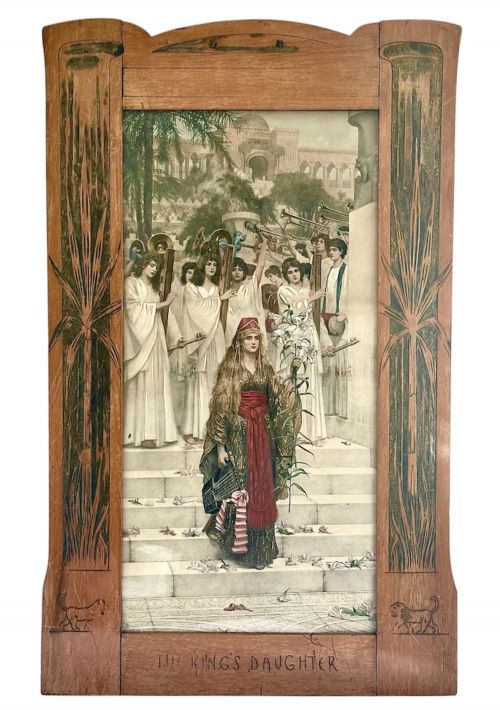
Alongside flat paintings, the broader selection includes framed prints and photogravures depicting specific narrative titles.
How do I date an orientalist canvas?
Dating relies upon examining the canvas preparation, stretcher construction, and framing techniques alongside any visible signatures. Nineteenth century works often feature hand spun linen canvases and period specific pigments.
Stylistic cues within the brushwork and the attire of depicted figures also help narrow the production decade.
Where were these decorative objects made?
Items originate from various European workshops and potteries, including English firms, French studios, and Belgian kilns. Manufacturers adapted Middle Eastern, Persian, and East Asian designs for Western drawing rooms.
Local European foundries produced the spelter figures and candlesticks to satisfy the period demand for exotic decor.
How should I display these pieces?
Oil paintings on canvas require stable wall environments away from direct sunlight to preserve the pigment and substrate. Garnitures and vases sit well on sturdy mantelpieces or sideboards where their full sets remain visible.
Table lamps and candlesticks function practically while adding regional decorative accents to living spaces.