




Framed Desert Landscape Artwork
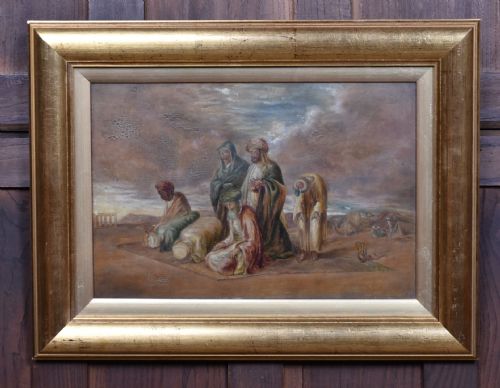
Framed desert landscape artwork brings arid vistas into your interior, offering sunlit expanses of sand and distant horizons.
Framed Desert Landscape Artwork
Framed desert landscape artwork encompasses paintings, watercolours and prints capturing arid terrain, Bedouin scenes and Nile villages. When you search for framed desert landscape artwork, you encounter pieces spanning the nineteenth century through to the mid-twentieth century.
The selections on this page lean heavily towards Orientalist visions, Victorian Orientalism, and Mid-20th Century Realism. Subjects range from the Suez Canal and Marble Canyon to Arabian and Middle Eastern wildernesses.
Watercolours, gouache, and oil paintings dominate the visual record, usually presented behind glass within protective wooden frames. Buyers will find individual watercolours, matched pairs, and larger sets of prints representing these distant vistas.
How framed desert landscape artwork was made
Artists captured these arid scenes utilising oil paint on canvas or board, alongside delicate watercolour and gouache on paper. These mediums allowed painters to render the intense light and expansive shadows characteristic of desert topographies.
Works are preserved behind glass and housed within wooden frames that protect the fragile paper or canvas surfaces from atmospheric damage. The physical construction combines traditional painting techniques with period framing methods appropriate to each era.
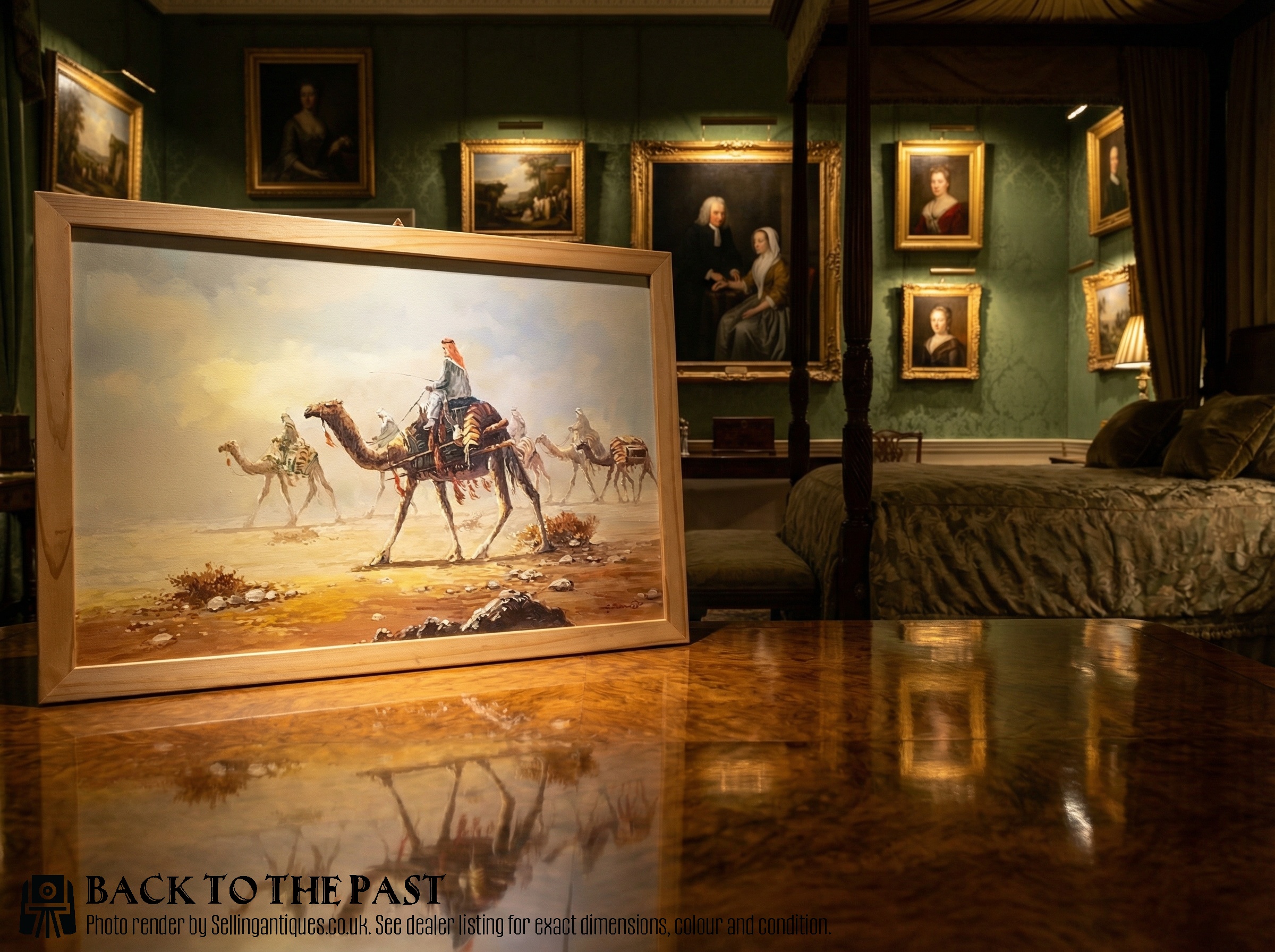
Camels feature in multiple desert scenes, steadfastly reminding viewers of the slow pace of nineteenth-century transport.
What varies in quality
Quality rests upon the artist's ability to handle light and atmosphere, distinguishing evocative watercolours by named painters from standard decorative prints. The fidelity of the composition and the handling of pigment determine the visual impact of the arid scene.
The condition of the paper, canvas, and wooden frame contributes significantly to the integrity of the piece over time. Original framing adds context, whereas later restorations or replacements influence the overall character of the artwork.
Anne Dorrien Smith·Nora Cundell·Cecil Rochfort Doyly John·William James Muller·Otto Pilny·Abdul Kadir Al Rassam
The Framed Desert Landscape Artwork Glossary
- Orientalism
- Artistic depiction of Middle Eastern and North African subjects by Western creators. This style flourished during the nineteenth and early twentieth centuries.
- Gouache
- An opaque water-based paint that provides solid, matte colour. It is frequently combined with transparent watercolour on paper.
- Bedouin
- Nomadic Arab pastoralists frequently featured as subjects in nineteenth and twentieth-century desert paintings.
- Mid-20th Century Realism
- An artistic approach focusing on recognisable, realistic depiction of scenes from the middle decades of the twentieth century.
Framed Desert Landscape Artwork: Frequently Asked Questions
What periods do these desert artworks cover?
The pieces span from the nineteenth century, through the Edwardian era, up to the mid-twentieth century around nineteen sixty. This timeframe captures various shifts in artistic interpretation of arid regions.
Buyers will encounter works dated across specific years like nineteen twenty, nineteen forty, and nineteen fifty, reflecting changing stylistic approaches to desert scenery.
What materials are used in these pieces?
Artworks are executed in oil paint, watercolour, gouache, and print formats on canvas, board, and paper. Wood and glass are standard components of the protective framing.
The combination of these materials varies according to the specific period and whether the item is an original painting or a print.
How should I hang desert watercolours?
Watercolours and gouache on paper are sensitive to direct sunlight and require placement away from harsh windows. Framing behind glass protects the delicate paper surfaces from ambient moisture and dust.
Ensuring stable indoor humidity levels helps preserve both the wooden frames and the painted supports over decades of display.
What subjects appear in these artworks?
Subjects include Bedouin tribesmen with camels, the Suez Canal, Nile villages, and Marble Canyon in Arizona. These scenes reflect both Middle Eastern landscapes and American desert topographies.
Artists recorded these vistas through Orientalist interpretations and mid-century realism, capturing expansive wilderness views.