


Orientalist Porcelain Statue
An orientalist porcelain statue brings rich nineteenth and twentieth century narrative and detail to a room.
Orientalist Porcelain Statue
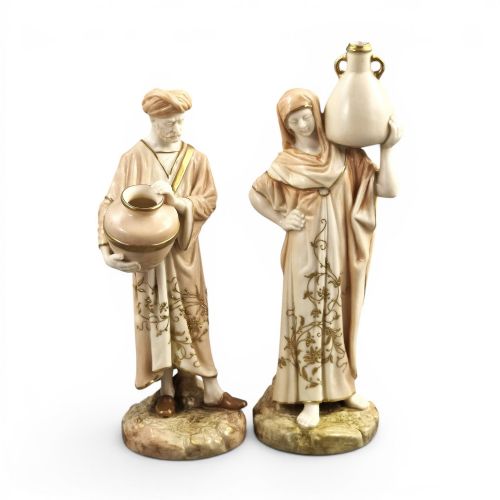
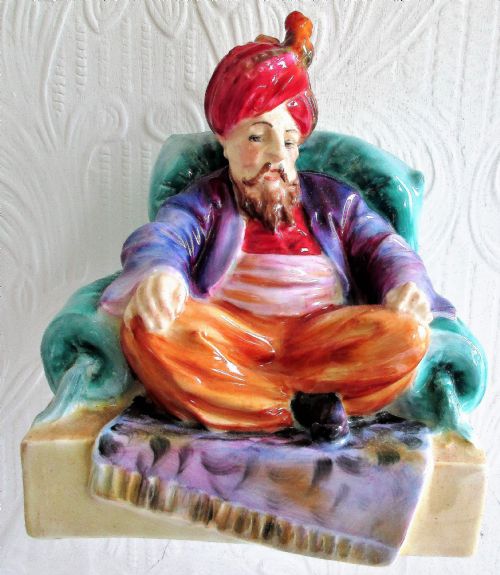
An orientalist porcelain statue portrays figures and subjects inspired by Eastern and Middle Eastern cultures, emerging primarily through Victorian and Edwardian works. When you search for an orientalist porcelain statue, you encounter carefully modelled figures such as water carriers, musicians, and snake charmers. These pieces capture specific cultural narratives popularised during the nineteenth and early twentieth centuries by prominent European factories.
The versions most commonly met on this page span the Victorian and Edwardian eras, with notable examples produced by factories such as Royal Worcester and Royal Dux. Forms range from large pairs of water carriers to single figures decorated with intricate patterns. Collectors often find works attributed to specific modellers like James Hadley alongside unmarked vintage representations.
Materials and production methods
Makers utilised fine ceramic and porcelain bodies, including biscuit porcelain and glazed porcelain, to achieve realistic skin tones and smooth drapery. Artisans shaped these materials into complex figurative sculptures that required precise kiln firing to maintain structural stability.
Surface decoration frequently involved hand-painted enamel, gold leaf, and extensive gilding to highlight elaborate garments and accessories. Specialised techniques such as blush ivory grounds and patent metallic finishes created the distinctive tactile surfaces seen on Victorian examples.
Listings feature porcelain, enamel, and gold leaf applied across Victorian and Edwardian production dates.
Distinctions in quality
The standard of a piece depends heavily on the crispness of the modelling and the finesse of the hand-painted details. Superior examples exhibit finely rendered facial expressions, intricate textures in clothing, and well-preserved gilding without loss.
Scale and ambition also differentiate the work, as large pairs and prototype pieces demand greater technical skill from the factory. The involvement of named designers adds a layer of artistic execution that elevates the finished sculpture.
Royal Worcester·Royal Doulton·Royal Dux·Carl Thieme Dresden·Turn Teplitz
The Orientalist Porcelain Statue Glossary
- Biscuit porcelain
- Unglazed ceramic fired once to produce a matte, marble-like surface. This finish is frequently employed to showcase delicate modelling in figurative works.
- Blush ivory
- A tinted ceramic ground developed by Royal Worcester featuring soft cream and peach tones. It provides a subtle background for polychrome enamel and gilt decoration.
- Gilding
- The application of gold leaf or gold paint to ceramic surfaces. It accents key architectural or sartorial details on nineteenth-century figures.
- Enamel
- Vitreous coloured glass fused to the porcelain body during firing. Artisans use enamel to achieve vibrant hues on clothing and accessories.
- Prototype
- An initial trial model produced by a factory before general release. These pieces often test new glazes or forms.
Orientalist Porcelain Statue: Frequently Asked Questions
How are water carrier figures identified?
Water carrier figures typically depict individuals carrying vessels such as jars or urns on their shoulders or heads. These sculptures often feature specific regional attire and detailed base decoration.
Factory marks, registration numbers, and titled bases help confirm the specific model and production period.
What defines the blush ivory finish?
Blush ivory is a specialised ceramic body and glaze technique associated with late nineteenth-century Royal Worcester production. It combines a soft, matte cream ground with delicate flesh tones and gold accents.
This finish creates a warm, tactile quality distinct from standard glossy porcelain glazes.
How do I care for antique porcelain?
Antique porcelain requires gentle handling and placement away from direct sunlight and dramatic temperature fluctuations. Dusting with a soft, dry brush preserves delicate enamel and gilt details.
Avoid using liquid cleaners on unglazed biscuit porcelain or painted surfaces.
Where were Royal Dux figures made?
Royal Dux pieces originated in Bohemia during the late nineteenth century. The factory became known for large figurative groups and orientalist subjects.
Identifying marks often include a pink triangular applied pad on the base.