


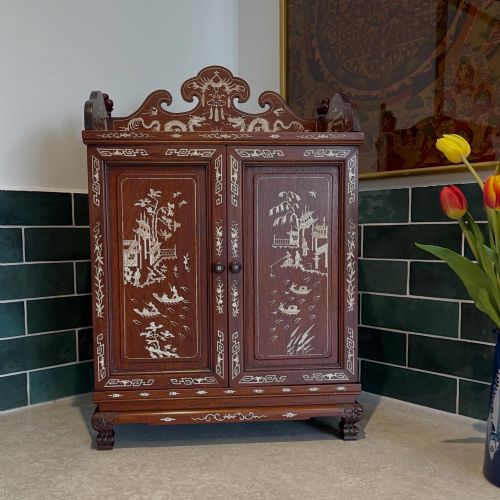


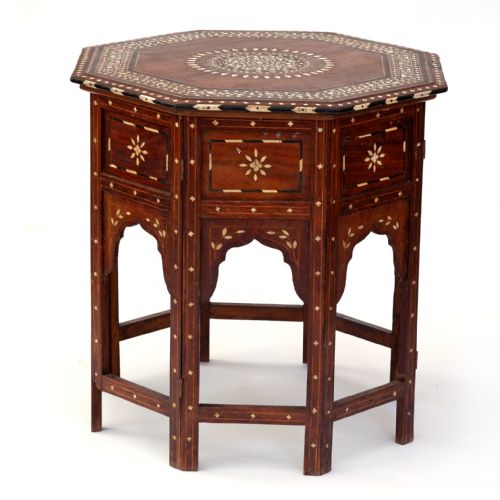
Oriental Wood Inlay Table
An oriental wood inlay table brings intricate craftsmanship into a room through contrasting materials set into rich timber surfaces.
Oriental Wood Inlay Table
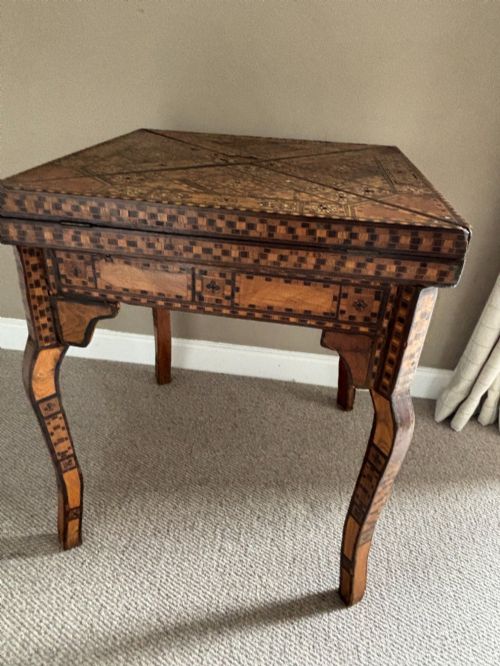
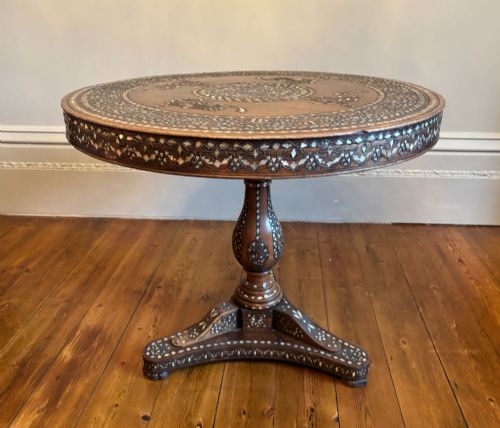
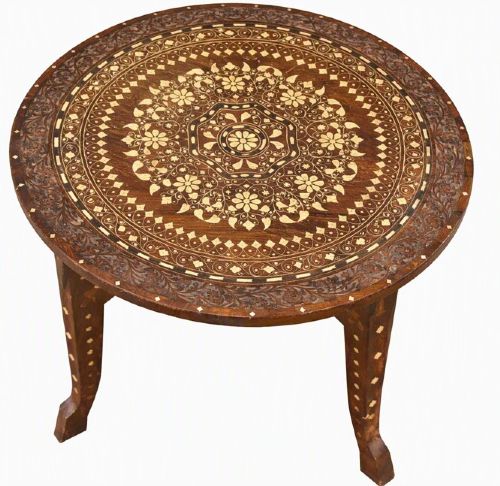
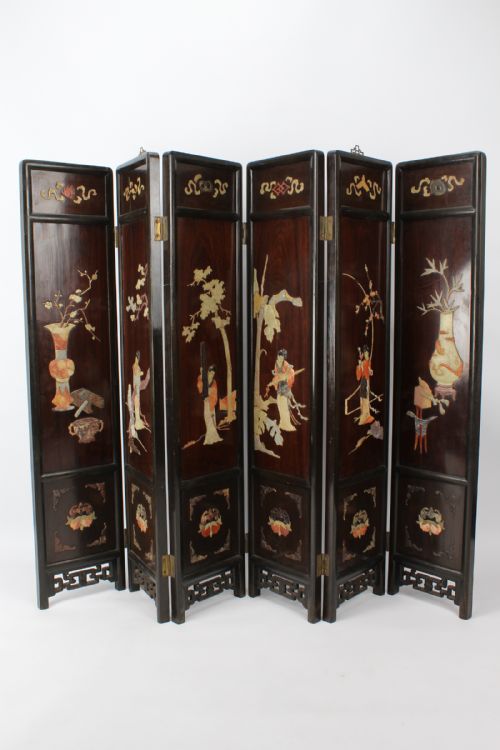
When someone searches for an oriental wood inlay table, they are looking at decorative small furniture pieces featuring detailed surface ornamentation from diverse regional traditions. The examples found here span from Victorian interpretations to Qing Dynasty pieces, taking forms such as occasional tables, games tables, and pedestal tables.
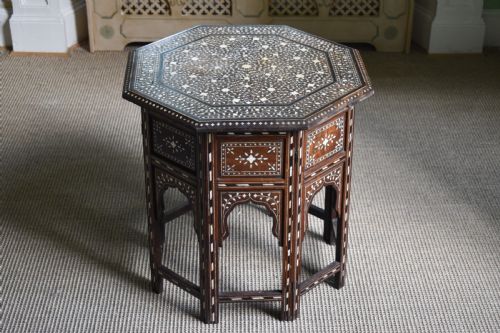
The most common versions met on this page are occasional and side tables originating from traditions like Anglo-Indian Hoshiarpur production or Chinese export workshops. These tables utilise dark hardwoods and exotic timbers embellished with contrasting decorative inserts.
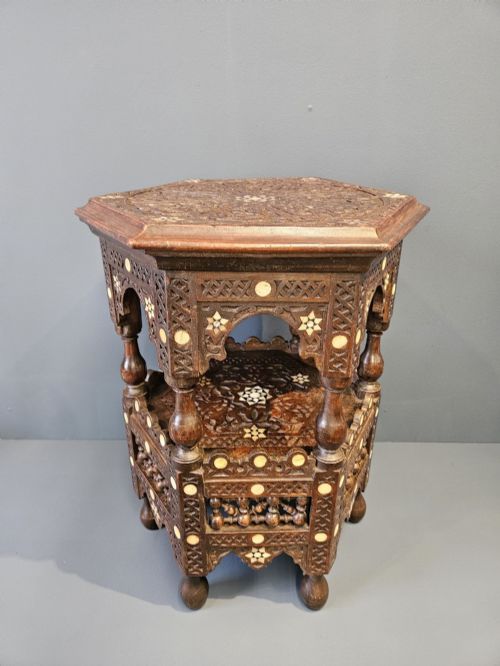
Makers across different regions applied distinct geometric and floral motifs, resulting in pieces that range from Moorish Revival octagonal lamp tables to Damascus envelope games tables. Each object reflects the specific decorative vocabulary of its period and geographic origin.
Materials and construction
These tables combine dense hardwoods such as teak, rosewood, sheesham, and hongmu as the primary structural timber. Artisans carved these robust woods to form folding bases, pedestal supports, and rigid table frames.
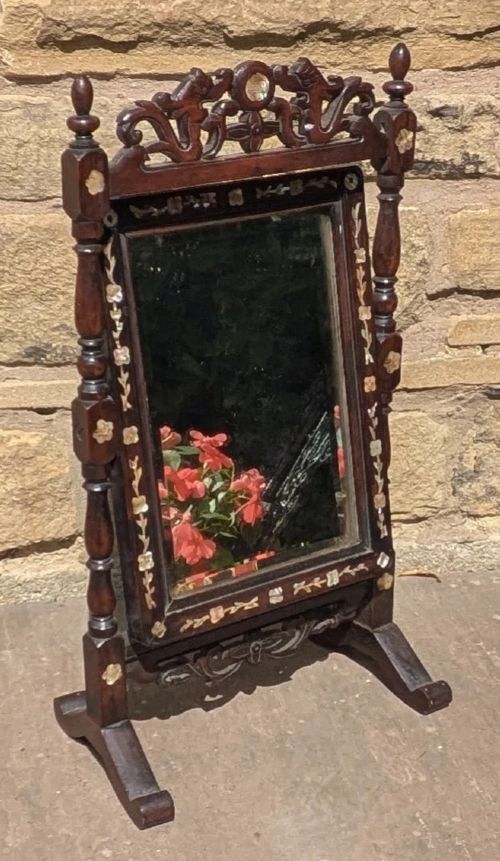
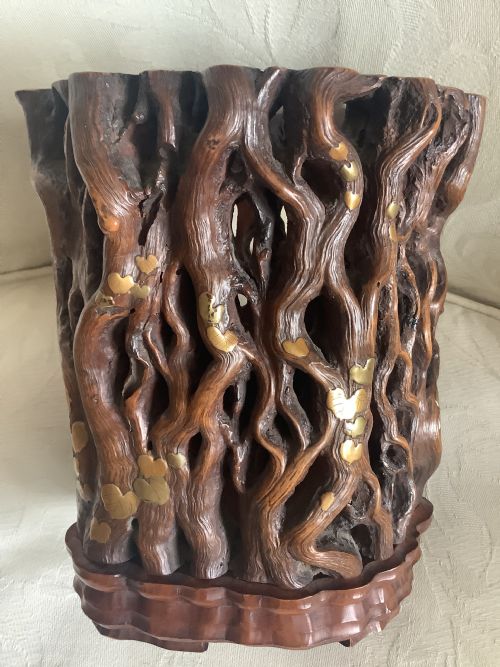
Surface decoration relies on meticulous inlay work utilising bone, mother-of-pearl, and sheet brass. Craftsmen recessed these contrasting materials into shallow channels carved directly into the timber to create complex geometric, floral, or figurative patterns.
Oriental Wood Inlay Table Retail Price Guide 2026
Typical asking prices for oriental wood inlay table among the pieces listed under this phrase on Sellingantiques today, from the lower quarter to the upper quarter. They describe what is for sale here now, not the wider market.
The listings here include 19th-century pieces alongside items dated from 1880, 1900, and 1920, showing diverse global workshop traditions.
Assessing quality in inlaid furniture
Quality separates in this field based on the precision of the joinery and the tightness of the inlay work within the timber surface. Superior pieces exhibit seamless integration of bone, mother-of-pearl, or brass with no visible gaps or excess adhesive.
The depth and clarity of the surrounding wood carving also dictate the standard of the piece. Crisp, deeply undercut foliage and geometric repeat patterns demonstrate a higher level of artisan skill than shallow, hastily stamped surface decoration.
Liberty & Co
The Oriental Wood Inlay Table Glossary
- Bone inlay
- A technique where small pieces of shaped bone are embedded into a wooden base to form pale decorative motifs. This method creates a striking visual contrast against dark tropical hardwoods.
- Mother-of-pearl
- The iridescent inner layer of certain mollusc shells used to create shimmering, reflective inlays. Craftsmen cut thin plates of this material to catch the light across table tops and panels.
- Hongmu
- A traditional Chinese term for dense, red-brown hardwoods utilised in fine furniture production. This heavy timber provides a stable, dark ground for intricate shell and metal embellishments.
- Hoshiarpur
- A North Indian city renowned for intricate wood carving and bone inlay work, particularly on folding occasional tables. Pieces from this region often feature dense overall botanical patterns.
Oriental Wood Inlay Table: Frequently Asked Questions
Are these tables sturdy enough for daily use?
Many occasional and side tables feature folding bases or complex fretwork designed for decorative display rather than heavy weight loads. Placing hot cups or heavy objects directly onto the surface can damage the delicate shell and bone inlays.
Use coasters and protective mats to preserve the inlaid panels from scratches and moisture rings. Position the furniture in stable room conditions away from direct heat sources to prevent the wood from warping.
How can I tell an Anglo-Indian table from a Chinese export piece?
Anglo-Indian pieces from centres like Hoshiarpur typically feature overall dense botanical carving and intricate bone inlay across folding wooden frames. The timber used is often sheesham or teak with geometric and floral repeat patterns covering every visible surface.
Chinese export and Qing Dynasty pieces generally utilise heavier hardwoods like hongmu and incorporate mother-of-pearl depicting figurative scenes, dragons, or stylized landscapes. The construction tends to focus on rigid pedestal or drum-shaped forms rather than folding bases.
What rooms suit an inlaid occasional table?
These compact tables function well as bedside stands, lamp tables, or decorative accents beside seating arrangements. Their detailed surfaces allow them to stand alone as focal points within a room without requiring heavy styling.
Pair them with neutral backgrounds that highlight the contrast of the bone, brass, or shell details against the dark timber. Ensure the chosen spot maintains stable humidity levels to protect the organic inlay materials.