



Oriental Tray Table
An oriental tray table combines portable serving work with low domestic staging, offering collectors a flexible surface in lacquer, hardwood or brass.
Oriental Tray Table
An oriental tray table typically pairs a removable or folding top with a supportive stand, functioning as a coffee table, occasional table or side table in modern rooms. The form bridges utilitarian serving ware and decorative display, originating in colonial trade and domestic revival movements across the nineteenth and twentieth centuries.
The versions most commonly met on this page span the Edwardian period, the nineteenth century and the nineteen-thirties, reflecting Anglo-Indian, Chinoiserie and Qing Dynasty traditions. Buyers encounter pieces ranging from circular lacquer surfaces to rectangular folding hardwood frames and embossed brass chargers.
Materials and construction methods
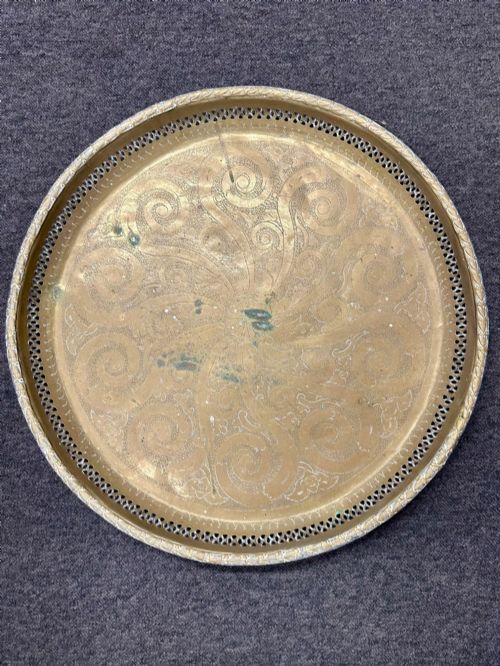
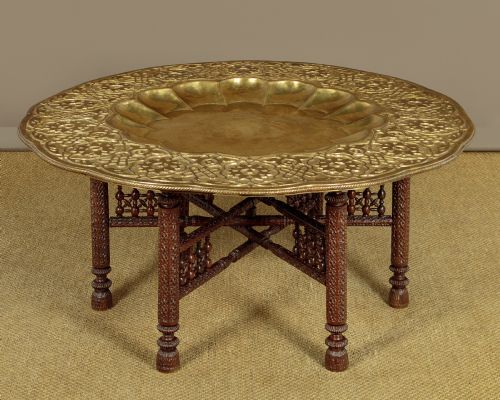
Cabinetmakers and metalworkers utilised hardwoods such as mahogany and hongmu alongside ebonised timber, papier-mâché and lacquered wood for the primary surfaces and stands. Brass and copper feature prominently in the top sections, often heavily chased or engraved with complex motifs.
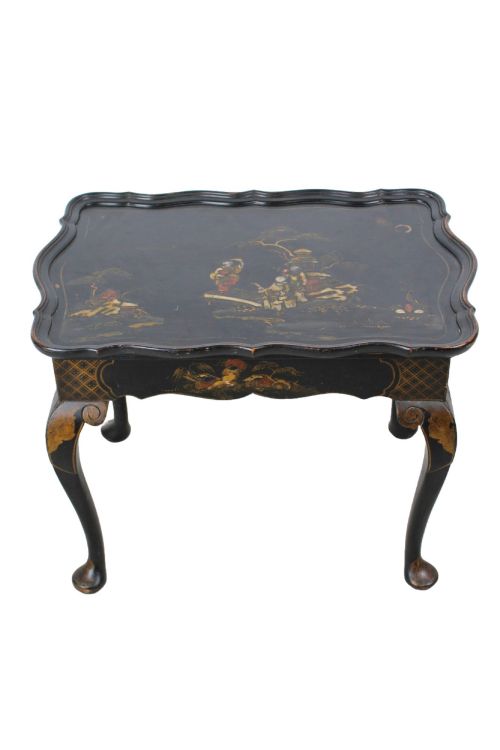
Folding mechanisms and detachable trays allowed for efficient transport and storage, a legacy of colonial campaign furniture and campaign utility. Surface decoration relies on traditional lacquer techniques, gilt highlights and painted Chinoiserie scenes applied over timber or composite bases.
Oriental Tray Table Retail Price Guide 2026
Typical asking prices for oriental tray table among the pieces listed under this phrase on Sellingantiques today, from the lower quarter to the upper quarter. They describe what is for sale here now, not the wider market.
The documented periods stretch from the eighteen-eighties through the Edwardian era into nineteen-thirty.
Distinctions in craftsmanship
The depth and precision of carving on hardwood frames and the intricacy of hand-chased detail on brass tops set finer examples apart from simpler production. Superior lacquerwork exhibits multiple polished layers with smooth finishes, whereas lesser pieces show surface cracking or flat painted application.
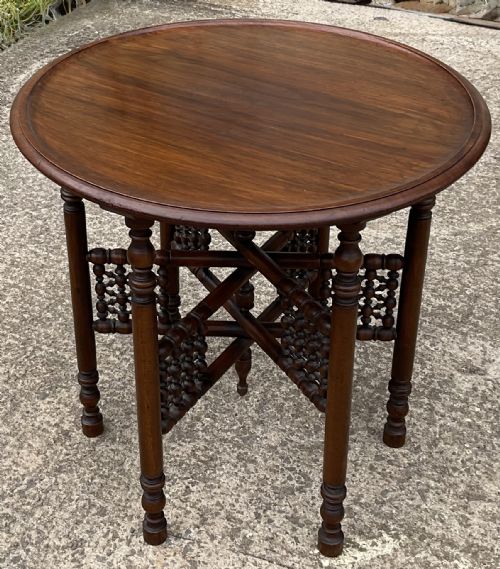
Structural integrity in the folding base and the snug fit of the tray within its supports indicate higher joinery standards. The quality of the timber, from dense hongmu to standard hardwoods, dictates the longevity and weight of the table.
The Oriental Tray Table Glossary
- Chinoiserie
- European artistic interpretation of Chinese and East Asian decorative motifs, popular in furniture and lacquerwork during the eighteenth and nineteenth centuries. It often incorporates pavilions, figures and landscapes in gold or coloured paint.
- Hongmu
- A category of dense, dark tropical hardwoods used in traditional Chinese furniture manufacturing. The timber possesses natural lustre and heavy weight.
- Papier-mâché
- A composite material made from paper pulp or layers of paper glued and pressed together, then lacquered and dried to form a rigid surface. It provides a lightweight base for painted tray tops.
- Japaned
- Finished with a hard, glossy black or coloured resin varnish imitating East Asian lacquer techniques. European workshops applied this finish extensively on furniture from the seventeenth century onward.
Oriental Tray Table: Frequently Asked Questions
How were these tables used?
These pieces served dual purposes as portable serving trays and permanent domestic tables by resting on collapsible stands. Households utilised them for tea service, display and casual dining in reception rooms.
The removable top allowed servants to carry provisions from kitchens before placing the surface onto a folding base in the main living space. This versatility made them popular in both British colonial outposts and metropolitan drawing rooms.
Where do these tables originate?
The pieces originate from British trade networks, Chinese export workshops, Indian regional metalworking centres and British domestic manufacturers producing in the Asian taste. Makers adopted local techniques to satisfy Western demand for exotic home furnishings.
Craftsmen in Canton, Benares and British provincial workshops contributed distinct regional styles, combining local materials like brass and hongmu with European furniture formats.
How do I care for a lacquered top?
Protect lacquered surfaces from direct sunlight, excessive heat and moisture by using coasters and mats. Clean the wood or lacquer gently with a dry or barely damp soft cloth, avoiding harsh chemical polishes.
Maintaining stable indoor humidity prevents the underlying timber or papier-mâché from expanding and causing the lacquer finish to craze or flake.
Are the tray tops removable?
Most examples feature a tray top that lifts entirely off the folding or fixed stand for independent use or easy storage. Some variations secure the tray to the base with simple wooden battens or retaining lips.
Checking the fit between the tray and the stand reveals whether the elements are matched originals or later pairings from different workshops.