






Oriental Shelving
Oriental shelving brings intricate display cabinets and wall shelves from the nineteenth and early twentieth centuries into modern rooms.
Oriental Shelving
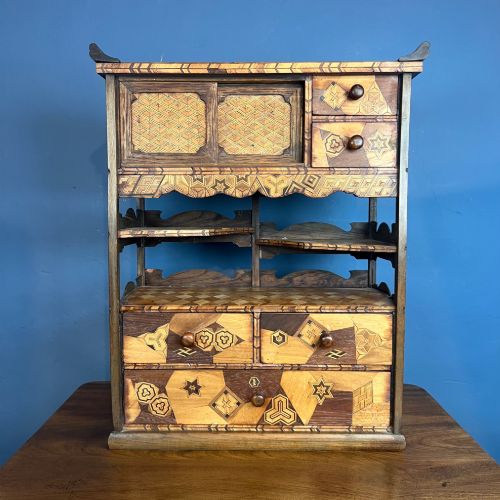
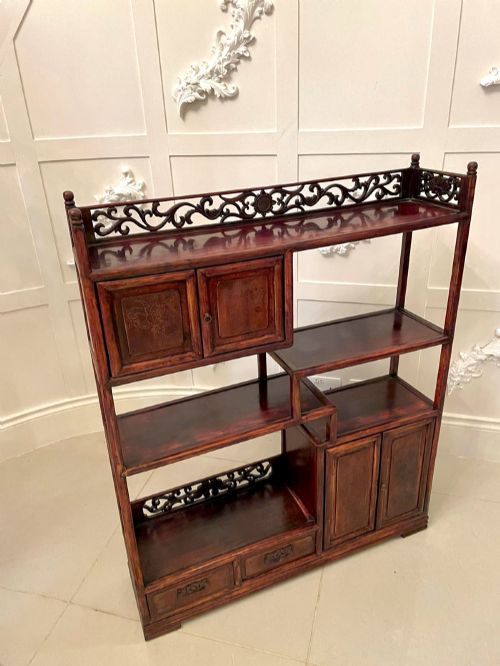
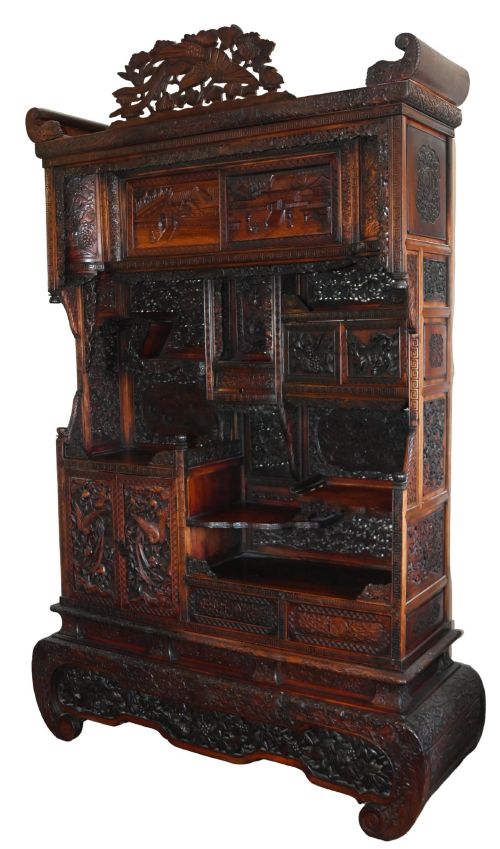
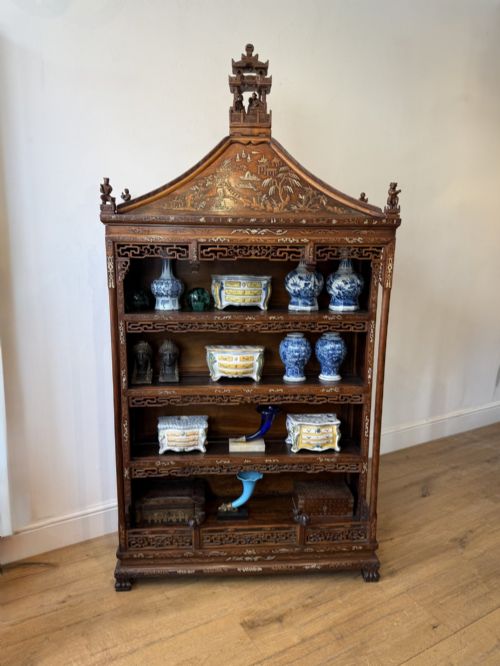
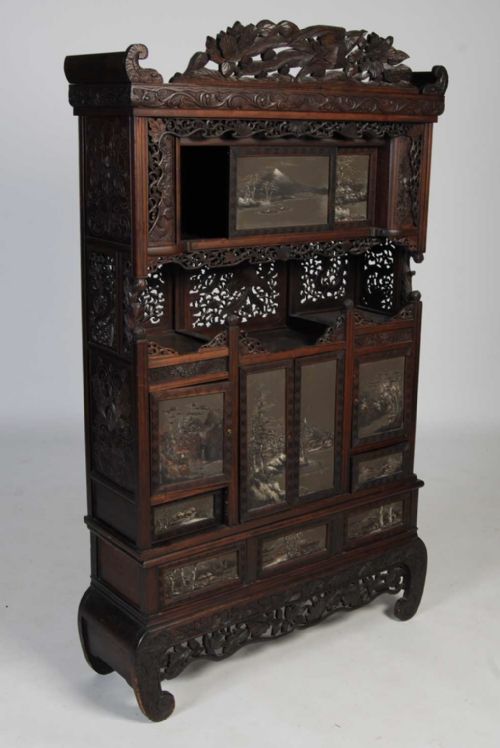
When you search for oriental shelving, you encounter a varied selection of antique display cabinets, wall shelves, and etagere units spanning the nineteenth and early twentieth centuries. These pieces encompass diverse regional aesthetics, from Chinese Qing Dynasty and export items to Japanese Meiji period shodana cabinets and Victorian Chinoiserie interpretations.
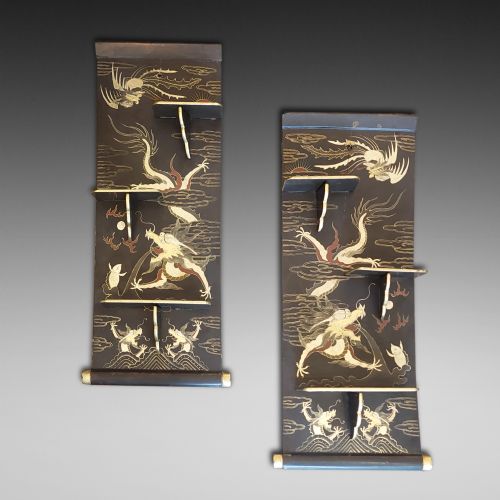
The objects listed on this page range from hanging shelves and corner cabinets to freestanding dwarf side-cabinets and open whatnot structures. Most examples incline towards traditional Chinese hardwood and lacquer forms or Japanese bamboo and carved wooden designs created during the late Victorian and Edwardian eras.
Materials and construction
Construction relies heavily on dense woods such as rosewood, hongmu, and general hardwood, often paired with lighter bamboo frameworks for wall shelves and etageres. Artisans utilised traditional joinery methods to support complex compartment layouts, intricate carved panels, and tiered display surfaces.
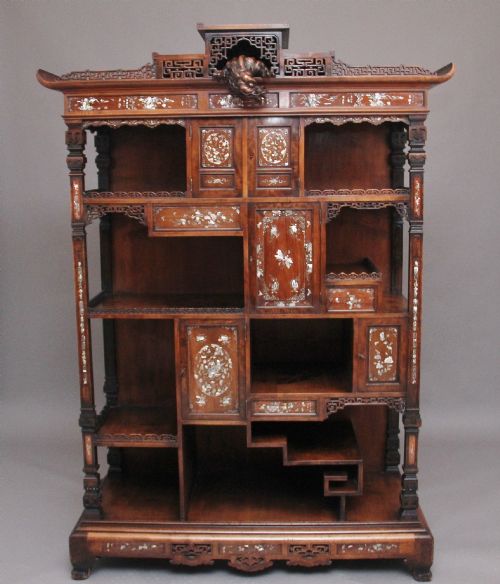
Surface decoration frequently incorporates black or red lacquer, delicate mother of pearl inlay, and brass fittings to accent the woodwork. Carved motifs range from architectural pagoda structures to profuse floral and figural reliefs characteristic of nineteenth-century export and domestic workshops.
Oriental Shelving Retail Price Guide 2026
Typical asking prices for oriental shelving among the pieces listed under this phrase on Sellingantiques today, from the lower quarter to the upper quarter. They describe what is for sale here now, not the wider market.
The listings on this site feature nineteenth-century and Edwardian periods, utilising hardwood, lacquer, bamboo, brass, and rosewood.
Evaluating quality and execution
The distinction between standard examples and the finest pieces rests in the depth and precision of the carving, particularly on intricate shodana cabinets and dwarf side-cabinets. Superior items exhibit crisp joinery, well-defined wood grain, and securely mounted inlay work rather than superficial surface decoration.
Structural integrity of the tiered shelves and cabinet doors indicates the original maker's skill, especially in complex bamboo and lacquer combinations where fragile joints bear weight. The harmony between decorative lacquer panels and the underlying hardwood chassis dictates the overall aesthetic success of the piece.
The Oriental Shelving Glossary
- Etagere
- A piece of furniture consisting of a set of open shelves for displaying small ornaments. These tiered structures appear frequently in bamboo and nineteenth-century hybrid designs.
- Shodana
- A traditional Japanese cabinet featuring an asymmetrical arrangement of shelves, sliding doors, and small compartments. These items demonstrate refined woodwork from the Meiji period.
- Chinoiserie
- European decorative style in the Chinese taste, popular during the Victorian era. This aesthetic influences the lacquer and pagoda details found on several display cabinets.
- Hongmu
- A dense, dark traditional Chinese hardwood used for fine furniture and display cabinets. Pieces constructed from this material command attention for their substantial weight and rich grain.
- Japonisme
- The study and influence of Japanese art and lacquerware on Western design during the late nineteenth century. This movement inspired numerous bamboo and aesthetic period cabinets.
Oriental Shelving: Frequently Asked Questions
Where should I place oriental shelving in my home?
These display cabinets and wall shelves suit studies, living rooms, and hallways where you can showcase small ceramics or glassware.
Freestanding etageres and corner cabinets function well against plain walls that allow their intricate woodwork and lacquer details to stand out without visual clutter.
How do I care for antique lacquer and hardwood?
Maintain stable indoor humidity levels and keep these cabinets away from direct sunlight to protect delicate red and black lacquer finishes.
Dust the carved panels and open shelves gently with a dry, soft cloth, avoiding commercial polishes that might damage historic wood surfaces.
Are bamboo display shelves sturdy enough for daily use?
Nineteenth-century bamboo and lacquer shelves were built using specialised joinery that provides surprising stability for light decorative items.
However, due to their age and organic materials, they are best suited for displaying ornaments rather than heavy books or daily utility storage.