




Oriental Relief Pottery
Oriental relief pottery brings tactile dimension to Japanese and Chinese ceramics, offering sculptural figures and motifs that collectors treasure for their intense craft.
Oriental Relief Pottery
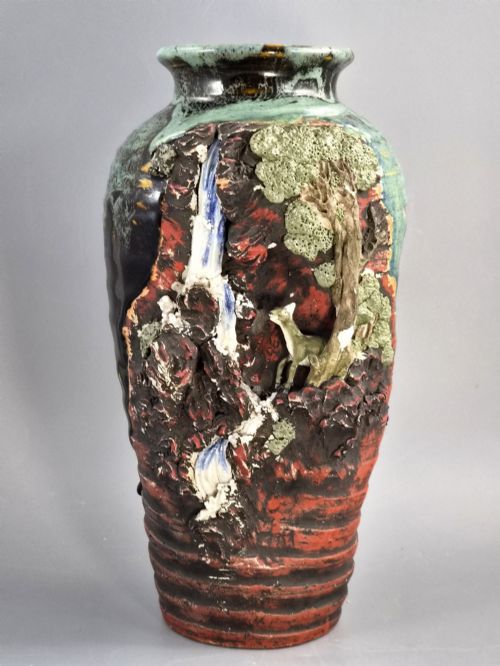
When you search for oriental relief pottery, you encounter sculptural ceramics defined by raised motifs, figures, and textures that stand proud of the vessel wall. The pieces on this page are predominantly Japanese wares from the Meiji, Taisho, and Showa periods, alongside select Chinese examples.
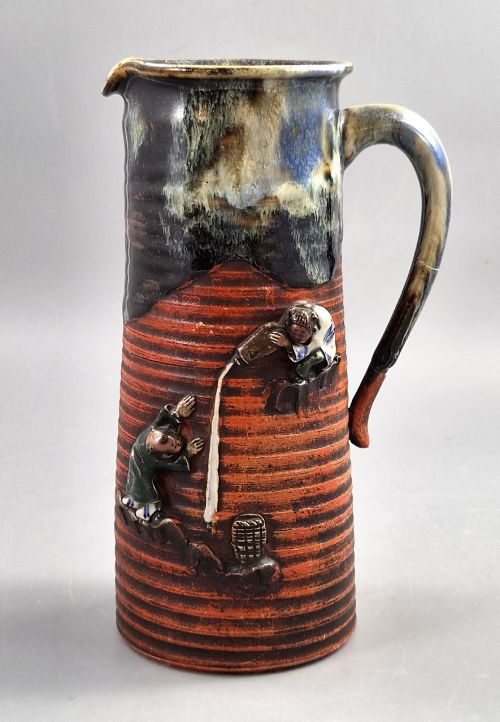
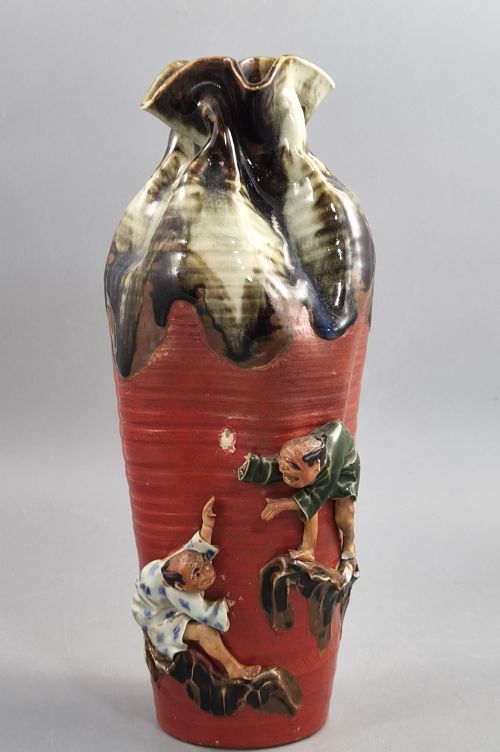
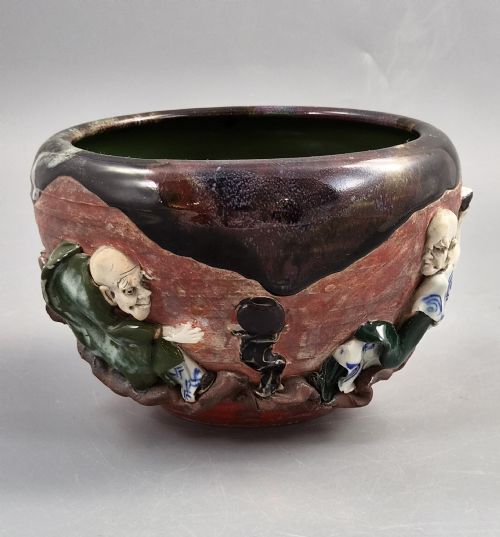
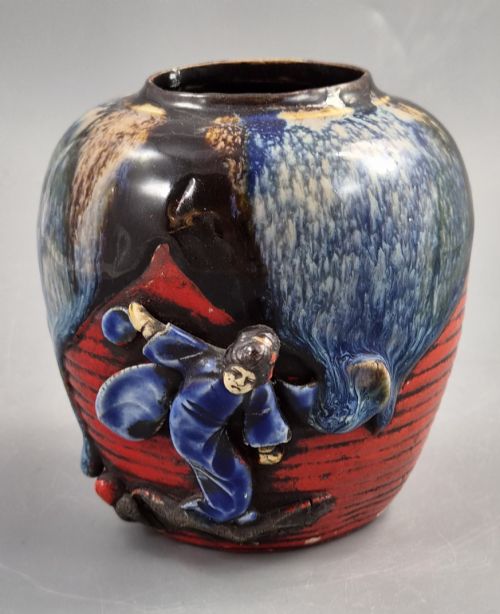
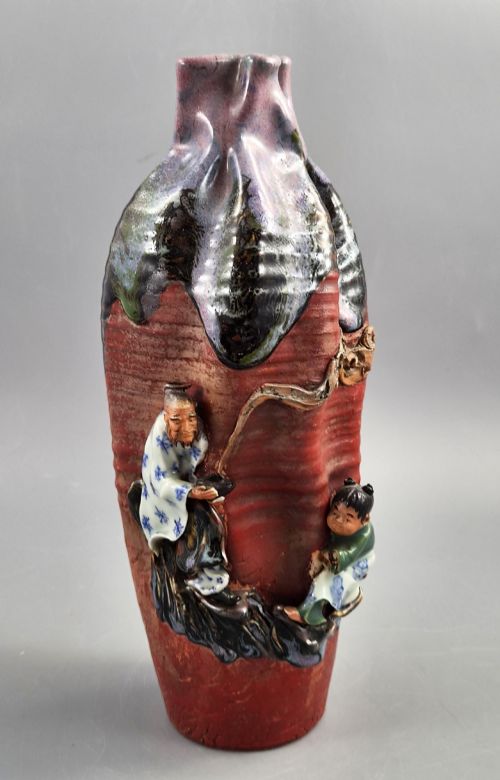
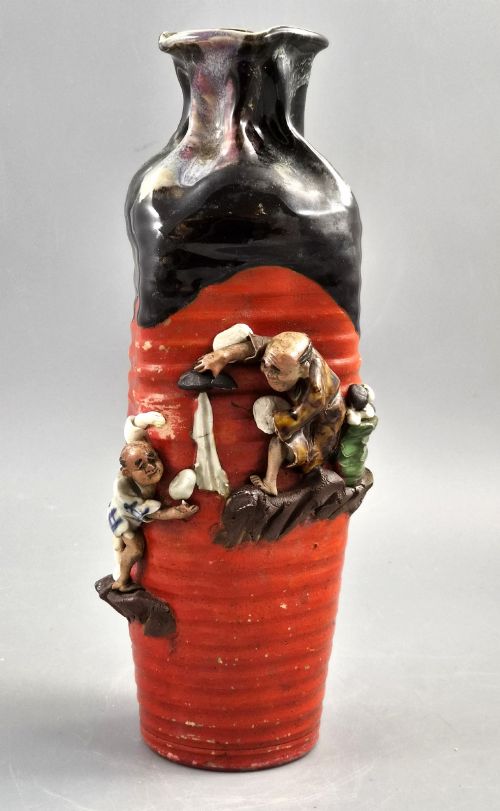
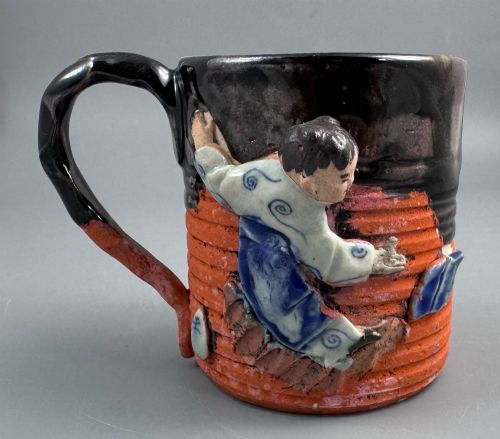
Vessels take the form of vases, pitchers, jugs, decorative bowls, mugs, teapots, and tiles or plaques. Sumida Gawa wares dominate the selection, bringing distinctive pinched rims, flambe glazes, and figures modelled in high relief.
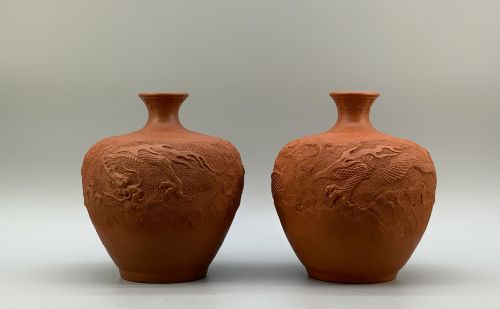
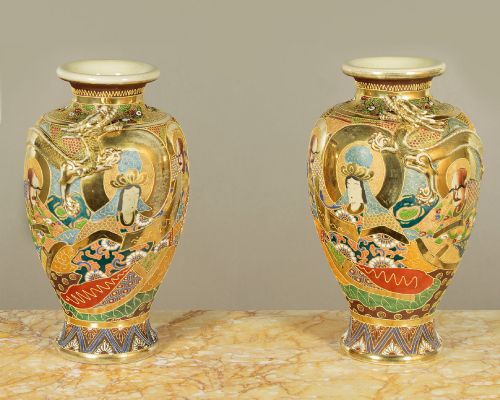
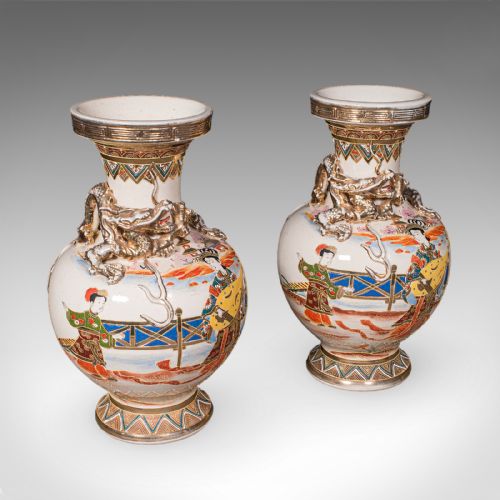
Satsuma and Tokoname pieces also appear, presenting red clay, earthenware, and terracotta bodies decorated with dragons, phoenixes, and sages. Makers employ applied modelling where human and animal forms cling to shoulders and rims.
Materials and construction methods
Potters shape these pieces from earthenware, terracotta, red clay, and stoneware, establishing sturdy foundations for complex surface work. Artisans apply figures and decorative elements separately to the body before firing, building up deep topographical textures.
Glazes play a defining role in the finish, utilising flambe, oxblood, blue, and lavender tones alongside enamel and gold leaf accents. Signed pieces often bear the signatures of master workshops pressed directly into the damp clay before the kiln stage.
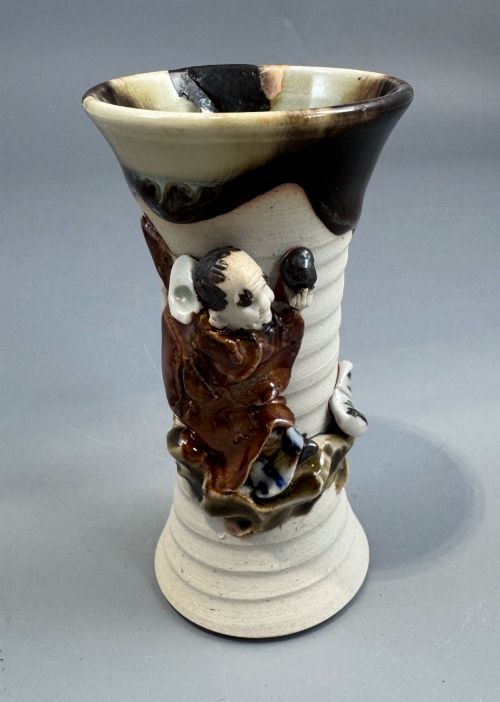
Watch for tiny ceramic children permanently scaling the sides of teapots, frozen mid-climb since the Meiji period.
Judging quality in relief ceramics
The distinction between standard and exceptional pieces rests upon the execution of the modelled figures and the control of the glaze. Master modellers like Inoue Ryosai create dynamic proportions and expressive faces that remain crisp beneath heavy runs of flambe glaze.
Glaze distribution marks superior examples, where pooling creates depth without obscuring the fine details of the applied figures or signature stamps. The integration between the vessel body and the sculptural elements determines the structural harmony of the piece.
Inoue Ryosai·Ban-ni·Hiroshi
The Oriental Relief Pottery Glossary
- Sumida Gawa
- A style of Japanese pottery originating from the banks of the Sumida River in Tokyo, known for heavy glazes and applied figures. These wares often feature raw, unglazed clay patches contrasting against vibrant flambe surfaces.
- Flambe glaze
- A streaked or mottled glaze that achieves complex colour variations through reduction firing in the kiln. Blue, lavender, and oxblood tones frequently run across the surface of relief vessels.
- Karako
- A traditional Chinese motif depicting a Chinese boy or children at play, frequently adopted in Japanese decorative arts. Figures appear clambering up the sides of vases and mugs.
- Suiban
- A shallow basin or dish used for arranging flowers or holding water for brushes. These ceramic trays often incorporate relief figures along the interior or exterior rims.
Oriental Relief Pottery: Frequently Asked Questions
What is Sumida Gawa pottery?
Sumida Gawa pottery is a distinctive type of Japanese ceramic produced around Tokyo from the late Meiji period onwards. It is instantly recognisable for its heavy, dripping flambe glazes and figures modelled in high relief clinging to the vessel walls.
Potters often left patches of the red clay body unglazed to contrast with the glossy blues and purples. These pieces range from tall vases to mugs and teapots, each bearing sculptural narratives.
How do I spot a signed piece?
Makers and studios pressed their signatures into small cartouches directly onto the wet clay of the vessel body before firing. Names such as Inoue Ryosai and Koko appear near the base or among the applied figures.
Examining the base and lower edges under good light reveals these impressed seals. Signatures add significant context to the origin and date of the ceramic.
How should I display these vessels?
Place these sculptural ceramics where adequate lighting can catch the varied textures of the relief figures and flambe glazes. Because the surfaces feature applied elements that stand proud of the body, position them away from high-traffic areas where they might suffer knocks.
Allow enough space around each piece to appreciate the modelling from multiple angles. Open shelving or well-lit cabinets suit their tactile nature.
How do I tell Meiji from Taisho pieces?
Meiji period ceramics typically date from 1868 to 1912, whilst the Taisho period spans from 1912 to 1926. Many surviving relief pottery items bridge this transition, bearing styles characteristic of the turn of the century.
Stylistic shifts are subtle, as workshops continued popular figurative designs across both eras. Signatures and material composition provide the firmest clues for dating individual works.