



Oriental Portrait Art
Oriental portrait art brings together traditional likenesses from China, Japan, India, and the Middle East, capturing historical figures and subjects on silk, paper, and glass.
Oriental Portrait Art
Oriental portrait art encompasses framed paintings, ancestral scrolls, miniature works, and woodblock prints created across the nineteenth and early twentieth centuries. These pieces record sitters ranging from Chinese dignitaries and Mughal emperors to Japanese beauties and Indian nawabs.
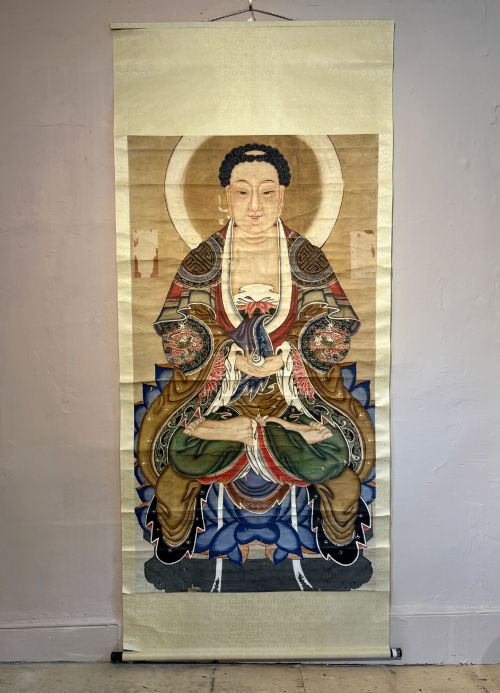
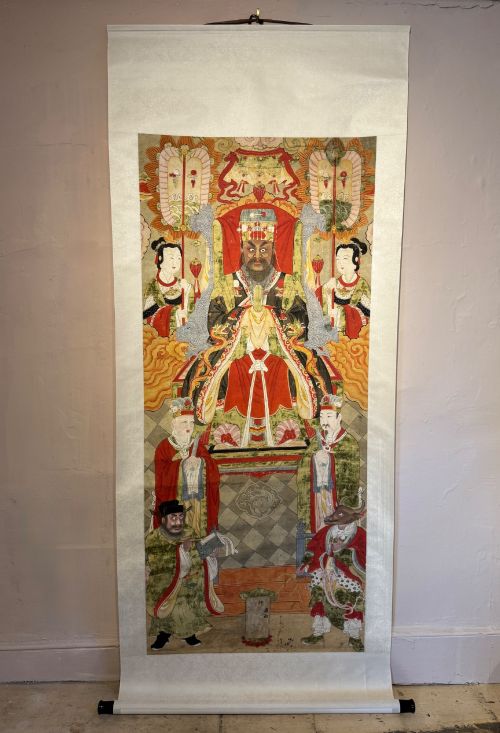
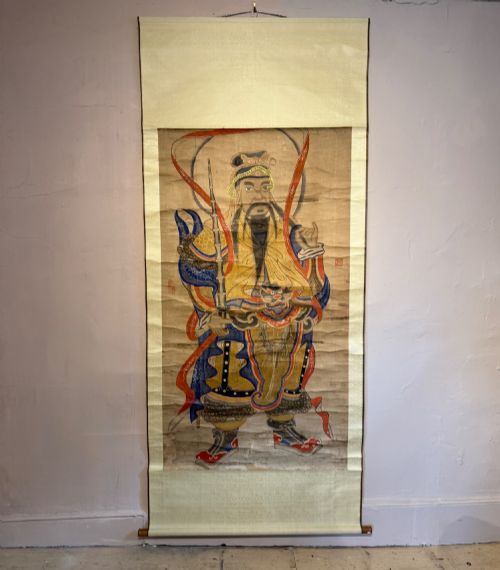
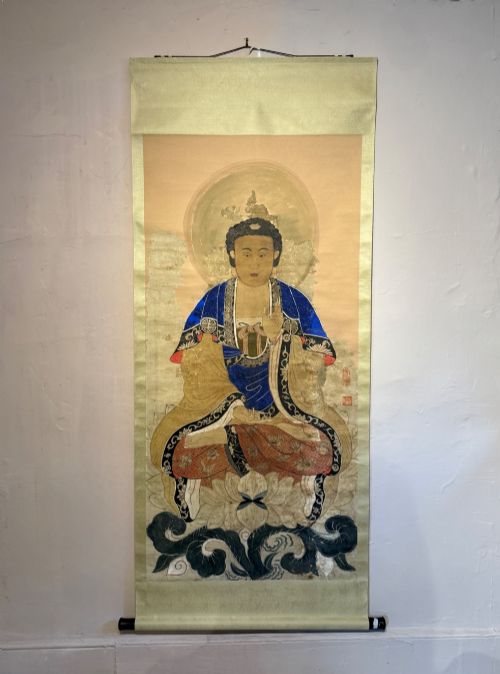
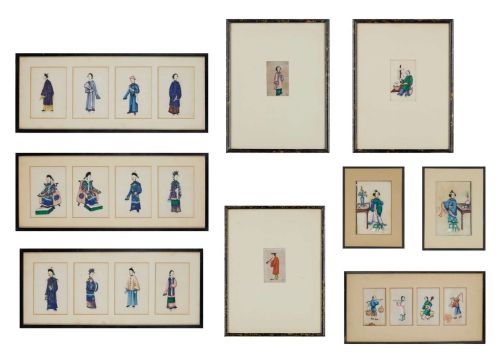
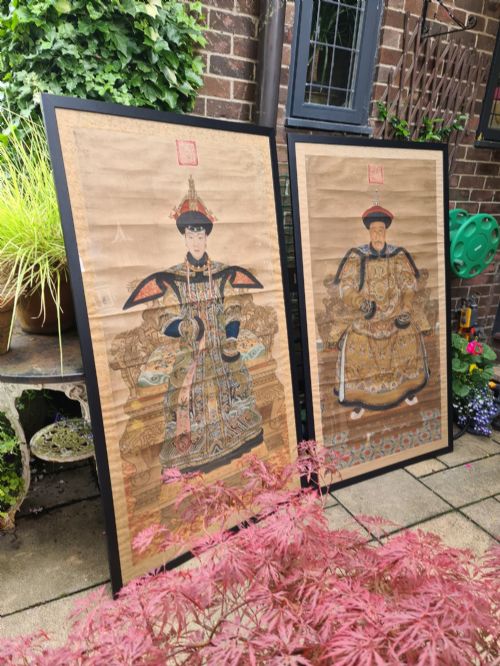
The version most commonly encountered on this page is the nineteenth century Chinese ancestor painting or pith paper work. Such pieces often depict seated subjects formally posed in traditional robes, reflecting both status and lineage.
Beyond China, the selection includes Japanese ukiyo-e prints on paper, Indian gouache miniatures, and reverse glass paintings. Each regional tradition applies distinct formats, from vertical hanging scrolls to compact framed panels.
How they were made
Artists utilised varied traditional supports, applying pigment, ink, gouache, and oil onto canvas, silk, paper, pith, and glass. Chinese works frequently employed delicate watercolours on pith paper or detailed brushwork on silk scrolls.
Japanese woodblock prints required a collaborative process involving publisher, designer, carver, and printer to apply multiple blocks of colour onto paper. Indian miniatures relied on fine squirrel hair brushes and mineral pigments built up in meticulous layers on paper.
Oriental Portrait Art Retail Price Guide 2026
Typical asking prices for oriental portrait art among the pieces listed under this phrase on Sellingantiques today, from the lower quarter to the upper quarter. They describe what is for sale here now, not the wider market.
Several portraits thoughtfully pair distinguished human subjects with domestic company, including a remarkably attentive feline companion.
What varies in quality
The distinction between standard commercial export pieces and superior scholarly or court commissions lies in the delicacy of execution and the depth of expression captured by the artist.
Kitagawa Utamaro·Frederick Goodall RA·Takabatake Kasho·Kunisada·Ya Ming·Takashi Nakayama
The Oriental Portrait Art Glossary
- Pith paper
- A fragile organic material formed from the pith of the Tetrapanax papyrifer plant, commonly used for nineteenth century Chinese watercolour paintings.
- Ukiyo-e
- A genre of Japanese art translating to pictures of the floating world, encompassing woodblock prints and paintings produced during the Edo period.
- Ancestor scroll
- A hanging scroll depicting family forebears, traditionally displayed for veneration and ancestral rites in Chinese households.
- Reverse glass painting
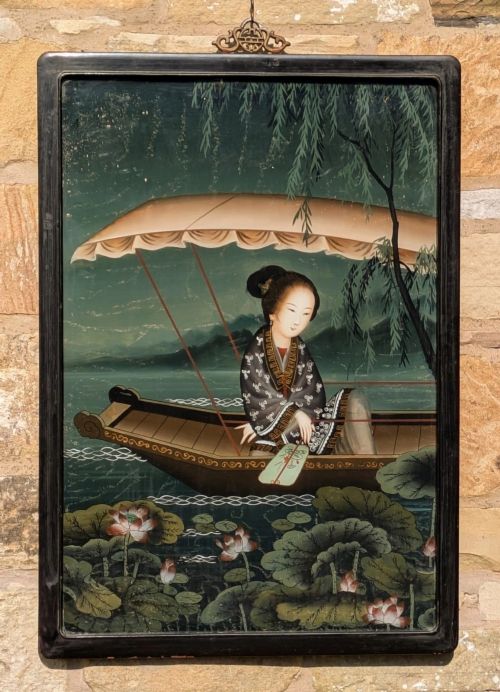
- An artwork painted directly onto the back of a glass panel so that the final image is viewed correctly through the front.
- Gouache
- An opaque water-based medium composed of ground pigments and a binding agent, frequently used in Indian miniature paintings.
Oriental Portrait Art: Frequently Asked Questions
How should I care for silk paintings?
Display silk and paper works away from direct sunlight to prevent the fading of natural pigments and delicate textile fibres.
Maintain stable indoor humidity levels to protect organic supports from warping or brittle deterioration over time.
Are pith paper paintings fragile?
Pith paper is exceptionally delicate and prone to cracking or tearing if handled without professional framing support.
Keep these works behind protective glass in a secure mount so the brittle surface remains entirely undisturbed.
How do I identify a woodblock print?
Japanese woodblock prints show flat areas of colour and visible ink grain under magnification rather than continuous photographic tones.
Close examination often reveals slight impression marks where the carved block pressed into the handmade paper.
What is reverse glass painting?
The artist paints the final details first on the rear surface of the glass, building layers up to the background.
When turned over, the glossy front protects the pigment layer while giving the colours a luminous depth.