
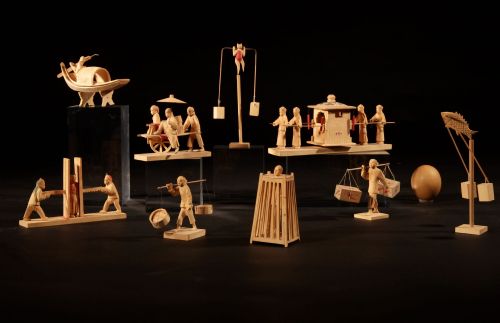


Oriental Miniature Figures
Oriental miniature figures are compact carved and cast collectibles that bring intricate craftsmanship and historical detail straight to your display cabinet.
Oriental Miniature Figures
Oriental miniature figures encompass small-scale carvings and objects originating from Asian traditions, featuring subjects such as daily life, wise men, young boys, and Buddha figures. When you search for oriental miniature figures, you encounter diverse forms ranging from netsuke and okimono to snuff bottles and small scroll weights.
The pieces on this page span the nineteenth and early twentieth centuries, drawing on the aesthetics of the Qing Dynasty, Edo Period, and Meiji Period. You will frequently find collections of wood carvings, bamboo okimono, and hardstone snuff bottles that capture traditional Chinese and Japanese artistry in miniature proportions.
How they were made
Carvers utilised organic materials such as boxwood, bamboo, hardwood, and carved wood, shaping intricate details with hand tools to portray human figures and animals. Artisans also worked with hardstone, jade, mother of pearl, and coral, polishing these dense minerals to highlight natural colour variations.
Metalwork and lacquering techniques appear in specific items, including cast bronze scroll weights with gold finishes and gilt metal stoppers. These methods required precise casting and carving skills passed down through generations of regional workshops.
Materials represented in the current selection include boxwood, bamboo, hardstone, coral, jade, mother of pearl, and bronze.
What varies in quality
The selection of the medium also dictates the tier of the piece, with finely polished jade, coral, or signed boxwood commanding greater attention than simpler utilitarian objects. Preservation of original surface patinas and stoppers further separates standard examples from exceptional ones.
Masayuki
The Oriental Miniature Figures Glossary
- Netsuke
- A small carved toggle fastened to the end of a cord connecting a traditional Japanese pouch or container to a kimono sash. These toggles frequently take the form of figures or animals.
- Okimono
- A Japanese decorative statue designed for display on a shelf or in a tokonoma alcove. They are smaller than temple sculptures but share the same sculptural ambition.
- Snuff Bottle
- A small container utilised to hold powdered tobacco, highly popular during the Qing Dynasty. They feature decorative stoppers and are carved from materials like hardstone and coral.
- Scroll Weight
- A small heavy object placed upon paper or silk scrolls to keep them flat during viewing or writing. Bronze examples are often cast in figurative shapes.
Oriental Miniature Figures: Frequently Asked Questions
What are oriental miniature figures?
These pieces are small sculptures, netsuke, and snuff bottles carved from wood, bamboo, and hardstone during the nineteenth and early twentieth centuries.
They represent traditional Eastern subjects, including figures from daily life, wise men, and animals, created for personal use or display.
How were oriental miniature figures used?
Many items served practical functions in daily traditional dress, such as netsuke securing pouches or snuff bottles holding tobacco.
Other objects, like okimono and scroll weights, were kept on desks or displayed in rooms as decorative art.
How do I date these carvings?
Dating relies on stylistic markers from periods like the Qing Dynasty or the Meiji Period, alongside material wear and construction methods.
Examining the tool marks and the natural ageing of boxwood, bamboo, or hardstone helps establish the era of production.
How should I clean them?
Dust wood and bamboo gently with a dry, soft brush to protect the delicate carved surfaces and historical patinas.
Avoid liquid cleaners, water, or chemical polishes, particularly on organic materials like coral, ivory substitutes, and old lacquer.