




Oriental Lacquerware
Oriental lacquerware brings deep glossy surfaces and hand-painted gilt decoration into rooms through boxes, cabinets and tables.
Oriental Lacquerware
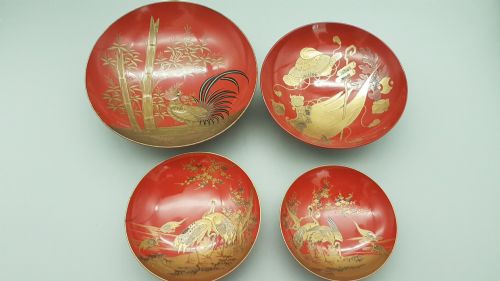
Oriental lacquerware encompasses decorative objects and furniture finished with resin, varnish or paint, originating from traditions across China, Japan, Kashmir and Burma. When searching this phrase, buyers encounter items ranging from small desk accessories and sake cups to large wedding baskets, temple vases and cabinets.
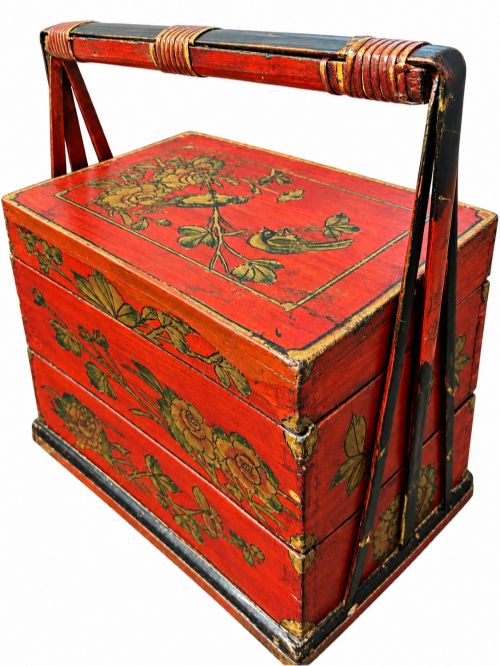
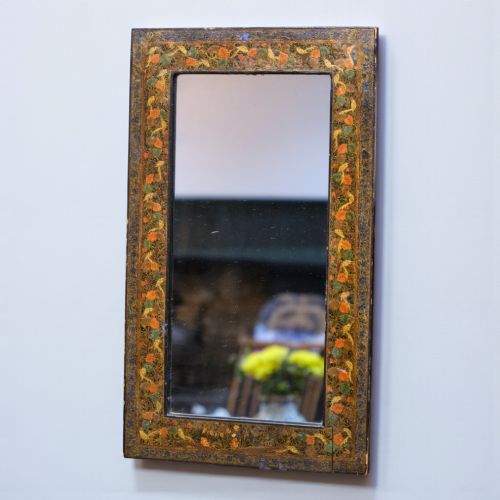
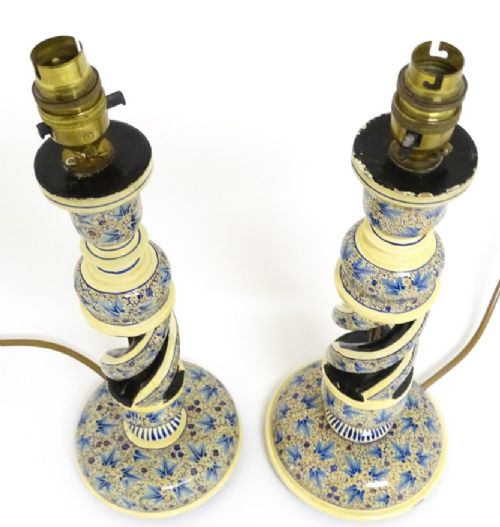
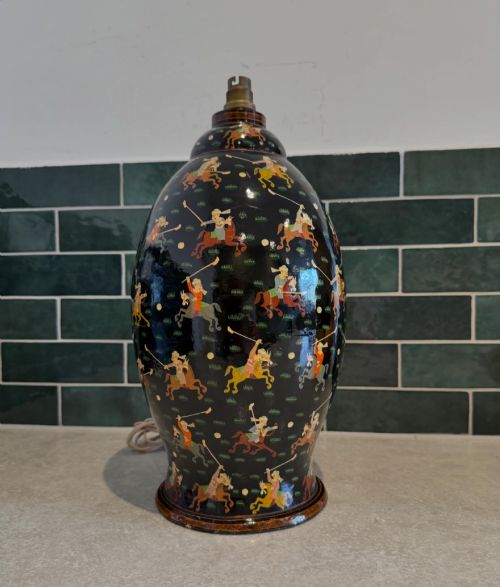
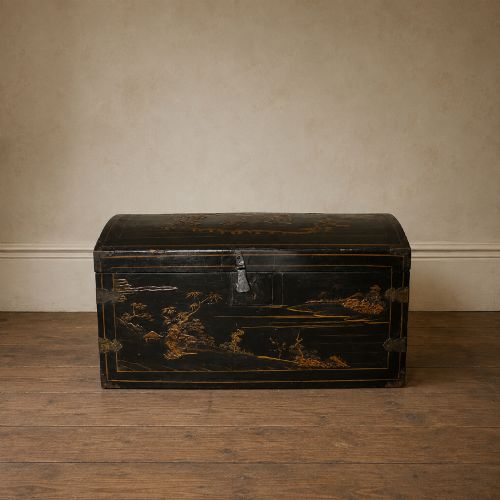
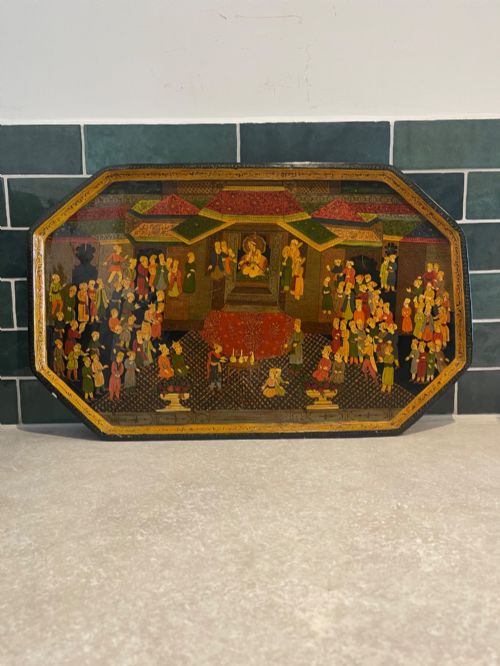
The pieces appearing on this page date principally from the nineteenth and early twentieth centuries, spanning Victorian imports, Qing Dynasty works and the Japanese Meiji period. Forms include table lamps, wall mirrors, tea caddies and multi-tiered dowry chests, alongside practical items like travelling jewellery boxes and stationery tidies.
Materials and construction
Items are constructed from timber, papier-mâché or porcelain, serving as firm foundations for layers of natural resin, urushi lacquer or black and red paint. Artisans built up these surfaces before applying intricate hand-painted designs or carving deep relief patterns.
Gold leaf and gilt decoration frequently accent red and black lacquer grounds, while brass hardware appears on trunks, campaign cases and cabinets. Certain Kashmiri and Japanese objects utilise papier-mâché or ceramic bodies overlaid with lacquer and paint.
Oriental Lacquerware Retail Price Guide 2026
Typical asking prices for oriental lacquerware among the pieces listed under this phrase on Sellingantiques today, from the lower quarter to the upper quarter. They describe what is for sale here now, not the wider market.
Listings feature items from the Victorian era up to the 1930s, utilising wood, papier-mâché, brass and porcelain.
Judging the standard of execution
Quality rests upon the depth of the lacquer finish, the precision of the carved relief work, and the delicacy of the gilt painting. Pieces with rich, multi-layered surfaces and intact, detailed motifs demonstrate superior workshop execution.
The complexity of the object form also dictates standard, separating standard boxes and trays from large architectural temple vases, tiered wedding baskets, and intricate shodana cabinets on stands.
The Oriental Lacquerware Glossary
- Urushi lacquer
- A natural resin harvested from trees, applied in multiple coats to create a durable, glossy surface. It cures through moisture absorption rather than drying.
- Cinnabar
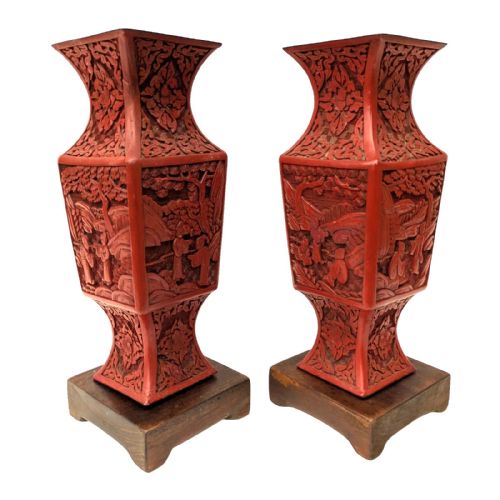
- A bright red mineral pigment used to colour lacquer, often carved deeply when thick layers are built up. Pieces featuring this technique show dense floral or figurative relief.
- Shodana
- A traditional Japanese display cabinet featuring asymmetrical shelving and small cupboards. These architectural pieces date frequently to the Meiji period.
- Chinoiserie
- European decorative styles imitating Chinese artistic traditions, applied to furniture and objects. It appears alongside authentic export pieces from the nineteenth century.
- Inro
- A traditional Japanese small case for carrying objects, suspended from a sash. They form part of the smaller personal items found within lacquerware collections.
Oriental Lacquerware: Frequently Asked Questions
How do I clean oriental lacquerware?
Dust surfaces gently with a soft, dry cloth without applying water, modern cleaning sprays or chemical polishes.
Keep pieces away from direct sunlight and radiators to prevent the lacquer finish from drying out or cracking over time.
What is a Chinese wedding box?
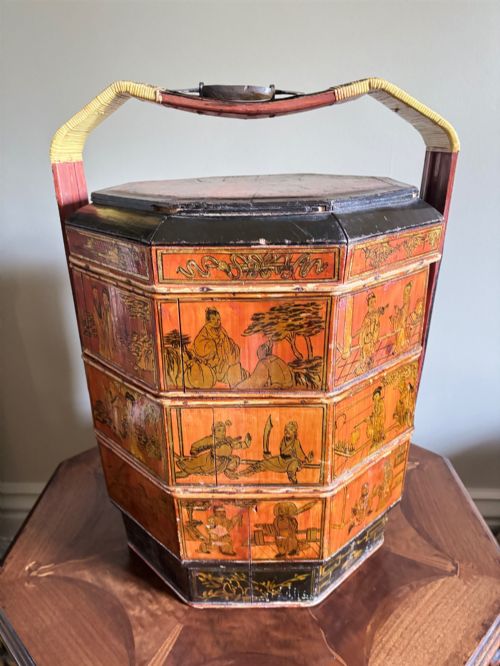
Large cylindrical or multi-tiered vessels used traditionally to transport gifts and ceremonial foods during marriage rites.
They feature sturdy wooden frames coated in red or black lacquer, often secured with brass handles and fittings.
How do I identify Meiji period lacquer?
Japanese items from this era frequently display precise gold leaf decoration over black grounds on cabinets, plaques and vases.
Meiji period works often combine traditional export motifs with high technical refinement in the lacquer application.
Where were Kashmiri lacquer items made?
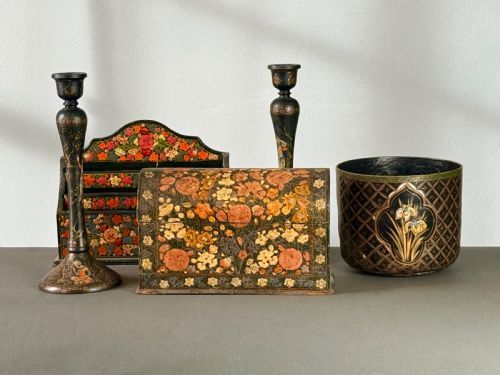
Kashmiri pieces originate from northern India, utilising papier-mâché or wood as a base for painted decoration.
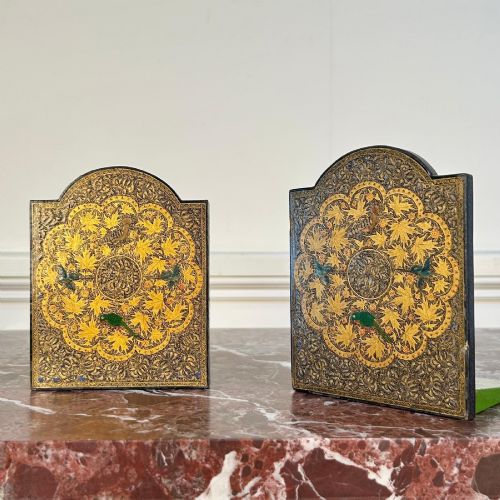
These objects include table lamps, trays, bookends and small boxes decorated with intricate floral patterns.