







Oriental Hardwood Side Stool
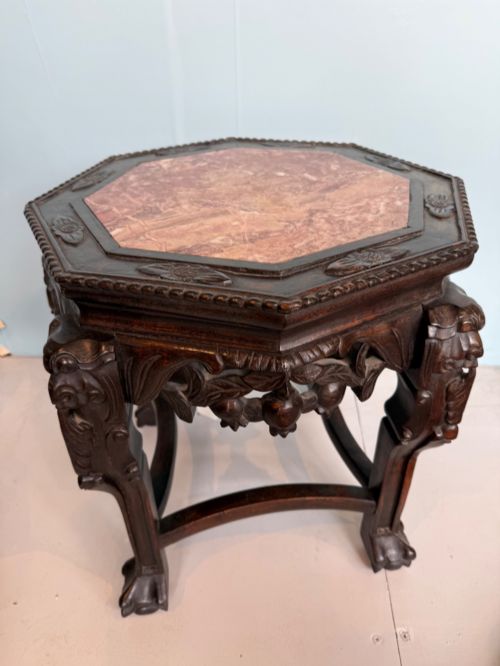
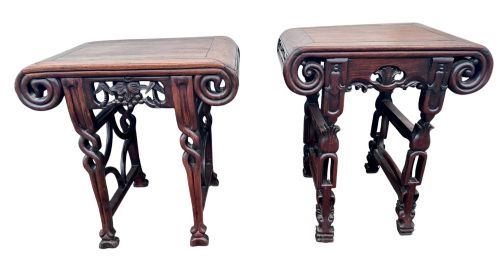
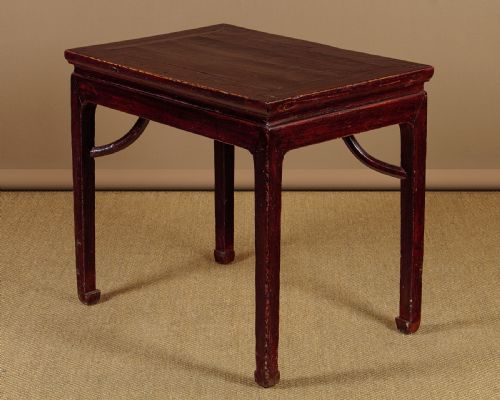
These oriental hardwood side stool examples bring dense timber, carved detail, and varied stone or wood tops into domestic spaces.
Oriental Hardwood Side Stool
An oriental hardwood side stool serves multiple domestic functions as a low table, plant stand, or seat across various nineteenth-century and early twentieth-century origins.
Buyers encounter forms ranging from square low tables and barrel-shaped drum stools to pedestal stands and circular occasional tables.
The material palette draws heavily on rosewood, hongmu, teak, and elm, often paired with inset marble, burr wood, or porcelain panels.
Materials and Techniques
Workshops utilise dense tropical hardwoods such as hongmu and rosewood, chosen for their weight and capacity to hold deep, intricate carving.
Many examples incorporate contrasting insets of rouge marble, burr wood, or mother-of-pearl within the timber framework.
Construction relies on traditional joinery techniques to stabilise heavy timber forms like barrel stools and pedestal plant stands.
Oriental Hardwood Side Stool Retail Price Guide 2026
Typical asking prices for oriental hardwood side stool among the pieces listed under this phrase on Sellingantiques today, from the lower quarter to the upper quarter. They describe what is for sale here now, not the wider market.
Listings feature items from the nineteenth century, eighteen-eighties, eighteen-nineties, nineteen hundreds, and nineteen-twenties.
Gradations of Quality
The depth and crispness of the carving distinguish finer pieces from simpler commercial production, showing careful hand work in floral and geometric motifs.
The selection and fit of inset materials, such as solid marble tops or delicate bone and mother-of-pearl inlay, mark out superior examples.
The Oriental Hardwood Side Stool Glossary
- Hongmu
- A dense, dark traditional Chinese hardwood prized for its rich tone and durability. It frequently forms the structure of carved nineteenth-century stands and tables.
- Burr wood
- Timber taken from a tree growth featuring swirling grain patterns. It provides decorative contrast when inset into table tops.
- Meiji Period
- A Japanese historical era spanning from eighteen sixty-eight to nineteen twelve. Pieces from this time often exhibit distinct regional carving styles.
Oriental Hardwood Side Stool: Frequently Asked Questions
How were these stools used?
These pieces function flexibly as low seats, plant stands, or side tables for lamps and decorative objects.
Their sturdy timber construction allows them to support heavy ceramic jardinieres and bronze figures safely.
Can I use them as bedside tables?
Many compact square and circular forms suit placement beside a bed or chair.
Flat marble or wooden surfaces provide stable space for lighting and books.
How do I care for the marble tops?
Wipe inset stone surfaces with a damp cloth and avoid harsh chemical cleaners.
Use coasters to protect polished marble and timber from moisture rings.
What periods do these pieces date from?
Most examples originate from the nineteenth century through the early twentieth century.
Designs reflect traditional Qing dynasty aesthetics alongside nineteenth-century export styles.