


Oriental Hall Runner
An oriental hall runner brings distinct geometric patterns and rich natural dyes to a narrow corridor, offering durable wool construction designed for heavy foot traffic.
Oriental Hall Runner
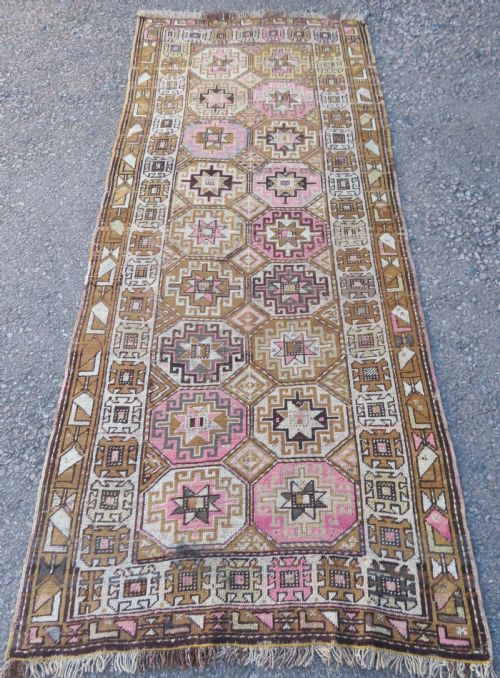
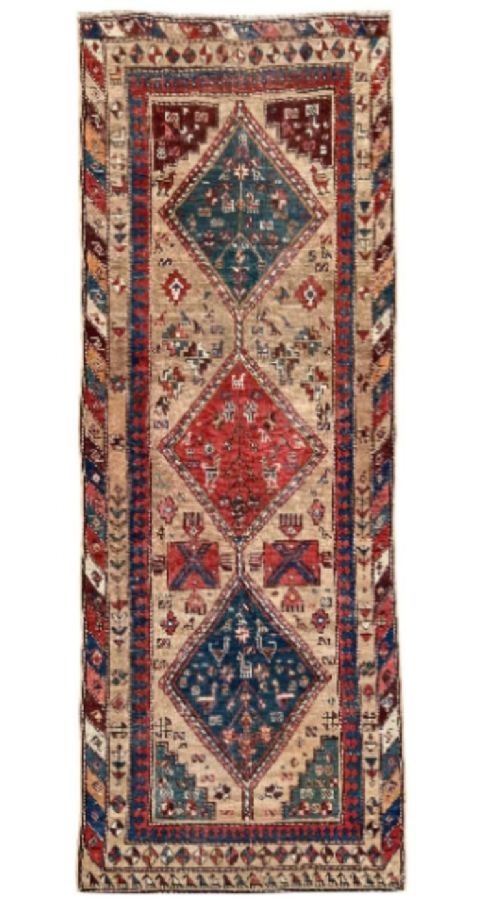
An oriental hall runner is an elongated floor covering designed specifically for corridors, landings, and narrow spaces within a home. These textiles originate predominantly from Persian and Caucasian weaving traditions, spanning from the nineteenth century into the twentieth century. They combine practical utility with intricate tribal and traditional designs suited for long, narrow floor plans.
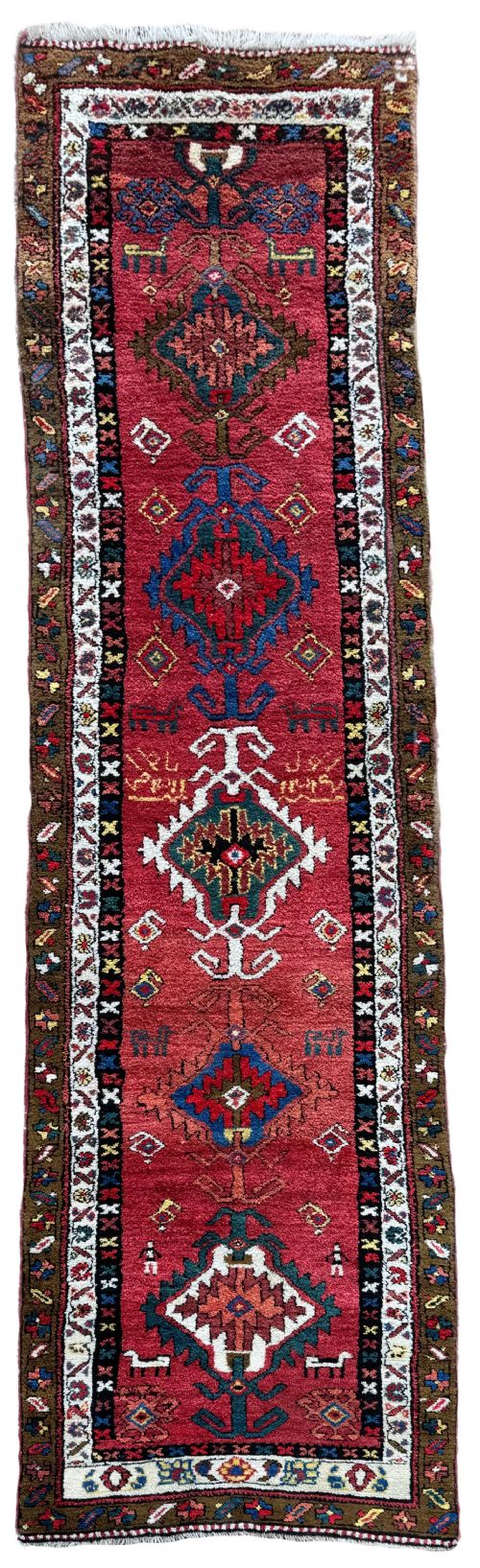
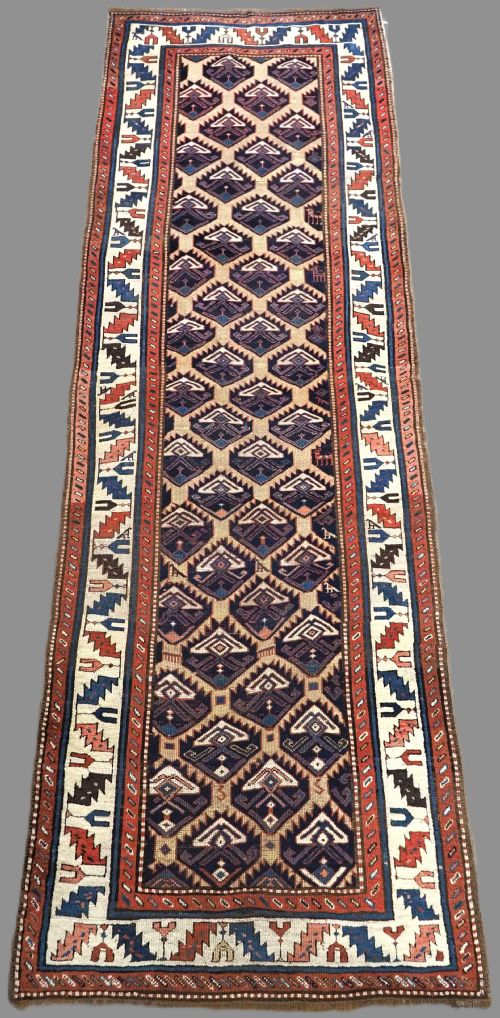
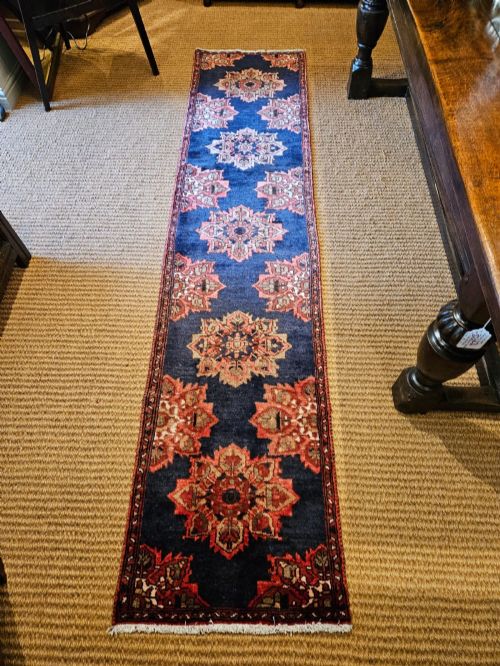
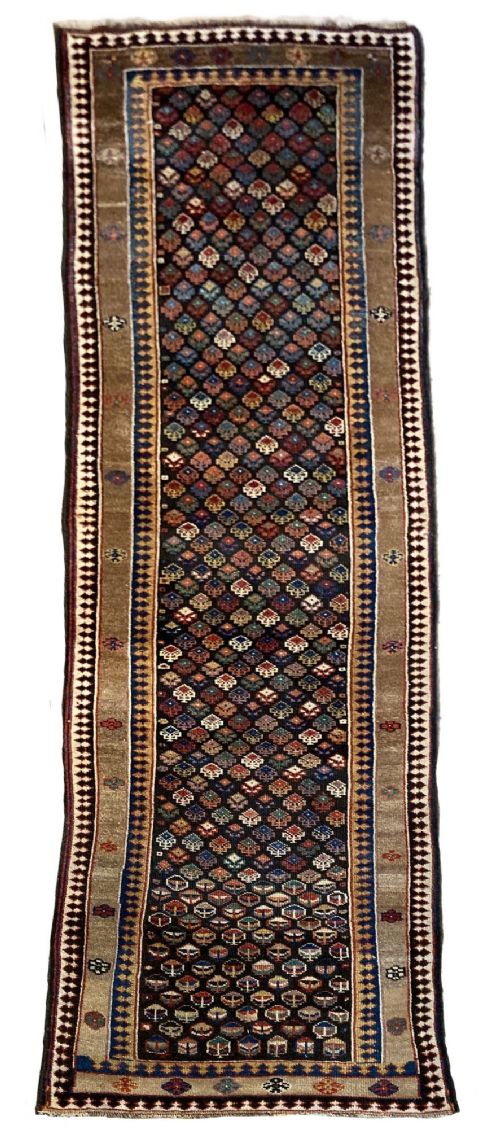
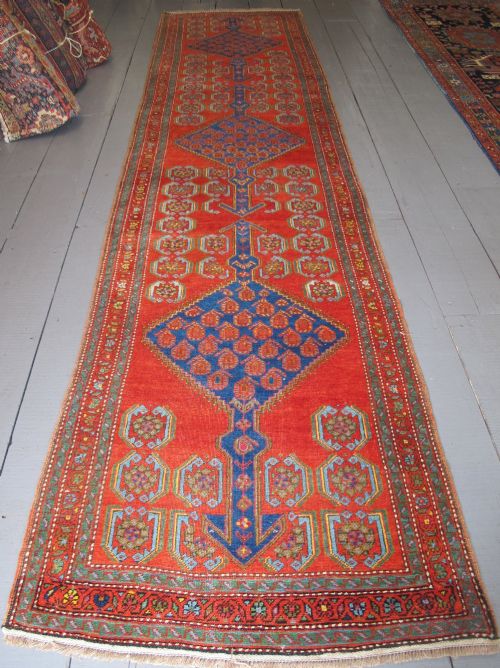
The versions most commonly met on this page include antique Heriz, Kurdish, Hamadan, and Caucasian pieces such as Shirvan and Kazak runners. These rugs frequently display geometric medallions, lattice patterns, and boteh motifs woven in deep red and blue palettes. Many examples measure under a metre in width while extending several metres in length.
What varies in quality
Knot density and the precision of the geometric layout distinguish finer examples from standard production pieces. Finer runners exhibit tightly packed foundations and sharply defined motifs, whereas simpler village weaves display more relaxed proportions and broader, rustic designs.
The integrity of the natural dyes and the preservation of the original wool pile determine the long-term character of each runner. Examples that retain strong colour saturation and minimal pile wear demonstrate superior material selection and expert initial construction.
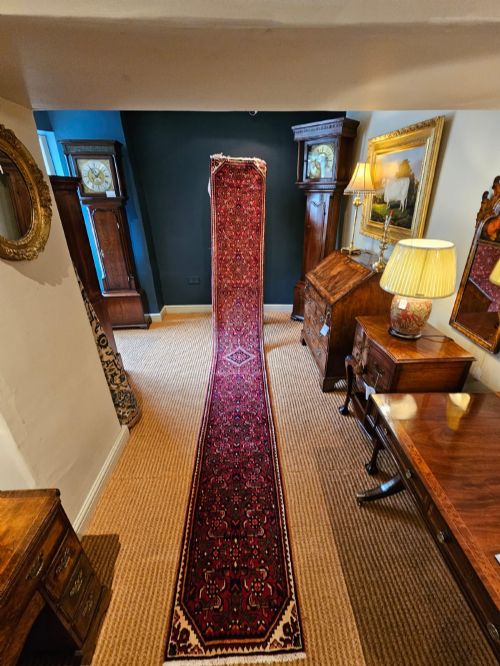
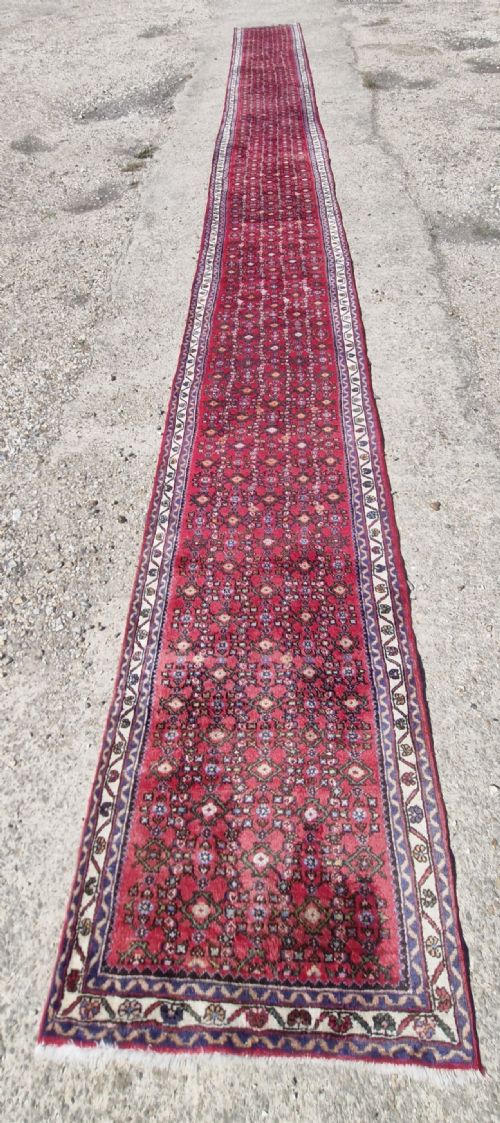
Occasional long runners stretch beyond ten metres, designed to accommodate exceptionally grand nineteenth-century hallways.
The Oriental Hall Runner Glossary
- Boteh
- A stylised almond or paisley motif representing a floral spray or cypress tree, frequently repeated along the field of Caucasian and Persian runners. This ancient symbol appears extensively in nineteenth-century village weaving.
- Kazak
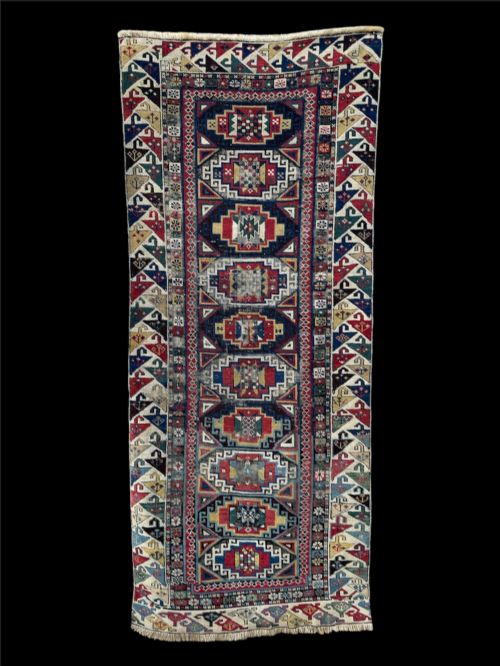
- A term denoting rugs and runners woven by various tribes in the southern Caucasus region, recognised for bold geometric medallions and primary colour palettes. These pieces typically display robust wool construction and stark, rectilinear designs.
- Heriz
- A style originating from north-west Persia, known for durable structures and large, geometric central medallions balanced by angular corner spandrels. Heriz runners utilise sturdy wool well suited to heavy foot traffic.
- Camel hair
- Un-dyed fleece derived from camels, providing natural golden-brown or beige tones in the foundations or fields of traditional runners. Weavers valued this fibre for its natural strength and soft texture.
- Shirvan
- A Caucasian weaving origin associated with finely knotted runners featuring precise geometric lattices and star motifs. These rugs often display crisp detailing and balanced, repeating compositions.
Oriental Hall Runner: Frequently Asked Questions
Where should an oriental hall runner be placed?
An oriental hall runner functions best in high-traffic corridors, entryways, and narrow landings where floor protection and visual warmth are required. Their elongated proportions suit straight architectural paths.
The durable wool pile and sturdy construction withstand daily footsteps while introducing traditional character to transitional spaces in the home.
How do I identify a Caucasian runner?
Caucasian runners typically feature bold geometric medallions, hooked designs, and sharp rectilinear motifs rendered in primary colours. Regional variations include Kazak, Shirvan, and Gendje styles.
Examination of the knotting style and the presence of wool foundations help differentiate these Caucasian examples from Persian production.
What is the difference between Heriz and Hamadan runners?
Heriz runners are characterised by large, bold geometric medallions and structured angular corners, reflecting north-west Persian workshops. They utilise heavy, durable wool.
Hamadan runners encompass a broader range of village and town weaving from a major market centre, often displaying all-over Herati patterns or simpler repeated boteh designs.
How are nineteenth-century runners dated?
Dating relies on structural analysis, including the type of wool, the composition of the foundation threads, and the chemistry of the dyes. Natural dyes and hand-spun wool indicate earlier production periods.
Design motifs, weave tightness, and comparative examples from known regional traditions assist in establishing approximate decades of manufacture.