

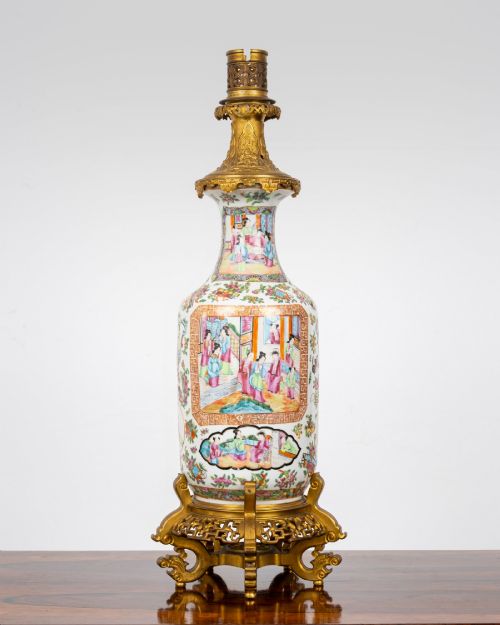



Oriental Figural Table Lamp
An oriental figural table lamp brings character to a room, combining sculpted forms with decorative bases.
Oriental Figural Table Lamp
An oriental figural table lamp combines sculpted figures or transformed vessels with electric lighting, drawing on traditions from East Asia. When you search for an oriental figural table lamp, you encounter pieces designed to illuminate interior spaces while serving as sculptural art.
The selections here span the nineteenth century and the early twentieth century, including the Meiji period and the Qing dynasty. These items frequently take the form of converted vases, ginger jars, and carved root wood figures.
You are most likely to meet pairs of Japanese Satsuma lamps and Chinese porcelain pieces mounted with brass or gilt bronze. Carved root wood figures also appear regularly, offering distinct textures and organic silhouettes.
How they were made
The manufacture of these pieces involves porcelain, earthenware, and hardwood, shaped by hand and fired or carved with precision. Makers utilised materials like brass and gilt bronze to mount and support the ceramic and wooden bodies.
Root wood pieces show detailed carving that follows the natural contours of the timber, resulting in unique figural representations. Porcelain and earthenware vessels display hand-painted glazes, including famille rose, turquoise, and crackleware finishes.
Listings feature pieces from the 19th Century, 1900, and 1920, utilising porcelain, earthenware, hardwood, and gilt bronze.
What varies in quality
Quality rests in the execution of the hand-carved details on root wood figures and the finesse of the hand-painted porcelain decoration. Finer examples display crisper moulding, balanced proportions, and integrated metal mounts that complement the ceramic body.
The condition of the original glaze and the integrity of the carved timber distinguish superior items from simpler decorative pieces. The presence of matched pairs also elevates the standing of these lamps within a collection.
The Oriental Figural Table Lamp Glossary
- Satsuma
- A type of Japanese earthenware with a ivory-coloured, crackled glaze that is typically decorated with polychrome enamels and gilding. These wares were widely exported from the nineteenth century onwards.
- Famille rose
- A palette of opaque enamel colours dominated by pink or rose, used extensively on Chinese porcelain during the Qing dynasty. This style of decoration allows for intricate floral and figural scenes.
- Meiji Period
- The era in Japanese history spanning from 1868 to 1912, noted for a surge in decorative arts produced for international markets. Works from this period often combine traditional motifs with refined craftsmanship.
- Qing Dynasty
- The last imperial dynasty of China, ruling from 1644 until 1912, famous for its diverse ceramic output including monochrome and polychrome glazes. Pieces from this era frequently serve as the bodies for later lamp conversions.
- Gilt bronze
- Copper alloy that has been coated with a thin layer of gold, providing a durable and decorative metallic finish. It is often utilised for mounts and bases on high-end lamps.
Oriental Figural Table Lamp: Frequently Asked Questions
How are these lamps wired?
These pieces generally feature modern electrical wiring adapted for standard domestic use during conversion from original vessels or figures.
Buyers should inspect the internal fittings to ensure they meet current safety standards while preserving the antique body.
Can I find matched pairs?
Matched pairs do appear frequently among Satsuma and famille rose listings, offering symmetrical options for interior placement.
Pairs usually share similar dimensions, glaze palettes, and mounting styles, though minor hand-painted variations remain typical.
What materials make up the bases?
Bases and mounts are commonly constructed from brass or gilt bronze, providing structural stability to ceramic and wooden bodies.
Root wood lamps rely on the dense, carved timber itself for support without additional metal mounting.
How do I date these lamps?
Dating relies on stylistic markers from the nineteenth century, the Meiji period, and the Qing dynasty, visible in the glaze and carving techniques.
Conversions often happened decades after the original vessel or figure was made, blending antique bodies with later electrical fittings.