






Oriental Elm Storage Cabinet
An oriental elm storage cabinet brings architectural timber and traditional joinery straight into a room, offering both substantial capacity and historical presence.
Oriental Elm Storage Cabinet
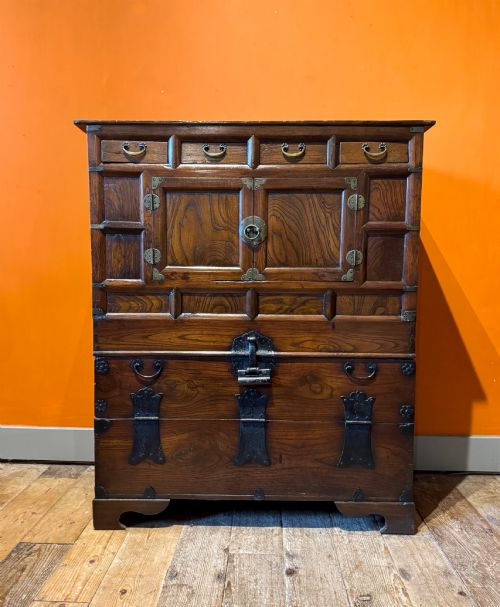
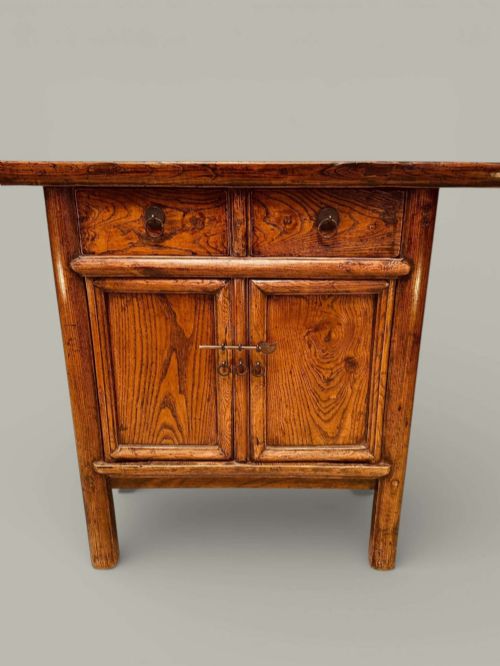
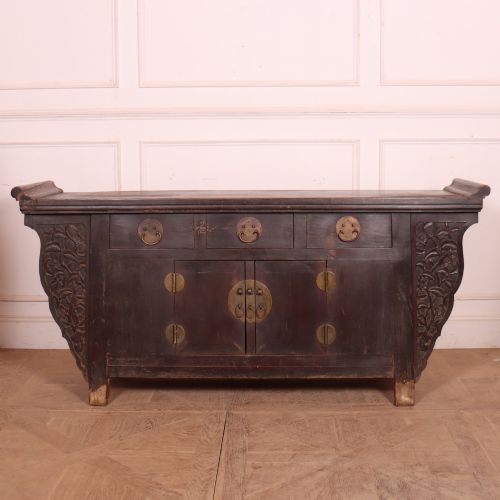
An oriental elm storage cabinet encompasses practical furniture pieces originating from China and Korea, spanning periods from the eighteenth century through to the early twentieth century. Buyers seeking this phrase encounter sideboards, side cabinets, marriage cabinets, and banded chests alongside smaller tabletop examples.
The aesthetic is rooted in traditional Chinese and Korean forms, with styles drawing from the Qing Dynasty, the Korean Joseon Dynasty, and regional workshops such as Shanxi. These pieces range from substantial sideboards to compact noodle cabinets and bandaji storage chests.
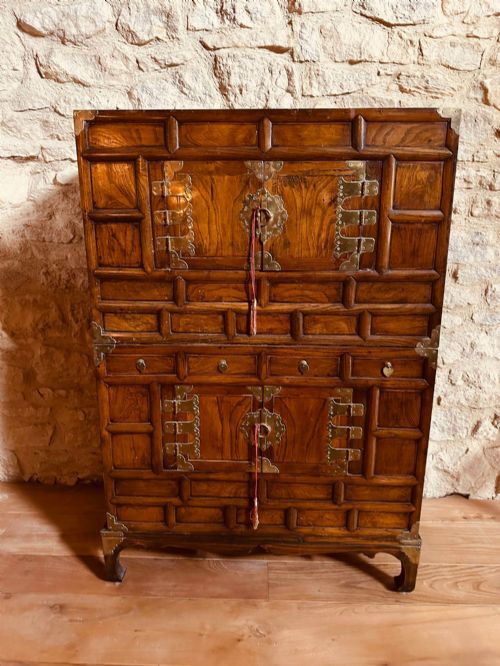
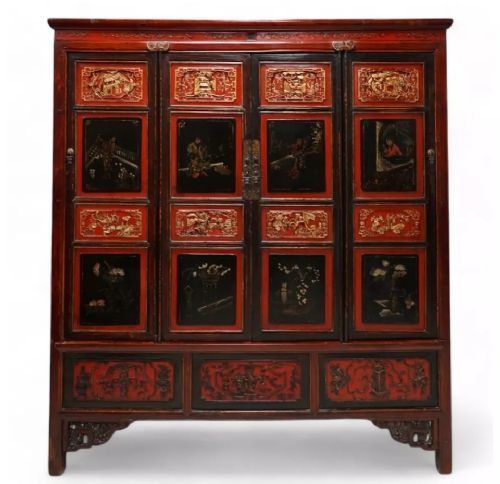
Materials extend beyond plain timber to incorporate burr elm veneers and red lacquer finishes, paired with functional hardware in brass and iron. The pieces on offer reflect diverse domestic storage needs across Asian traditions, translated into durable hardwood construction.
Construction and materials
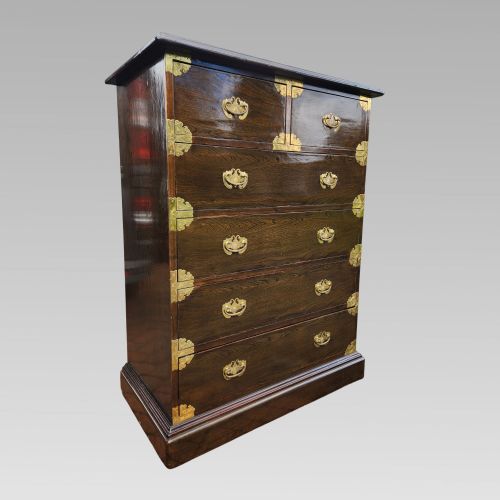
Construction relies primarily on elm and burr elm timber, frequently supported by secondary hardwoods and finished with red lacquer where designated for ceremonial use. The natural grain of the wood provides visual texture, particularly when selected as burr veneer on drawer fronts and panels.
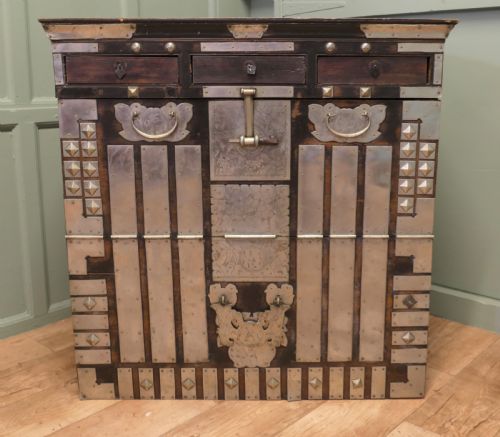
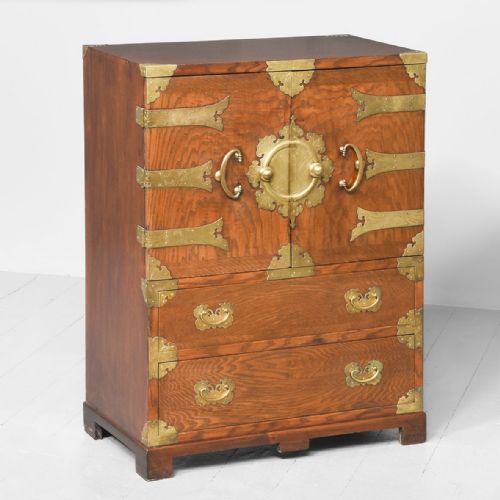
Metalwork plays a structural and decorative role, with iron and brass hardware securing corners, hinges, and locking plates on pieces like Korean bandaji chests. Traditional joinery methods allow the timber to move naturally while maintaining the rigid frame required for heavy storage.
Oriental Elm Storage Cabinet Retail Price Guide 2026
Typical asking prices for oriental elm storage cabinet among the pieces listed under this phrase on Sellingantiques today, from the lower quarter to the upper quarter. They describe what is for sale here now, not the wider market.
Listings feature elm, burr elm, brass, iron, and lacquer across eighteenth-century to 1930s periods.
Assessing quality in construction and finish
Quality rests in the crispness of the carved details, the integrity of the original lacquer or polished wood surface, and the stability of the carcass. Superior examples show careful selection of elm grain, particularly in burr veneer panels, alongside balanced proportions.
The execution of the brass and iron hardware distinguishes finer pieces, where backplates and hinges are securely integrated rather than crudely applied. Original patination on both the timber and metal fixtures indicates careful handling and long-term survival.
The Oriental Elm Storage Cabinet Glossary
- Bandaji
- A traditional Korean storage chest featuring a hinged front flap that drops down to access the interior compartments. These chests are often reinforced with elaborate metal strapwork.
- Marriage cabinet
- A large, upright cabinet traditionally presented to a bride in China, typically finished in red lacquer and fitted with brass or iron door furniture.
- Noodle cabinet
- A tall, slender Chinese cupboard characterised by recessed frame construction and rounded uprights, historically utilised for food storage.
- Burr elm
- Timber taken from a tree growth where grain has swirled into intricate patterns, highly prized for decorative drawer fronts and panel inserts.
- Qing Dynasty
- The final imperial dynasty of China, lasting from the mid-seventeenth century until nineteen twelve, associated with varied regional cabinetmaking traditions.
Oriental Elm Storage Cabinet: Frequently Asked Questions
What is a bandaji chest?
A bandaji chest is a traditional Korean storage box featuring a drop-front panel that gives access to internal compartments. These items were built for domestic storage and reinforced with iron or brass straps.
They display distinct regional joinery and serve as versatile low sideboards or display surfaces in modern interiors.
How do I date an elm cabinet?
Dating relies on construction methods, wear patterns, style markers, and material finishes like traditional red lacquer. Pieces from the eighteenth and nineteenth centuries show hand-cut joinery and aged patination.
Twentieth-century examples often incorporate transitional elements from the Republic period or early Korean production, reflecting shifting domestic requirements.
Where were these cabinets made?
These storage pieces originated in workshops across China and Korea, utilising local elm timbers and regional decorative styles. Chinese pieces often follow Shanxi Province traditions or imperial court aesthetics.
Korean pieces frequently adhere to Joseon Dynasty forms, incorporating distinctive brass hardware and banded reinforcement across the wooden panels.
Can I use these cabinets for modern storage?
These cabinets offer deep shelving and enclosed compartments suited for contemporary media storage, dinnerware, or hallway organisation. Their robust hardwood construction handles daily use effectively.
Placing them away from direct heat sources helps protect the historic timber and maintains the stability of the original joinery.