









Oriental Divider
Oriental divider folding screens bring segmented spatial design and hand-worked surface art into a room.
Oriental Divider
When you search for an oriental divider, you encounter multi-panel folding screens originating from various Asian traditions and European adaptations. The examples gathered here span large multi-fold panels down to smaller table screens and domestic dressing screens.
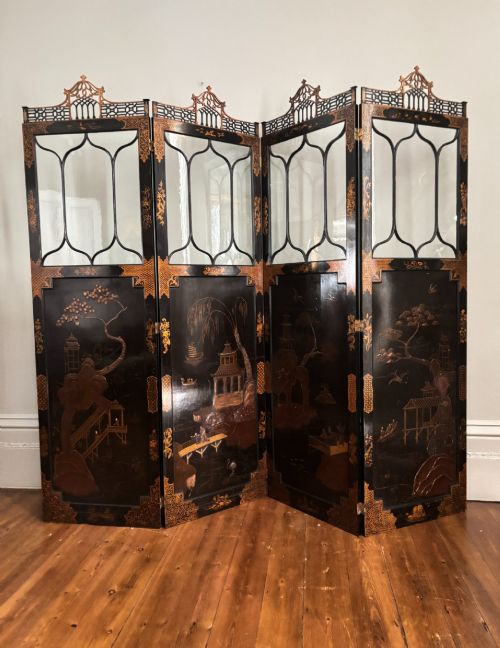
The most common forms on this page are folding screens with multiple panels, often numbering four, six, or eight. These function practically as room dividers and visually as expansive surfaces carrying lacquer, paint, or textile displays.
The objects originate from diverse cultural contexts including Chinese, Japanese, Burmese, and Anglo-Indian workshops. European interpretations such as Victorian Chinoiserie and Regency styles also appear among the selections.
Materials and construction
Makers utilised solid timbers and hardwoods alongside composite structures like papier mâché to build the supporting frames and panels. Lacquer surfaces provide the foundational sheen, often built up in multiple coats to receive subsequent carving, painting, or inlay work.
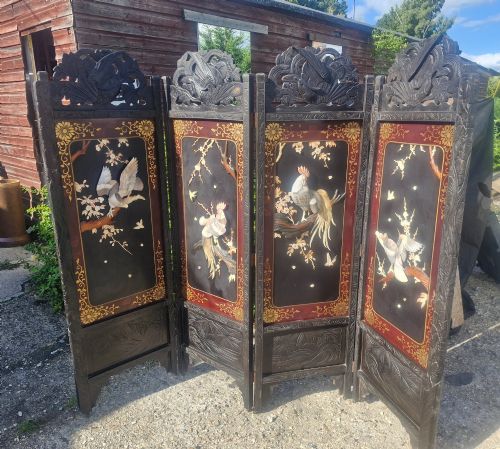
Surface ornamentation relies on distinct decorative techniques including deep bone and hardstone carving, gold leaf application, fretwork, and hand-painted motifs. Silk and other textiles are frequently stretched within panels or mounted as woven picture sections.
Hinges join the individual leaves together, allowing the screens to articulate into zigzag configurations for freestanding placement. Detail work ranges from incised coromandel incisions to applied figurative reliefs.
Oriental Divider Retail Price Guide 2026
Typical asking prices for oriental divider among the pieces listed under this phrase on Sellingantiques today, from the lower quarter to the upper quarter. They describe what is for sale here now, not the wider market.
Listings feature items dated across the eighteenth, nineteenth, and twentieth centuries, using lacquer, hardwood, silk, and bone.
Distinctions in craftsmanship
The depth and precision of carving differentiate panels, where figures and floral elements stand in sharp relief rather than flat application. Inlaid materials such as bone and hardstone demonstrate superior standard when fitted flush and secured tightly into the lacquer or wood matrix.
The complexity of the composition and the number of folds alter the visual weight of the piece, with multi-fold coromandel and lacquer works requiring substantial labour across expansive surfaces. The preservation of original lacquer and painted pigments dictates the integrity of the finish over time.
The Oriental Divider Glossary
- Coromandel lacquer
- A Chinese incised lacquer technique where designs are cut into a dark ground and filled with colours or left natural. It creates a textured, multi-layered surface often found on large folding screens.
- Chinoiserie
- A European artistic style reflecting Chinese and East Asian motifs, popular in British decorative arts. It reinterprets traditional forms through Western interior design perspectives.
- Table screen
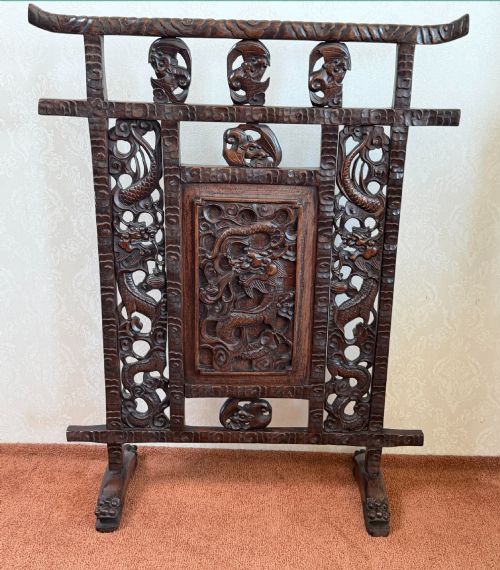
- A small decorative screen mounted on a stand rather than hinged for folding. These were traditionally placed on desks or tables for display.
- Fretwork
- Openwork ornamentation carved or pierced through wood in geometric or organic patterns. It frequently appears on the upper or lower panels of screens to allow filtered light and air movement.
Oriental Divider: Frequently Asked Questions
How do I place a room divider?
Position the panels in a shallow zig-zag stance so the structure remains stable under its own weight on a flat floor.
Keep the panels away from direct heat sources to protect the wood and lacquer from drying and cracking.
What is a coromandel screen?
A coromandel screen is a heavy wooden folding panel coated in dark lacquer, carved with pictorial scenes using an incised technique.
These pieces typically feature multiple folds and depict traditional figures, landscapes, or flora.
How do I clean lacquer panels?
Dust the surfaces gently with a dry, soft cloth to remove everyday particles without scratching the finish.
Avoid using liquid cleaners, polishes, or damp cloths, as moisture can damage aged lacquer and exposed wood.
What is the difference between a dressing screen and a room divider?
Dressing screens are traditionally shorter or narrower partitions used historically for privacy while changing clothes in a bedroom.
Room dividers are typically taller, multi-fold configurations designed to section off larger living spaces.