



Oriental Decorative Room Divider
An oriental decorative room divider splits a space with dramatic weight, bringing rich panels of carved bone and dark lacquer into a room.
Oriental Decorative Room Divider
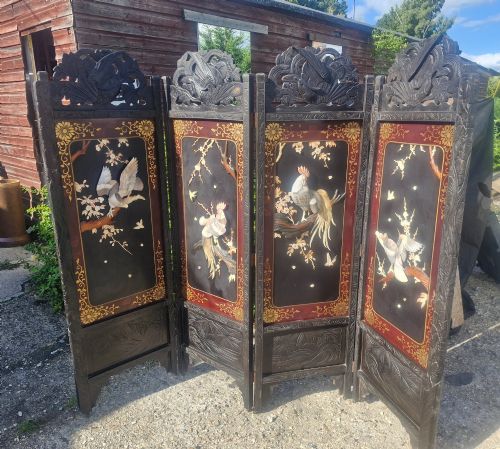
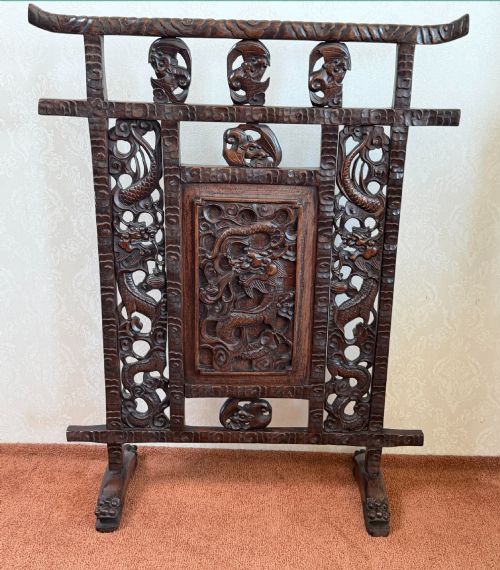
An oriental decorative room divider serves as both a physical barrier and a striking visual centrepiece within an interior. The selection spans folding screens with multiple panels alongside smaller table screens and domestic fire screens.
Most examples found here date from the late nineteenth century through to the middle of the twentieth century. These pieces draw upon Chinese Qing Dynasty traditions, Japanese Meiji aesthetics, and Burmese craftsmanship.
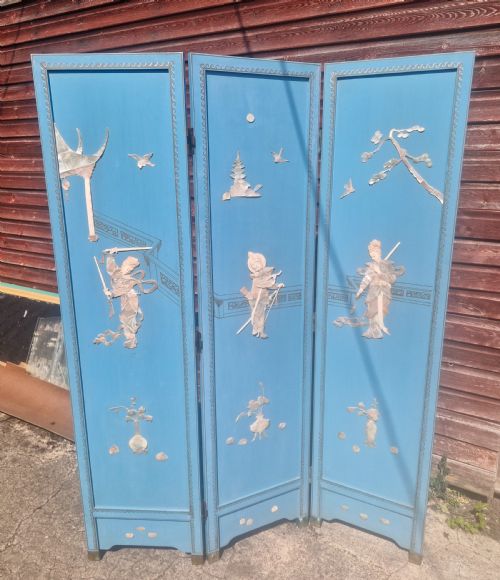
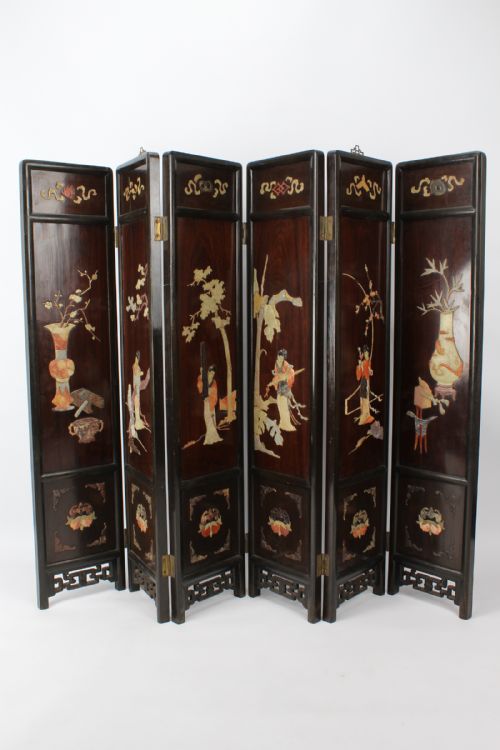
Forms vary widely from large four-fold and six-fold textile or lacquered barriers down to three-fold dressing screens and rigid wall art panels. Each piece utilises traditional panel construction to manage light and privacy in a room.
How they were made
Makers built these screens using sturdy hardwoods, pine or lightweight frames to support expansive panels of silk, cotton or deep black lacquer. Artisans applied successive coats of lacquer to achieve a smooth, resilient surface that could accept intricate inlays.
Decoration relied heavily on meticulous handwork, incorporating deeply carved animal bone, shimmering mother-of-pearl and polished hardstones to build relief scenes. Textile screens deployed skilled weaving and embroidery techniques upon silk or cotton panels.
Oriental Decorative Room Divider Retail Price Guide 2026
Typical asking prices for oriental decorative room divider among the pieces listed under this phrase on Sellingantiques today, from the lower quarter to the upper quarter. They describe what is for sale here now, not the wider market.
Some nineteenth century folding screens doubled as photographic studio props, letting sitters pose against exotic backdrops before heading home for tea.
What varies in quality
The distinction between ordinary and exceptional pieces lies in the depth and precision of the manual carving and the security of the inlay work. Finer screens exhibit deeply relief-carved bone figures and tightly fitted hardstone mounts that sit flush within the lacquer.
Material selection dictates longevity and visual presence, with dense hardwoods and heavy brass hinges separating substantial architectural dividers from lighter, more purely decorative props.
The Oriental Decorative Room Divider Glossary
- Lacquer
- A durable resin finish applied in multiple layers to wooden panels to create a glossy, protective surface. It provides a dark, reflective background for inlaid bone and stone.
- Chinoiserie
- A Western stylistic tradition imitating Chinese artistic motifs and techniques. It appears frequently in European interpretations of oriental design.
- Hardstone
- Naturally occurring decorative stones such as jade, agate or soapstone cut and polished for inlay work. Artisans mount these stones into lacquer panels to depict flora and fauna.
- Meiji
- A Japanese historical period spanning the late nineteenth and early twentieth centuries. Pieces from this era often feature exceptional metalwork, textile or bone inlay techniques.
Oriental Decorative Room Divider: Frequently Asked Questions
How do I use a room divider?
These screens work well to segment large living spaces or hide utilitarian areas while adding vertical pattern to plain walls.
Position them away from direct sunlight to protect delicate silk fabrics and natural lacquer finishes from fading.
How do I clean lacquered screens?
Dust the panels regularly with a soft, dry cloth to prevent grit from scratching the delicate lacquer surface.
Avoid using liquid cleaners, polishes or modern detergents which can soften historic finishes and loosen bone inlays.
Were these screens purely decorative?
While many served as grand visual dividers, smaller variations functioned specifically as fire screens or dressing screens in Victorian homes.
Photographic studios also utilised decorated panels as scenic props for formal portraiture.
How do I date a screen?
Examine the hinge construction, wood type and fastening methods used on the reverse of the folding panels.
Stylistic markers like Meiji period motifs or specific Victorianprop labels help anchor the piece within the nineteenth or twentieth century.