


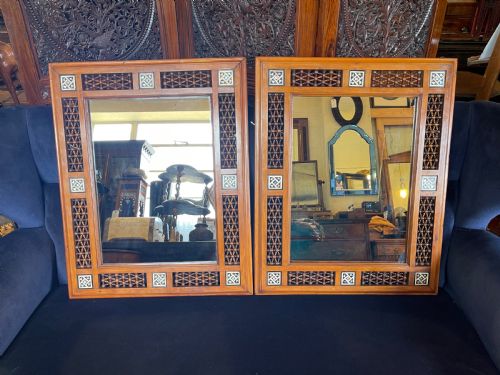


Oriental Carved Mirror
An oriental carved mirror brings intricate handwork and distinct regional character into a room, offering both reflection and decorative presence.
Oriental Carved Mirror
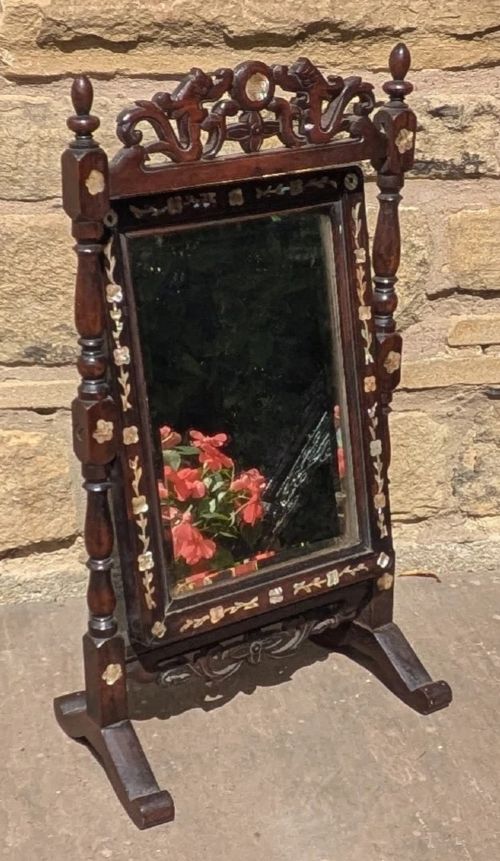
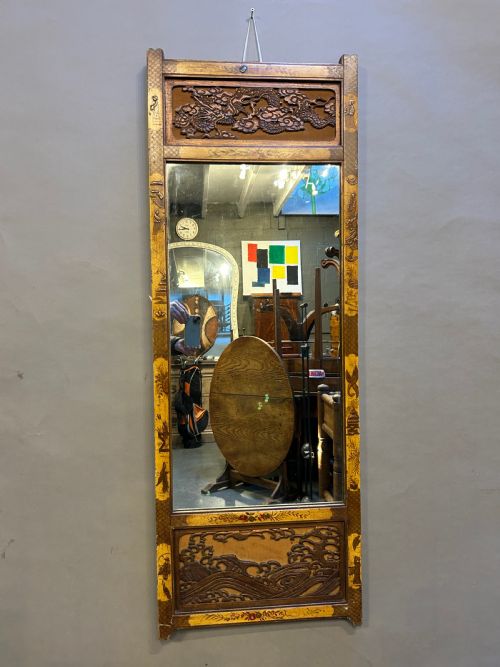
When you search for an oriental carved mirror, you encounter reflective pieces spanning the late nineteenth century through to the early decades of the twentieth century. These items encompass wall mirrors, table mirrors, freestanding cheval mirrors, and pier mirrors created across various Eastern and revival traditions.
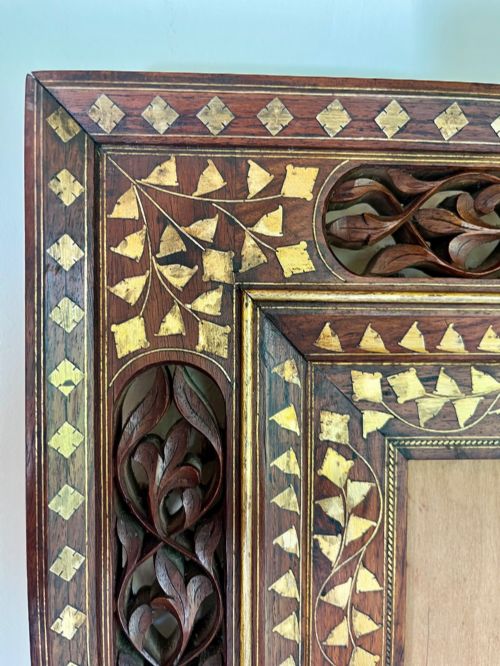
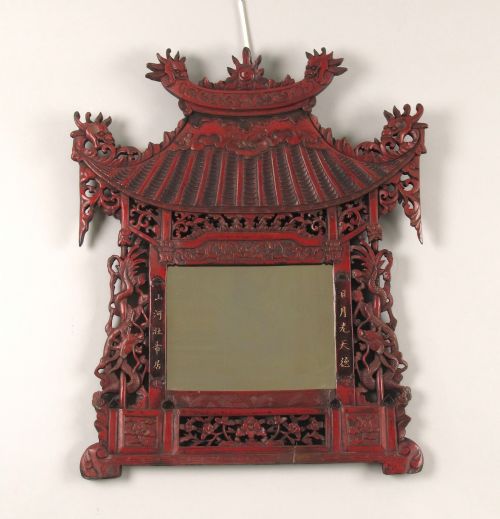
The examples most commonly met on this page include Chinese hardwood and lacquer frames alongside Anglo-Indian Hoshiarpur work and Kashmiri brass inlaid designs. They bring distinct regional carving styles, woodwork, and historical character directly into domestic spaces.
How they were made
Maker workshops utilised dense timbers such as hardwood, rosewood, cherrywood, and bamboo to form the structural frames. These woods provided a stable base capable of supporting deep relief carving, pierced fretwork, and applied decorative elements.
Surface decoration involved red lacquer, mother-of-pearl inlay, brass wire inlay, and gilt accents. Artisans shaped these materials by hand, combining traditional joinery with intricate surface embellishment characteristic of Qing Dynasty, Chinoiserie, and Anglo-Indian aesthetics.
The selection includes regional styles ranging from Anglo-Indian Hoshiarpur frames to Chinese Qing Dynasty lacquer and hardwood mirrors.
What varies in quality
Quality rests primarily in the depth, crispness, and complexity of the hand carving across the wooden frame. Pieces displaying deeply undercut relief, intricate pierced fretwork, and well-preserved inlaid elements represent a higher tier of craftsmanship than simpler, shallow-carved surfaces.
The integrity of the materials and the preservation of original finishes such as lacquer, brass wire, and mother-of-pearl inlay define the distinction between ordinary and exceptional examples. Balanced proportions and harmonious integration of the mirror glass within the decorative wooden structure also signal superior workshop execution.
The Oriental Carved Mirror Glossary
- Cheval mirror
- A freestanding full-length mirror suspended on a central swivel frame between two upright pillars. This form allows the glass to tilt to various angles.
- Pier mirror
- A tall mirror specifically designed to hang on the wall between two windows, often placed above a pier table or console.
- Mother of pearl
- The iridescent internal layer of mollusc shells, utilised for decorative inlay work in furniture and frames. It creates luminous contrasting details against dark hardwoods.
- Pierced edge
- woodwork carved completely through the material to create openwork patterns and silhouettes. This technique adds lightness and intricate detail to heavy frames.
Oriental Carved Mirror: Frequently Asked Questions
How do I hang a heavy carved mirror?
These frames often carry significant weight due to dense hardwoods and intricate detailing. Secure fixings into solid wall studs or appropriate cavity anchors ensure safe support.
Professional mirror hangers can assess the weight distribution and provide hardware suited to both the wall type and the frame structure.
Where should I place an oriental mirror?
Placing the reflective piece opposite a window or light source helps to brighten darker rooms and create a sense of expanded space. Hallways, living rooms, and bedrooms benefit from the decorative focus these carved frames provide.
Consider eye-level placement so the mirror functions both practically and as a focal point among surrounding furnishings.
How do I clean mother of pearl inlay?
Gentle dusting with a soft, dry cloth prevents the accumulation of dirt within the intricate carved recesses and delicate shell sections. Avoid harsh chemical cleaners or excess moisture which can damage the surrounding wood and adhesive.
Periodic application of appropriate furniture wax helps preserve the timber without affecting the inlaid surfaces.
What is Hoshiarpur work?
Hoshiarpur refers to a specific style of woodwork originating from the Punjab region, noted for intricate inlay using brass, wire, and resin. These pieces frequently incorporate dense floral and geometric patterns across wooden frames.
The technique creates a distinct tactile surface where metal and wood sit flush together.
Are these mirrors fragile?
While the hardwoods used are durable, protruding carved elements, applied mother of pearl, and brass wire require careful handling during movement. Regular household cleaning should be approached gently around delicate pierced edges and corners.
Stable indoor humidity conditions prevent timber movement that might otherwise stress the inlaid elements.