



Oriental Carved Folding Screen
An oriental carved folding screen divides a room with deep relief work and layered lacquer, bringing dramatic architectural presence and movable division to an interior.
Oriental Carved Folding Screen
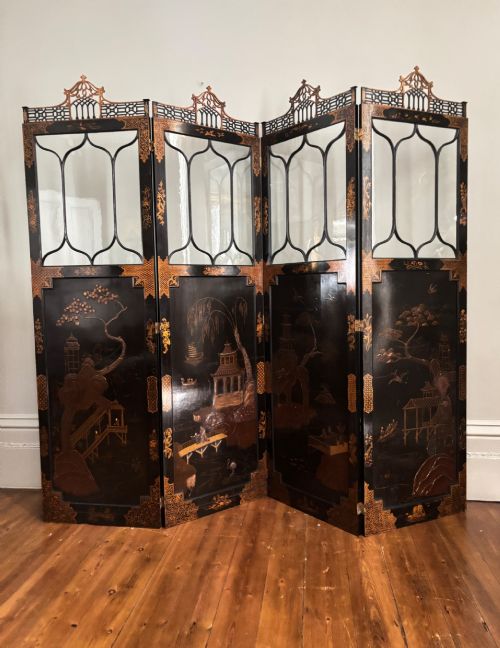
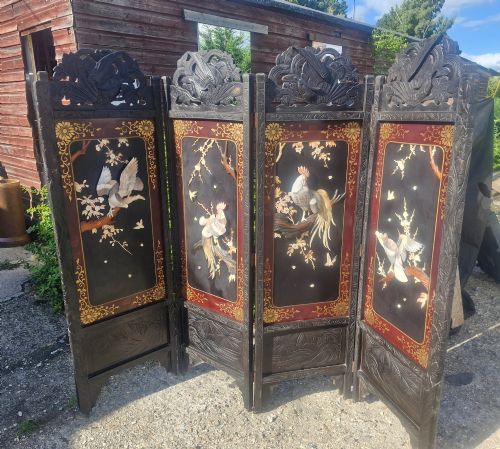
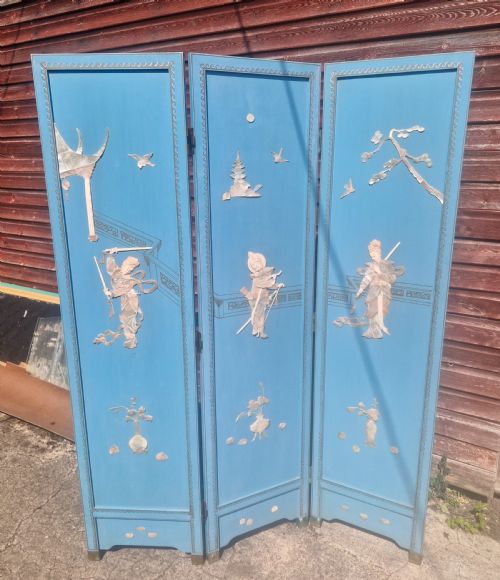
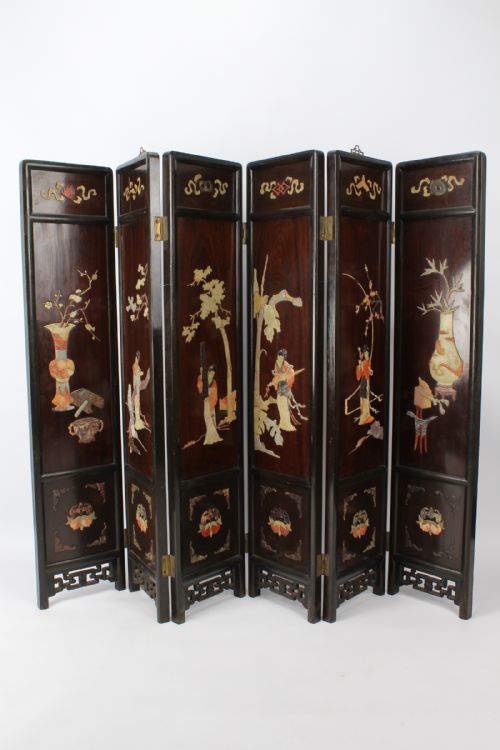
An oriental carved folding screen is a hinged panel structure designed to divide spaces or decorate walls, appearing in forms from three-fold dressing screens to grand eight-fold room dividers. These pieces originate from traditions across China, Japan, Burma, and India, spanning periods from the eighteenth century through the mid twentieth century.
The domestic role of these screens ranges from full room dividers to lower fire screens and photographic props. You encounter configurations featuring three, four, six, or eight panels joined by hinges, designed to fold flat or angle into a room.
The aesthetic vocabulary encompasses Chinese Chippendale style, Chinoiserie, Qing Dynasty work, and Japanese Meiji production. Each panel functions as a vertical canvas of carved woodwork, lacquer, and applied detail.
How they were made
Makers constructed these screens using timber foundations of hardwood and standard wood, applying coats of lacquer to build up deep, smooth surfaces. Carvers cut directly into the lacquer and wood to create low and high relief panels depicting figures, foliage, and dragons.
Decoration incorporates contrasting materials set into the surface, including bone, hardstone, brass, and pigment. Artisans combined painting, silk and cotton textile panels, and fretwork to articulate the complex visual schemes across multiple folds.
Listings feature items spanning the eighteenth century to the mid twentieth century, utilising lacquer, hardwood, bone, and brass across Chinese, Japanese, Burmese, and Indian origins.
What varies in quality
The depth and clarity of the carving separate ambitious panels from simpler decorative items. Superior examples display crisp undercutting in the woodwork and meticulous incision in coromandel lacquer work.
The integration of applied elements like bone and hardstone indicates the maker's skill. Panels where these inlays sit flush and secure demonstrate better craftsmanship than those with superficial surface additions.
The architectural weight of the timber and the integrity of the hinges determine how well a multi-fold screen stands when angled. Heavier hardwoods provide greater stability for large eight-fold configurations.
The Oriental Carved Folding Screen Glossary
- Coromandel lacquer
- A Chinese incised lacquer technique where layers of dark lacquer are carved away to reveal coloured grounds beneath, often filled with pigment. This technique creates a rich textured surface across large folding screens.
- Chinoiserie
- European theatrical interpretation of Chinese artistic motifs and styles, popular in furniture and decorative screens. It employs playful asymmetry and exotic landscape elements.
- Meiji
- A period of Japanese history spanning the late nineteenth and early twentieth centuries noted for intricate decorative arts and fine metalwork and inlay. Pieces from this era often feature detailed bone carving.
- Fretwork
- Openwork ornamentation carved or pierced through wood to form geometric or scrolling patterns. It frequently appears along the borders or upper sections of screens.
- Hardstone
- Dense semi-precious stones such as jade or agate used for inlaid decorative elements on lacquer panels. Artisans carve these stones into floral or figural shapes.
Oriental Carved Folding Screen: Frequently Asked Questions
How do I use a folding screen in a modern room?
Position your screen to zone open-plan spaces, soften an empty corner, or mask a doorway. Angle the panels to ensure the structure stands securely without extra support.
Keep the screen away from direct heat sources and strong sunlight to protect the lacquer and inlaid materials from drying out or cracking.
What is the difference between coromandel and painted screens?
Coromandel screens involve cutting designs directly into layers of dark lacquer and filling the recesses with colour, resulting in a tactile, recessed surface. Painted screens rely on surface pigments and brushwork applied over wood or lacquer grounds.
Both methods produce striking pictorial panels, but coromandel work offers greater depth and durability in the carved details.
How do I care for antique lacquer?
Dust your screen regularly with a soft, dry, lint-free cloth to prevent particle build-up on the carved surfaces. Avoid liquid cleaners, polishes, and abrasive cloths that can damage the delicate lacquer finish.
Maintain stable room humidity to prevent the wood substrate from expanding and causing the lacquer to craze or lift.
How can I tell the period of a screen?
Examine the hinge types, the timber underneath any visible wear, and the style of the carving. Eighteenth and nineteenth-century examples often display hand-forged hardware and dense, heavy hardwoods.
Twentieth-century pieces may show different machining on the joints and lighter construction materials while retaining traditional motifs.