




Oriental Carved Elbow Chair
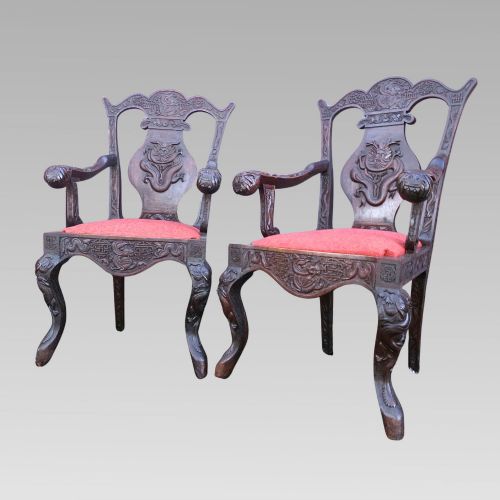
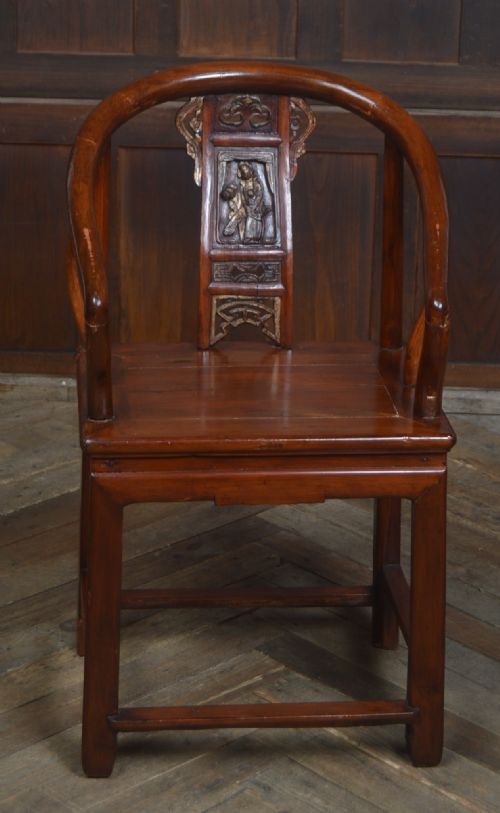
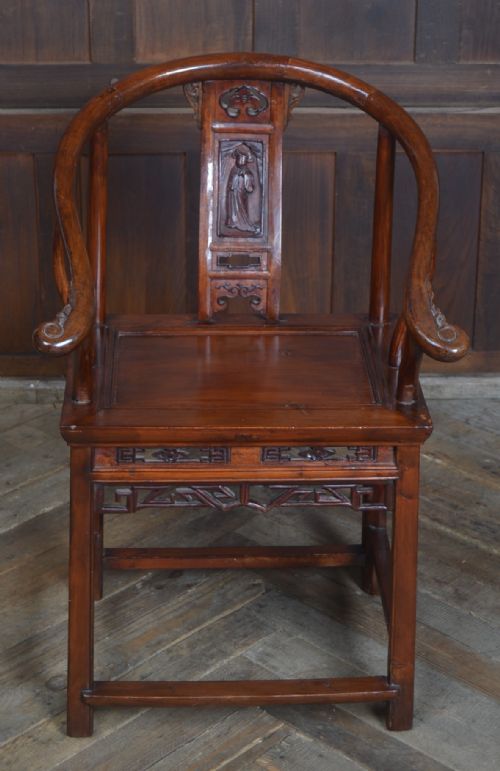
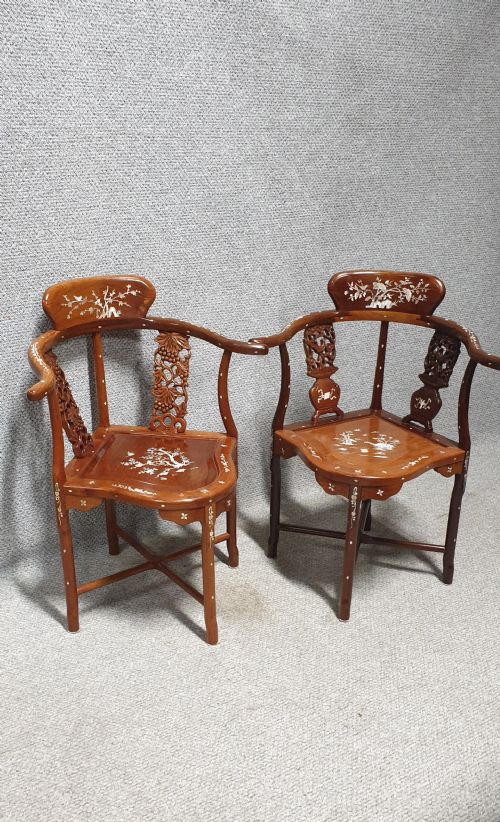
These oriental carved elbow chair examples combine traditional form with dense timber, offering a striking seat for any collector.
Oriental Carved Elbow Chair
An oriental carved elbow chair brings together traditional seating designs and intricate woodwork from various periods. You will frequently encounter nineteenth-century pieces alongside examples from the early twentieth century.
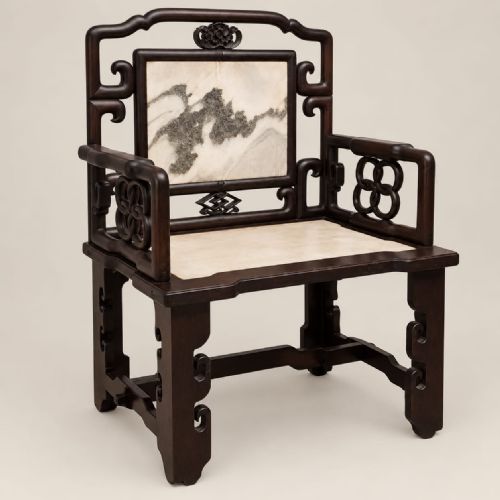
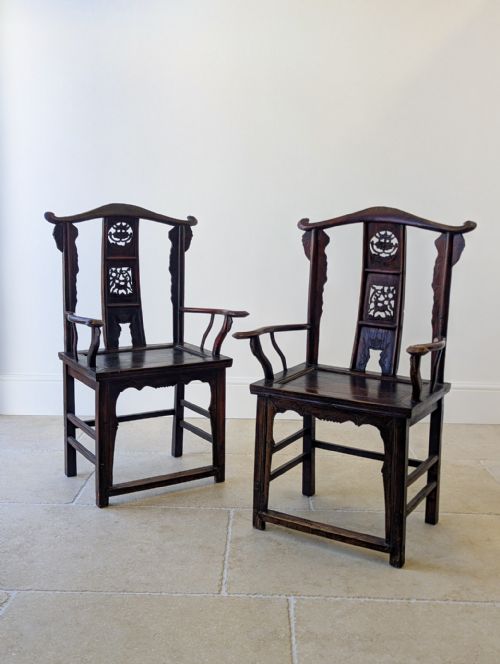
The selection ranges from simple elm frames with red lacquer to elaborate Qing dynasty throne chairs and yoke-back armchairs. Hardwood and teak frequently appear among the listed items, sometimes paired with marble inserts or cane seats.
How they were made
Maker's workshops utilised dense timbers such as hardwood, rosewood, teak and elm to build sturdy frames capable of supporting detailed relief carving. Joinery methods relied on traditional interlocking joints rather than metal screws.
Surface treatments often involved layers of red or black lacquer applied to the timber, while certain seating areas incorporated woven cane. Selected armchairs also integrated marble panels into the backrests for decorative contrast.
Listings span from eighteen fifty through to nineteen twenty, featuring materials such as hardwood, teak, elm, rosewood, lacquer, marble and cane.
What varies in quality
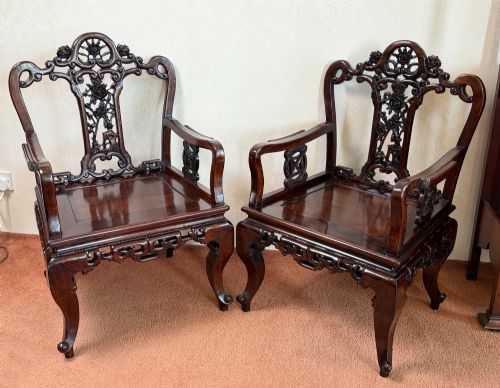
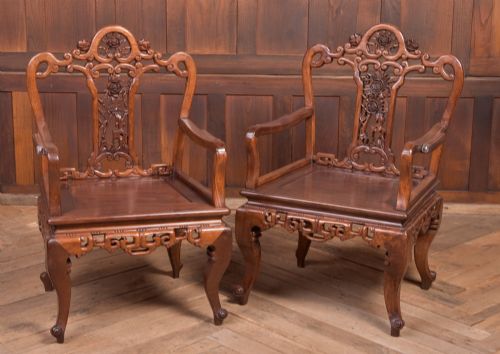
The depth and crispness of the carving dictate much of the visual distinction between standard pieces and exceptional ones. Finer examples display deeply undercut motifs like dragons and foliage without loss of structural integrity.
The choice of primary timber also influences the standing of a chair, with dense hardwoods and rosewood commanding more attention than simpler elm. Original lacquer finishes that survive intact add considerable character to the finished piece.
The Oriental Carved Elbow Chair Glossary
- Yoke-back armchair
- A traditional chair style featuring a top rail that curves upward and outward like an ox yoke. This design provides ergonomic support for the sitter's shoulders.
- Hardwood
- A dense and durable timber sourced from broad-leaved trees, frequently utilised in fine antique seating. It allows for crisp carving that resists splitting.
- Qing Dynasty
- The final imperial dynasty of China, spanning from sixteen forty-four to nineteen twelve. Pieces from this era often exhibit formal symmetry and complex symbolic decoration.
- Cane
- Woven material made from the outer portion of rattan palms, utilised for chair seats and back panels. It offers both flexibility and breathability.
Oriental Carved Elbow Chair: Frequently Asked Questions
What is an oriental carved elbow chair?
An oriental carved elbow chair is a traditional armchair featuring distinctive Asian styling and intricate wooden relief work. These pieces often originate from nineteenth-century China or the Edwardian period.
They serve as both functional seating and sculptural elements within a room. Many examples incorporate armrests and high backs designed for formal posture.
How do I date an antique elbow chair?
Dating relies on examining the timber species, construction joints and decorative motifs present on the frame. Nineteenth-century examples often display deep hand-carving and heavy hardwoods.
Historical styles like the Qing dynasty provide a broad chronological framework for attribution. Comparing the wear patterns on lacquer and cane also aids in establishing age.
Were these chairs used for daily sitting?
Many formal armchairs and throne chairs were originally reserved for status and reception rooms rather than casual lounging. Their upright designs reflect historical seating etiquette.
Today, placing one in a hallway or study allows you to appreciate the craftsmanship while using it sparingly. Their sturdy hardwood construction remains entirely practical for occasional sitting.
What materials should I look for?
Hardwood, teak, rosewood and elm form the primary structural materials across these listings. Some chairs also feature marble inserts, cane panels or pigmented lacquer coatings.
Each material responds differently to light and humidity in a modern interior. Hardwood and teak offer exceptional durability, while lacquer requires gentle dusting to preserve the finish.