

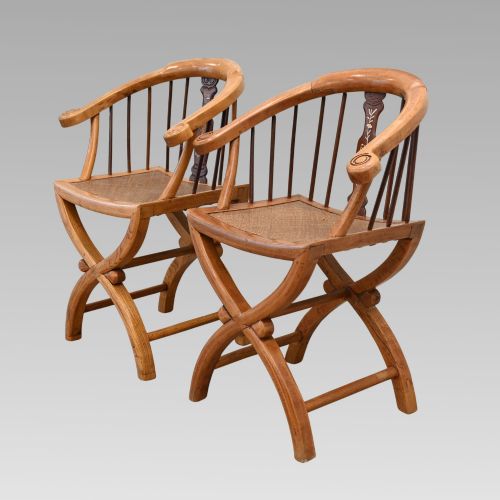
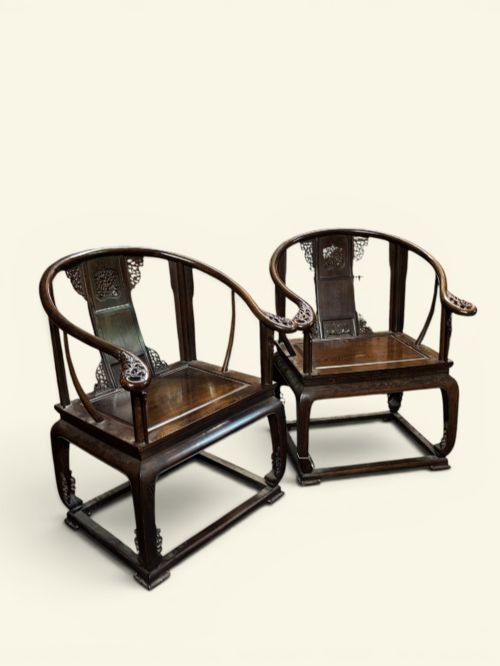
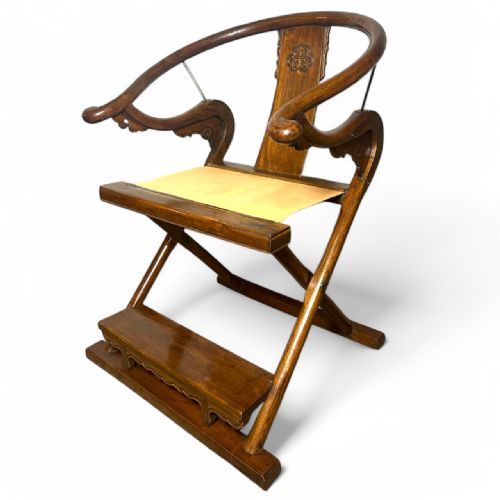


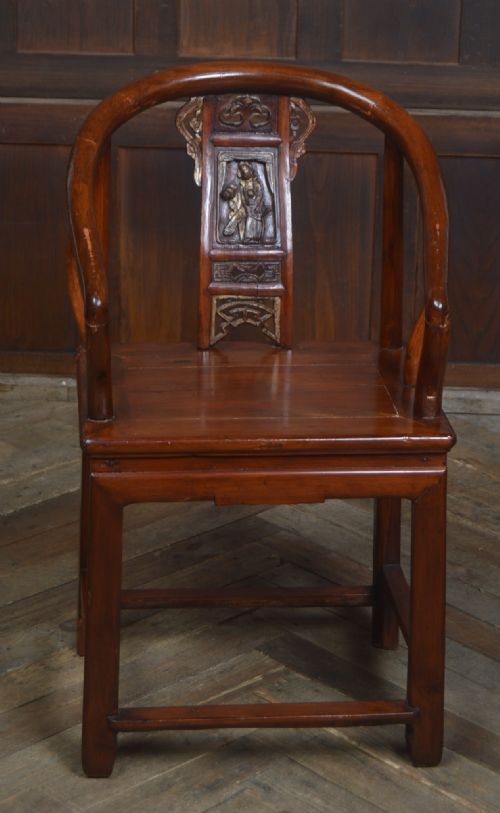
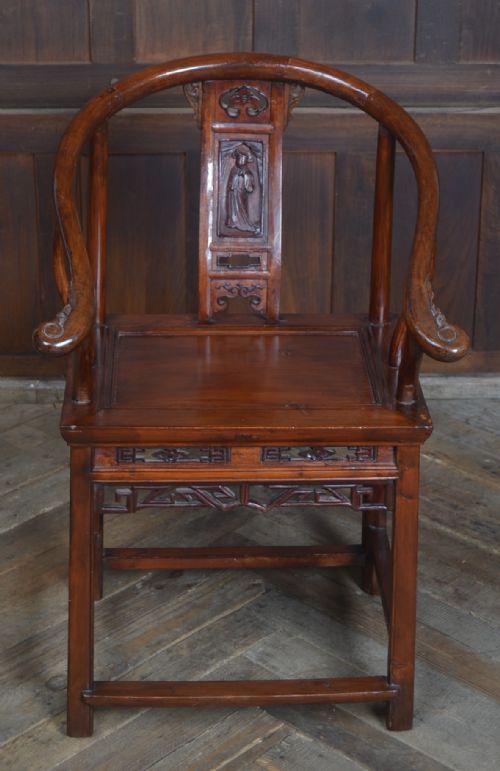

Chinese Horseshoe Back Armchair
A chinese horseshoe back armchair brings curved timber lines and traditional seating to a room, offering both history and support.
Chinese Horseshoe Back Armchair
A chinese horseshoe back armchair is defined by its continuous curved crestrail that sweeps down to form the armrests, creating a distinct silhouette derived from ancient forms. When searching for a chinese horseshoe back armchair, buyers encounter pieces ranging from simple provincial seating to elaborate throne chairs.
The selections span several eras, including the eighteenth century, nineteenth century, the Edwardian period, and nineteen-twenty. These chairs appear in various forms, such as folding frames and pairs with brass inlay or painted surfaces.
Originating within traditional Chinese and Qing dynasty aesthetic traditions, these armchairs bridge formal reception rooms and daily domestic spaces. The pieces available reflect both classic Ming influences and later Qing interpretations.
Materials and construction
Construction relies primarily on timbers such as elm, hardwood, and dark hardwood, chosen for structural strength and grain texture. Wood is frequently shaped into the characteristic curved back and supported by mortise and tenon joinery.
Surface finishes include lacquer, lacquered wood, paint, and pickled treatments that alter the natural tone of the elm or hardwood. Additional decorative elements involve brass inlay and leather components integrated into the wooden framework.
Chinese Horseshoe Back Armchair Retail Price Guide 2026
Typical asking prices for chinese horseshoe back armchair among the pieces listed under this phrase on Sellingantiques today, from the lower quarter to the upper quarter. They describe what is for sale here now, not the wider market.
Some nineteenth-century chairs were built to fold, proving that ancient travellers also appreciated portable comfort.
Assessing quality
Quality rests upon the execution of the curved wooden members and the integrity of the joinery that holds the frame together. Finer examples display precise alignment in the horseshoe crestrail and careful balance in the supporting spindles.
Surface treatment dictates much of the character, distinguishing between simple pickled elm and deeply applied lacquer or intricate brass inlay. The distinction lies in how cleanly the maker has resolved the traditional form without losing structural clarity.
The Chinese Horseshoe Back Armchair Glossary
- Crestrail
- The top horizontal member of a chair back. In these pieces, it sweeps forward in a continuous curve to form the armrests.
- Elm
- A resilient timber frequently utilised in provincial furniture making. It provides a distinct grain pattern visible beneath pickled or clear finishes.
- Hardwood
- A dense timber category used for structural durability in traditional seating. Darker variants contribute to the formal appearance of nineteenth-century chairs.
- Lacquer
- A durable resin coating applied to wooden surfaces for protection and shine. It often appears on pieces from the Edwardian era and earlier centuries.
- Qing Dynasty
- An imperial historical period associated with elaborate decorative arts. Many listed chairs reflect the styles developed during this era.
Chinese Horseshoe Back Armchair: Frequently Asked Questions
How are these chairs used?
These armchairs serve primarily as decorative accent seating in living rooms, studies, or hallways. Their sculptural profiles make them suitable for placement where the back and sides are fully visible.
Historically, they occupied prominent positions in traditional rooms. In contemporary settings, they add sculptural presence and a historical anchor to a space.
How do I date a Chinese armchair?
Dating relies on examining the timber species, joinery methods, and surface finishes such as lacquer or paint. Eighteenth-century examples often display simpler, purer lines, while nineteenth-century pieces may incorporate brass inlay or folding mechanisms.
Comparing the wear patterns and construction details to known historical periods helps narrow down the origin. Expert appraisal of the wood and lacquer provides further confirmation.
Are these chairs comfortable?
The curved wooden backrest is ergonomically shaped to support the upper body and arms. While lacking deep upholstery, the wooden contours offer surprising physical support.
Many users find the embrace of the continuous rail comfortable for reading or conversation. Additional cushions are sometimes added for extended sitting.