


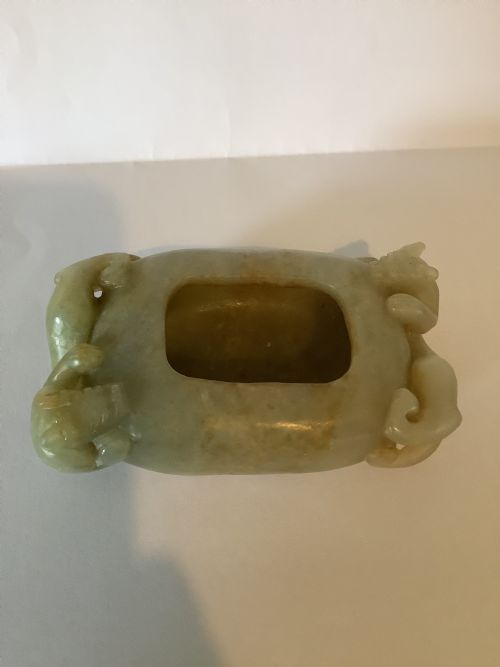


Oriental Brush Washer
An oriental brush washer brings scholarly refinement to a desk, offering a tactile connection to historical East Asian writing traditions.
Oriental Brush Washer
An oriental brush washer serves as a vessel designed to rinse ink from calligraphy brushes during the preparation of documents or artwork. The examples on this page encompass various periods, including the eighteenth century and the late nineteenth century, reflecting long-standing traditions of scholar's studio items.
Forms vary from compressed basins and lotus-form cups to soapstone groupings and pottery suiban vessels. These objects originate primarily from Chinese and Japanese workshops spanning the Qing Dynasty, Republic Period, and Meiji era.
Buyers will encounter materials ranging from porcelain with flambé glazes to carved jade, soapstone, cloisonné enamel, and earthenware. Each piece reflects the functional requirements of traditional scholarly pursuits adapted into decorative desk accessories.
Materials and construction methods
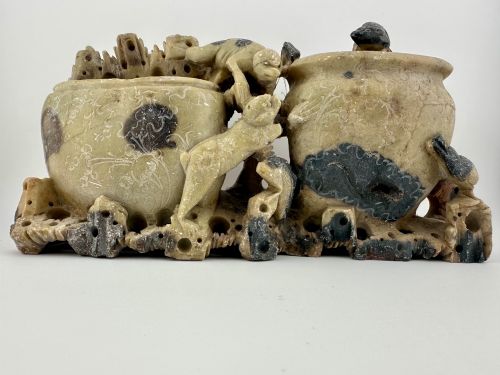
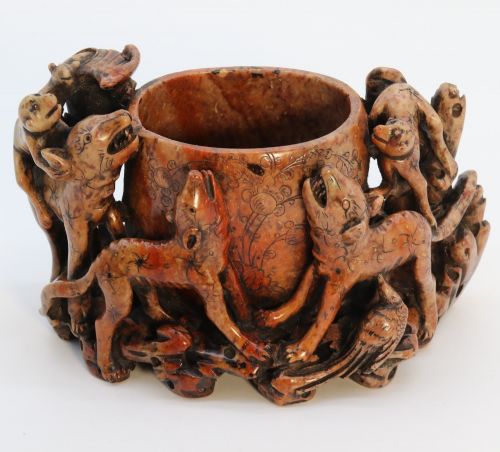
Hardstone vessels rely on meticulous carving techniques applied to minerals such as jade and soapstone, revealing natural variations in colour like russet and pale celadon. Artisans shaped these stones to emulate organic forms including lotus petals and natural rock formations.
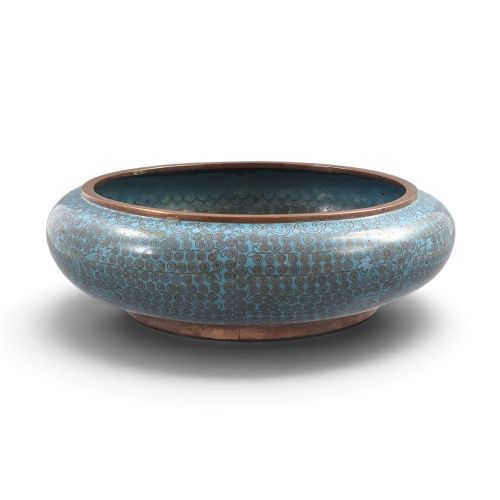
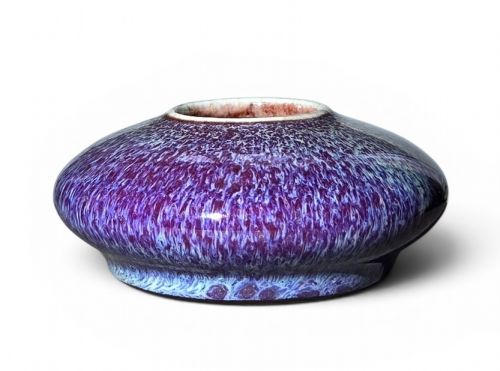
Ceramic examples utilise high-fired porcelain and earthenware bodies finished with specialised glazes, including blue and white decoration, flambé effects, and ge-type crackle patterns. Cloisonné enamel pieces employ metal wirework soldered to copper alloy bases to create compartmentalised design fields filled with coloured paste.
Some pottery items integrate applied sculptural figures modeled by hand and attached to the vessel body prior to firing and cold painting.
Distinguishing quality factors
The refinement of the carving distinguishes superior hardstone and bamboo pieces, where undercutting and depth of relief demonstrate the carver's dexterity. Jade and soapstone quality rests on the clarity of the stone and the skillful incorporation of natural colour inclusions.
In ceramics and cloisonné, quality relates to the control of the glaze or enamel work, evident in even colour distribution, precise line work, and successful kiln transformations such as flambé effects. The integration of form and utility, alongside period authenticity, establishes the standing of each piece.
The Oriental Brush Washer Glossary
- Celadon
- A transparent pale green glaze applied to porcelain or stoneware, often imitating the appearance of jade. The subtle hue results from iron oxide in the glaze interacting with the kiln atmosphere.
- Cloisonne enamel
- A metalwork technique where flat wires form raised barriers on a metal base to create cells, which are then filled with enamel paste and fired. The resulting surface is ground smooth and polished.
- Flambey
- A rich, streaked transmutation glaze characterised by complex colour flows of red, purple, and blue. This effect occurs naturally during high-temperature firing through the oxidation and reduction of copper.
- Suiban
- A shallow ceramic or bronze vessel traditionally used for displaying stones or growing miniature plants in water. These containers often feature sculptural elements along the rim.
- Scholar's desk group
- A collection of implements used by traditional East Asian scholars for writing and painting, including brush washers, brush pots, and ink stones. These items were valued for their material quality and poetic design.
Oriental Brush Washer: Frequently Asked Questions
What is an oriental brush washer used for?
An oriental brush washer functions as a small basin for cleaning ink from calligraphy and painting brushes. Scholars used them on their desks alongside brush pots and ink stones.
Over time, these vessels became prized art objects displayed in scholar's studios for their material quality and refined aesthetic.
How are jade brush washers dated?
Dating jade pieces involves examining the style of the carving, the choice of motifs, and the natural characteristics of the stone. Craftsmen across the Qing Dynasty and later periods employed specific geometric and organic designs.
Tool marks and polish types also provide clues regarding the period of production and the workshop methods utilised.
What materials are used for these washers?
Makers constructed these vessels from a variety of traditional materials including nephrite jade, soapstone, porcelain, and copper alloy. Each medium required distinct manufacturing techniques.
Ceramic versions feature specialised glazes like blue and white or flambé, while metal versions utilise cloisonné enamel work.
How do I display a brush washer?
Display these pieces on flat surfaces where their three-dimensional form and material textures can be examined closely. Many collectors place them on carved wooden stands.
Keeping them away from direct sunlight and extreme temperature changes protects delicate materials like soapstone and cold-painted earthenware.