




Oriental Bronze Jar
An oriental bronze jar brings substantial presence to a room, carrying the weight and craft of nineteenth-century workshops.
Oriental Bronze Jar
When you search for an oriental bronze jar, you encounter vessels that span the nineteenth century and early twentieth century, originating from Japanese Meiji workshops and Chinese traditions. These pieces include ginger jars, lidded koro, tsubo vases, and heavy jardinières that served practical and decorative roles in traditional interiors.
The most common versions on this page are Japanese Meiji period bronze vases and large planters, alongside Chinese vessels decorated with cloisonné enamel or shaped in solid bronze. These items reflect distinct aesthetic movements, from the naturalistic motifs of the Meiji era to the formal geometry of Qing style pieces.
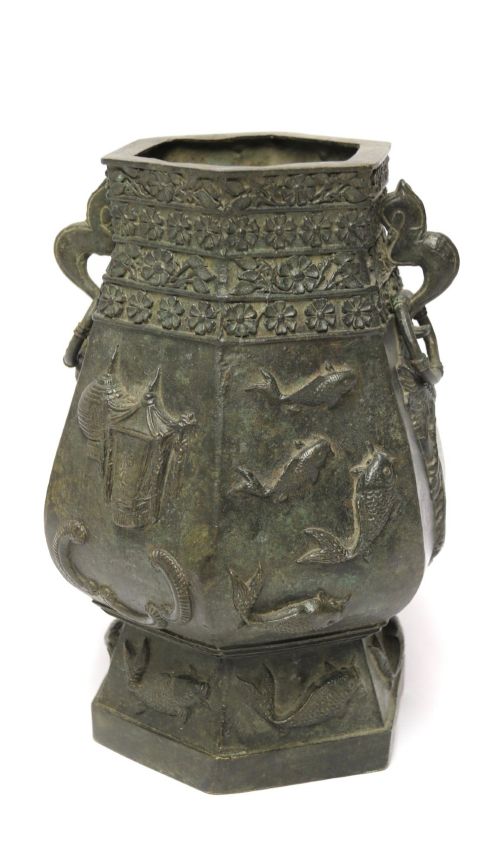
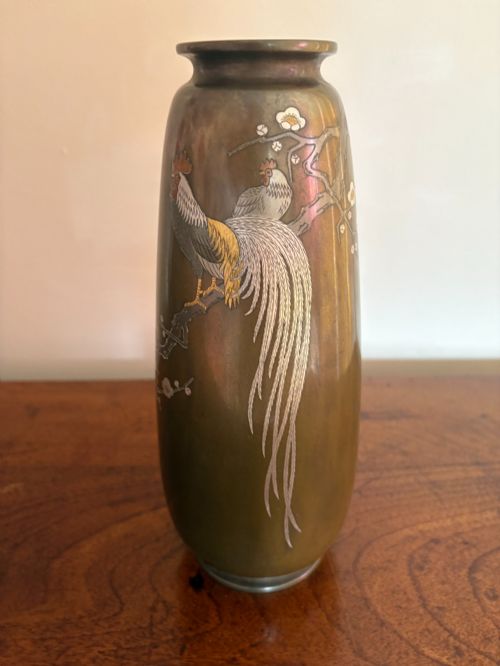
Collectors find these objects taking various forms, such as incense burners with lids, hexagonal vessels, and mixed metal vases inlaid with contrasting tones. Each form demonstrates the versatility of metalwork traditions across East Asia during a period of significant export production.
Materials and methods
Craftsmen built these vessels primarily through lost-wax casting in bronze, copper, and brass, creating thick walls capable of holding intricate surface detail. Workshops often applied chemical patination to achieve deep brown or dark green surface tones before finishing the metal.
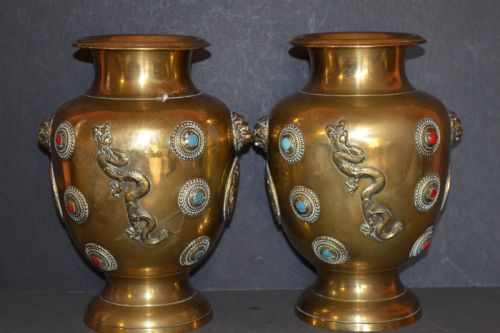
Surface ornamentation involved cloisonné wirework filled with coloured enamel, mixed metal inlays of silver and gold, and hand-chased relief work showing dragons or natural scenes. Ormolu mounts occasionally appeared on pieces adapted in Europe during the Victorian period.
Several heavy jardinières weigh three kilograms, proving that Victorian gardeners took their potted ferns very seriously indeed.
Separating the ordinary from the exceptional
Quality rests in the crispness of the casting and the precision of the metal inlay, where superior examples show clean lines and secure wirework without gaps. Heavy gauge bronze provides a stable base and satisfying heft that distinguishes better productions from lighter commercial wares.
The depth and subtlety of the original patination dictate visual success, as well-preserved surfaces retain tonal variations rather than flat, uniform paint. Master metalworkers of the Meiji period achieved harmonious compositions where mixed metals integrate seamlessly into the body of the vase.
KANASAWA
The Oriental Bronze Jar Glossary
- Meiji Period
- The era in Japanese history spanning from 1868 to 1912, known for opening trade and producing intricate metalwork for export. Pieces from this time frequently display naturalistic themes and advanced bronze patination.
- Cloisonné
- An enamelling technique where thin metal wires form compartments on a bronze base, which are then filled with coloured paste and fired. This method creates vibrant, patterned surfaces often seen on ginger jars and lidded vessels.
- Koro
- A traditional Japanese or Chinese incense burner, typically fitted with a pierced lid to release fragrance. These vessels often stand on three feet and feature mythical beast handles.
- Tsubo
- A traditional Japanese jar form with a wide body and narrower neck, used historically for storage or display. Fine examples demonstrate substantial weight and controlled patination.
- Suiban
- A shallow Japanese basin designed to hold water for flower arrangements or scholar's rocks. They share manufacturing techniques and materials with standard bronze jars of the period.
Oriental Bronze Jar: Frequently Asked Questions
How do I identify a Meiji period bronze?
Meiji period bronzes typically display dark, original patination and refined surface details such as mixed metal inlay or high-relief casting. Makers from this era between 1868 and 1912 utilised advanced metallurgical techniques developed during the opening of Japanese trade.
Examining the underside and the interior often reveals the casting method, while the style of decoration points directly towards late nineteenth-century workshop practices.
Were these jars used for incense?
Many lidded vessels and koro served specifically as incense burners in traditional settings, designed to diffuse scents through pierced covers. Other forms like ginger jars and tsubo functioned as storage containers or purely decorative display pieces.
Understanding the presence of internal residue or lid ventilation helps distinguish a ritual burner from a general decorative jar.
How do I clean an antique bronze jar?
Antique bronze requires minimal intervention to preserve the original surface patination and historical wear accumulated over the centuries. Dusting with a dry, soft cloth is usually sufficient for regular maintenance.
Avoid commercial metal polishes, water immersion, or abrasive cleaners, as these methods strip away the aged surface tones that collectors value.
What is mixed metal bronze?
Mixed metal work involves inlaying contrasting metals such as silver, gold, and copper into the bronze body of the vessel. This technique created pictorial scenes or geometric patterns with varied colouration across the surface.
Japanese metalworkers mastered this approach during the Meiji period, combining different alloys to achieve striking visual depth.