




Oriental Brass Urn Lamps
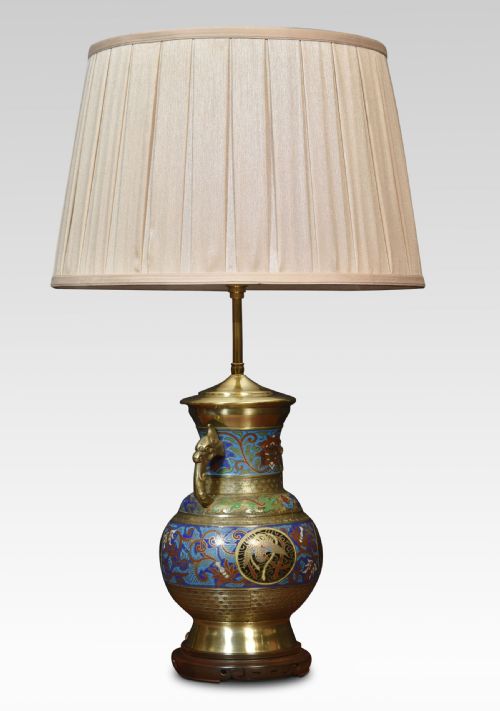
These oriental brass urn lamps bring heavy metal, rich enamel, and converted vessels straight into a room with striking presence.
Oriental Brass Urn Lamps
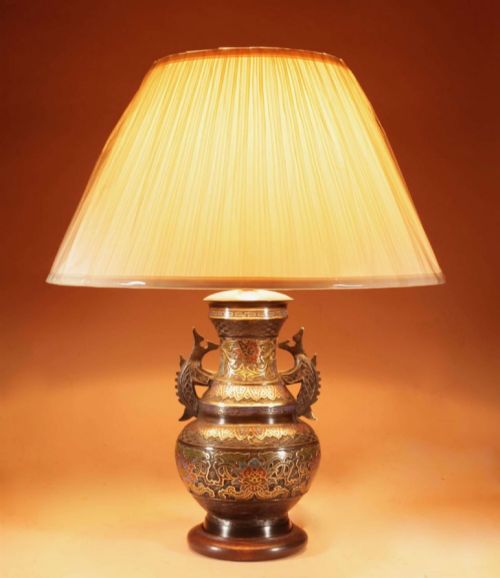
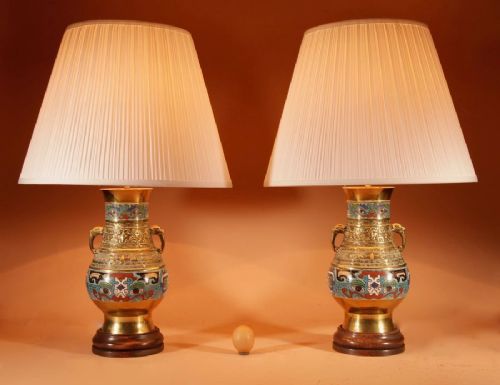
When you search for oriental brass urn lamps, you are looking at table lamps fashioned from converted vases, urns, and vessels of Asian origin. These pieces span centuries of craftsmanship, taking the form of baluster vases, twin-handled jars, and heavy vessels mounted for illumination.
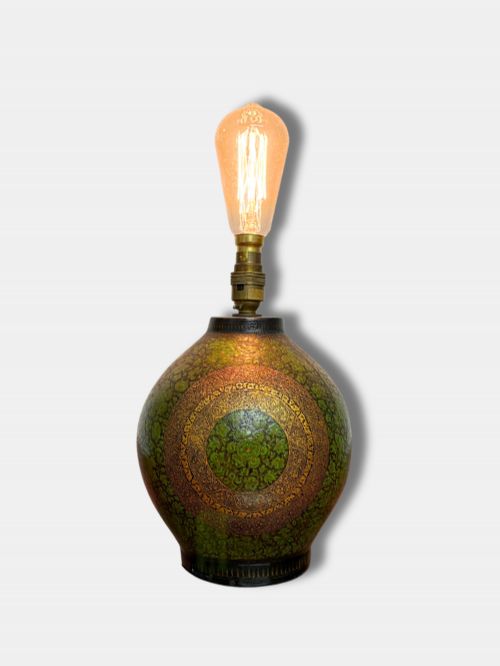
You are most likely to meet pieces from the nineteenth and early twentieth centuries on this page. The selections encompass Japanese bronzes, Chinese porcelain, and Kashmiri gilt work adapted into domestic lighting over generations.
The underlying forms are diverse, drawing on Chinese celadon, Japanese Arita Imari, and Chinoiserie lacquers. Each object bridges the gap between historical decorative arts and functional interior lighting.
Materials and construction
The core structure relies on heavy metals and ceramics, pairing cast brass and bronze with porcelain, enamel, and toleware. Many pieces incorporate champlevé and cloisonné techniques, fusing glass pastes onto metal wire grounds before firing and polishing.
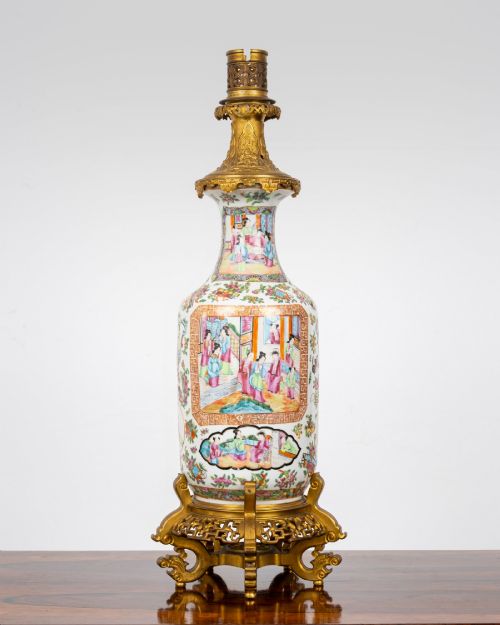
Makers utilised gilt bronze mounts to secure and elevate ceramic bodies, alongside black and gold lacquer on wood. Converted vessels often feature drilled bases or fitted collars designed to hold electrical or wiring components securely within the antique form.
Some urns have lived three lives: first as a temple jar, second as a Victorian mantelpiece ornament, and finally as a reading lamp.
The spectrum of quality
Quality rests upon the crispness of the bronze casting and the precision of the enamel work. Finer examples display meticulous cloisonné cell-work and deeply saturated glazes that remain intact across the entire surface of the urn.
The integration of mounts also defines the tier of the piece. Superior items feature heavy, hand-chased gilt bronze mounts fitted precisely to the ceramic or metal body rather than generic or loose hardware.
The Oriental Brass Urn Lamps Glossary
- Cloisonné
- Enamelwork in which enamel is applied to compartments sunk into or raised on a metal surface. These thin metal wires form the boundaries for different coloured pastes.
- Champlevé
- An enamelling technique where troughs or cells are carved into the surface of a metal base and filled with vitreous enamel before firing.
- Celadon
- A term for pottery denoting both European grooved wares and a pale green jade-like glaze. The finish results from iron oxide in the glaze reacting in a reducing kiln.
- Imari
- A type of Japanese porcelain decorated in underglaze blue and overglaze red, gold, and other colours. It originated in the town of Arita and became widely exported to Europe.
Oriental Brass Urn Lamps: Frequently Asked Questions
Are these lamps converted from old vases?
Many of these pieces began life as decorative vases, jars, or urns before being converted into table lamps. The process typically involves mounting the original vessel on a suitable base and fitting it for electrical components.
This method of adaptation allows centuries-old ceramics and bronzes to serve a practical purpose in modern interiors while retaining their antique character.
How do I date an oriental lamp base?
Dating relies on examining the materials, manufacturing marks, and the style of the mounts. Nineteenth-century pieces often display distinct patination on the bronze and specific enamel colour palettes.
Consulting the periods noted in the listings helps place the vessel within a broader historical context, from Victorian adaptations to earlier eighteenth-century forms.
How should I style an urn lamp?
These substantial lamps suit placement on heavy sideboards, desks, or large living room tables where their height and weight can anchor the space. Pairing them with complementary fabric shades completes the look.
Allowing the lamp to serve as a focal point lets the intricate brass, bronze, and enamel details stand out in the room.